描述
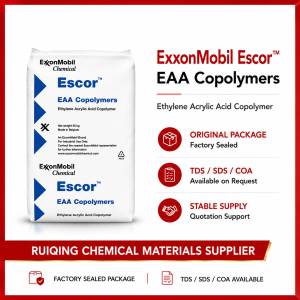
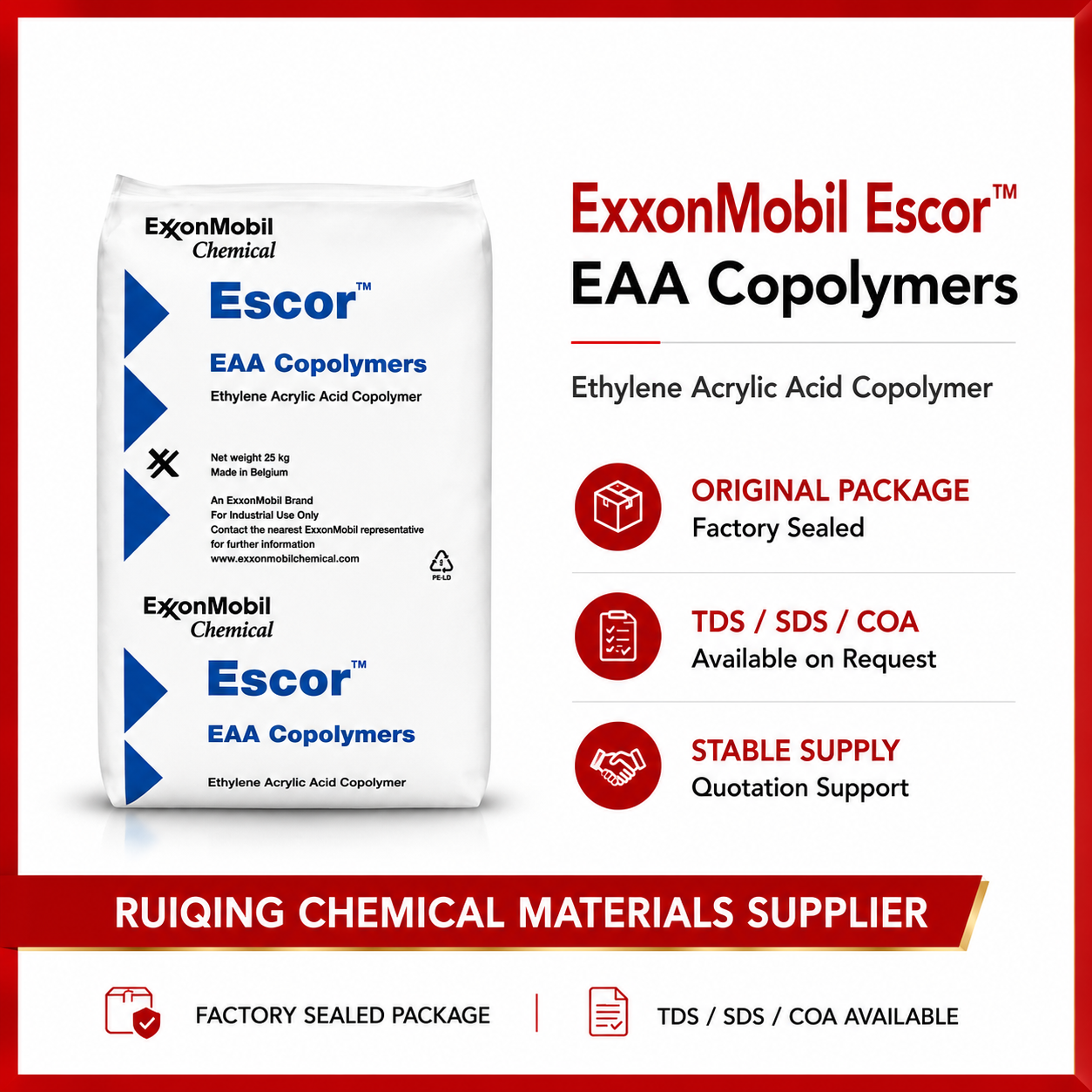
Escor 6000 is an ExxonMobil EAA resin, also known as an ethylene acrylic acid copolymer resin, designed for extrusion coating and coextrusion coating applications.
Escor 6000 is the high-drawdown product form of Escor 5000. It is designed to achieve very low coating weights at high production line speeds while maintaining good adhesion to polar substrates.
With an acrylic acid content of 6.0 wt% and a melt index of 8.2 g/10 min, Escor 6000 provides good adhesion to aluminum foil, metallized films, paper, iron, steel, and glass, as well as excellent interlayer adhesion with coextruded LDPE and EVA materials.
Key Features
- High-drawdown product form of Escor 5000
- Designed for extrusion coating and coextrusion coating
- Suitable for very low coating weights at high line speeds
- Good adhesion to polar substrates, aluminum foil, metallized films, paper, iron, steel, and glass
- Excellent balance of substrate adhesion and interlayer adhesion with LDPE and EVA
- Contains no antiblock, slip, or thermal stabilizer additives
Typical Applications
- Extrusion coating
- Coextrusion coating
- Extrusion lamination
- Food packaging
- Aluminum-containing packaging
- Metallized film packaging
- Hygiene packaging
- Cosmetic packaging
- Liquid packaging
Application suitability should be confirmed under actual substrate, structure, processing, and end-use conditions before commercial use.
Typical Properties
| Property | Typical Value | Unit | Test Method |
|---|---|---|---|
| Density | 0.932 | g/cm3 | ASTM D1505 |
| Melt Index, 190°C / 2.16 kg | 8.2 | g/10 min | ASTM D1238 |
| Acrylic Acid Content | 6.0 | wt% | ExxonMobil Method |
| Peak Melting Temperature | 102 | °C | ExxonMobil Method |
Technical data is based on the manufacturer’s published product information. Values shown are typical and should not be interpreted as guaranteed specifications. Review the latest official TDS before use.
Coating Performance
| Coating Property | Typical Value | Condition | Test Method |
|---|---|---|---|
| Draw Down | 200 m/min | Constant output at 35 rpm, 280°C | ExxonMobil Method |
| Neck-in | 9.5 cm | 25 m/min, constant output at 35 rpm, 280°C | ExxonMobil Method |
| Neck-in | 6.1 cm | 50 m/min, constant output at 35 rpm, 280°C | ExxonMobil Method |
| Neck-in | 4.6 cm | 100 m/min, constant output at 35 rpm, 280°C | ExxonMobil Method |
Processing Guidelines
Recommended extrusion coating temperature: 260–280°C / 500–536°F
- Avoid processing temperatures above 300°C / 572°F, as prolonged exposure may cause resin degradation.
- Use corrosion-resistant metals or suitable nickel/chrome plating for metal surfaces exposed to the molten resin.
- Feed Escor resin into the extruder after LDPE with a similar or higher melt index.
- Before shutdown, completely purge the equipment with LDPE or a suitable cleaning compound.
- Optimize air gap, line speed, coating weight, and temperature profile according to the substrate and laminate structure.
Additives and Regulatory Information
- Antiblock: No
- Slip: No
- Thermal Stabilizer: No
For information regarding potential food-contact applications and applicable requirements such as FDA, EU, or HPFB regulations, customers must review the latest supplier compliance documentation before commercial use.
This product is not intended for use in medical applications.
Supply and Documentation
Product form: Pellets
Contact us to confirm current packaging, regional availability, minimum order quantity, lead time, and sample options. TDS, SDS, COA, and available regulatory documents can be provided upon request.
For an accurate quotation, please provide your required quantity, delivery destination, intended application, and required documentation.
Frequently Asked Questions
What is ExxonMobil Escor 6000?
Escor 6000 is an ExxonMobil EAA resin, also known as an ethylene acrylic acid copolymer resin, primarily used for extrusion coating and coextrusion coating applications.
How is Escor 6000 different from Escor 5000?
Escor 6000 is the high-drawdown product form of Escor 5000, designed for very low coating weights at high production line speeds.
What is the melt index of Escor 6000?
Its typical melt index is 8.2 g/10 min at 190°C / 2.16 kg.
What is the acrylic acid content of Escor 6000?
Escor 6000 contains 6.0 wt% acrylic acid comonomer.
Which substrates can Escor 6000 bond to?
It provides good adhesion to polar substrates including aluminum foil, metallized films, paper, iron, steel, and glass.
What are the main applications of Escor 6000?
Typical applications include extrusion coating, coextrusion coating, extrusion lamination, aluminum-containing packaging, metallized films, food packaging, hygiene packaging, cosmetic packaging, and liquid packaging.
What processing temperature is recommended for Escor 6000?
The recommended extrusion coating temperature range is approximately 260–280°C / 500–536°F. Processing temperatures above 300°C / 572°F should be avoided.
Does Escor 6000 contain slip or antiblock additives?
No. This grade contains no slip, antiblock, or thermal stabilizer additives.
Can Escor 6000 be used for food packaging?
Escor 6000 may be evaluated for food-packaging structures. Customers should review the latest supplier compliance documents for the intended application and target market.
Can you provide TDS, SDS, COA, or samples for Escor 6000?
TDS, SDS, COA, regulatory documents, and evaluation samples may be available upon request, depending on stock and regional availability.
Request Escor 6000 Pricing and Product Documents
Contact RuiQingChem for current Escor 6000 availability, pricing, TDS, SDS, COA, regulatory documents, or an evaluation sample. For a faster response, please include your required quantity, delivery destination, intended application, and expected purchasing schedule.
Request Escor 6000 Pricing and Product Documents
The information provided on this page is intended for general product-selection guidance. Customers are responsible for testing Escor 6000 under actual processing conditions and confirming its suitability, safety, and regulatory compliance for the intended application. Product names and trademarks belong to their respective owners.