描述
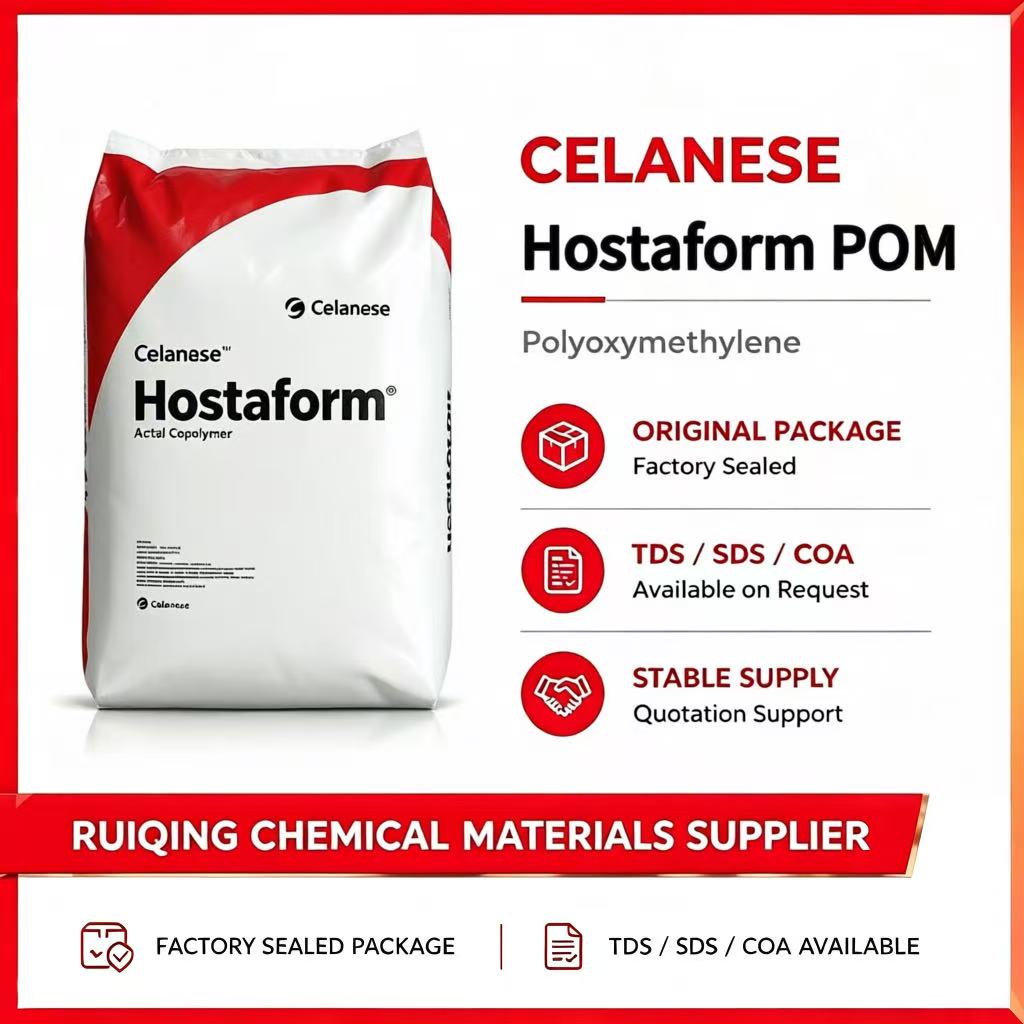
Hostaform C 13021 XAP is an unfilled, crystalline polyacetal polyoxymethylene (POM) copolymer supplied by Celanese Corporation. The “XAP” designation indicates this is an innovative development grade with Advanced Processing characteristics, specifically engineered for easy flow injection molding and low emission applications .
Hostaform C 13021 XAP delivers a tensile modulus of 2,900 MPa and yield stress of 65 MPa, providing high rigidity, hardness, and toughness for precision engineering applications . The material exhibits outstanding resistance to long-term fatigue, chemicals (including solvents, fuels, and strong alkalis), wear, creep, hydrolysis, stress cracking, and thermal and oxidative degradation .
With its low emission properties, Hostaform C 13021 XAP is particularly suitable for automotive interior applications where volatile organic compound (VOC) limits are strictly regulated . The material also provides good slip properties, excellent resilience, and low moisture absorption (0.20% at equilibrium), ensuring stable dimensions in varying humidity environments .
Hostaform C 13021 XAP Key Features
-
Easy Flow: Excellent flowability for complex and thin-wall injection molded parts, reducing cycle times
-
Low Emission: Low VOC emission levels (max 10 mg/kg per VDA 275), suitable for automotive interior applications
-
High Rigidity & Strength: Tensile modulus of 2,900 MPa and yield stress of 65 MPa
-
Good Chemical Resistance: Resists solvents, fuels, and strong alkalis; good hydrolysis resistance
-
Excellent Fatigue & Creep Resistance: High resistance to long-term fatigue and creep under continuous load
-
Good Heat Distortion Temperature: HDT of 106°C at 1.80 MPa, suitable for applications up to 100°C
-
Low Moisture Absorption: Only 0.2% at equilibrium (50% RH), ensuring stable dimensions in humid environments
-
Added Release Agent: Contains release agent additive for easier demolding
Related Products
Hostaform C 13021 XAP Applications
Automotive Engineering: Precision gears, window regulator mechanisms, seat belt components, fuel system parts, door lock components, interior mechanisms where low emissions are required
Precision Engineering: Gears, bearings, sliding elements, mechanical components requiring high precision, dimensional stability, and complex geometries enabled by easy flow
Electric & Electronic Industry: Connectors, relays, switches, coil formers, and electrical components requiring good electrical insulation properties
Domestic Appliances: Gears, pump components, and moving parts in household appliances
Hostaform C 13021 XAP Technical Specifications
| Property | Test Condition | Standard | Value | Unit |
|---|---|---|---|---|
| Density | — | ISO 1183 | 1,410 | kg/m³ |
| Molding Shrinkage (Parallel) | — | ISO 294-4 | 2.0 | % |
| Molding Shrinkage (Normal) | — | ISO 294-4 | 1.8 | % |
| Water Absorption | Saturation, 23°C, 2mm | ISO 62 | 0.65 | % |
| Humidity Absorption | 50% RH, 2mm | Sim. to ISO 62 | 0.20 | % |
| MVR (Melt Volume Rate) | 190°C/2.16kg | ISO 1133 | 12 | cm³/10min |
| Tensile Modulus | 23°C | ISO 527 | 2,900 | MPa |
| Tensile Stress at Yield | 23°C, 50mm/min | ISO 527 | 65 | MPa |
| Tensile Strain at Yield | 23°C, 50mm/min | ISO 527 | 9 | % |
| Nominal Strain at Break | 23°C, 50mm/min | ISO 527 | 25 | % |
| Flexural Modulus | 23°C | ISO 178 | 2,800 | MPa |
| Charpy Notched Impact | 23°C | ISO 179/1eA | 6.5 | kJ/m² |
| Charpy Notched Impact | -30°C | ISO 179/1eA | 6.0 | kJ/m² |
| Charpy Unnotched Impact | 23°C | ISO 179/1eU | 200 | kJ/m² |
| HDT (1.80 MPa) | Unannealed | ISO 75 | 106 | °C |
| Melting Temperature | 10°C/min | ISO 11357-3 | 166 | °C |
| CLTE (Parallel) | — | ISO 11359 | 110×10⁻⁶ | 1/K |
| Ejection Temperature | — | — | 140 | °C |
| Volume Resistivity | — | IEC 62631-3-1 | 1×10¹² | Ω·m |
| Surface Resistivity | — | IEC 62631-3-2 | 1×10¹⁴ | Ω |
| Dielectric Strength | — | IEC 60243-1 | 35 | kV/mm |
| Relative Permittivity (100Hz/1MHz) | — | IEC 62631-2-1 | 4.0/4.0 | — |
| Dissipation Factor (100Hz/1MHz) | — | IEC 62631-2-1 | 20/50 | ×10⁻⁴ |
| CTI (Comparative Tracking Index) | — | IEC 60112 | 600 | V |
| UL Flammability | 1.5-3.0mm | UL-94 | HB | — |
| Emission | 1.5mm molded plate | VDA 275 | ≤10 | mg/kg |
Processing Guide
| Parameter | Recommended Value |
|---|---|
| Drying Recommended | Generally not necessary; drying may be required for low emission values |
| Drying Temperature (if needed) | 100 – 120°C |
| Drying Time (if needed) | 3 – 6 hours |
| Max. Moisture Content | ≤ 0.2% |
| Melt Temperature Optimum | 200°C |
| Melt Temperature Range | 190 – 210°C |
| Mold Temperature Optimum | 100°C |
| Mold Temperature Range | 80 – 120°C |
| Holding Pressure Range | 60 – 120 MPa |
| Back Pressure | ~4 MPa |
| Max Screw Tangential Speed | ≤0.3 m/s |
Hostaform C 13021 XAP FAQ
Q: What is Hostaform C 13021 XAP?
A: Hostaform C 13021 XAP is an easy flow, low emission, unfilled POM copolymer from Celanese for precision injection molding applications. The XAP designation stands for innovative development product (X) with Advanced Processing (AP) characteristics .
Q: What is the difference between Hostaform C 13021 and C 13021 XAP?
A: Hostaform C 13021 XAP is specifically formulated with “Advanced Processing” characteristics for easier flow and lower emissions, making it particularly suitable for complex automotive interior parts requiring low VOC levels .
Q: What does “low emission” mean for this grade?
A: Hostaform C 13021 XAP exhibits low VOC emission levels (max 10 mg/kg per VDA 275), making it suitable for automotive interior applications where stringent emission limits are required .
Q: What is the tensile modulus of Hostaform C 13021 XAP?
A: It offers tensile modulus of 2,900 MPa .
Q: Is drying required before processing?
A: Drying is generally not necessary due to low moisture absorption. However, for achieving low emission values, drying with a recirculating air dryer at 100–120°C for 3–6 hours is recommended .
Q: What are the recommended processing conditions?
A: Melt temperature 190–210°C (optimum 200°C), mold temperature 80–120°C (optimum 100°C), with holding pressure 60–120 MPa .
Q: What automotive specifications does this material meet?
A: It meets the recommendation XXXIII for consumer goods of the BgVV and complies with RoHS, PFOS, and PFOA regulations