描述
Micromax 3500N Insulating Glaze, Stainless Steel Substrate
Type: Insulating Glaze
Solid Content: 75.5-80%
Substrate: 430/444 Stainless Steel
Firing: 850°C / 30 min
Shelf Life: 6 months
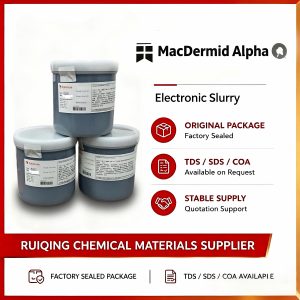
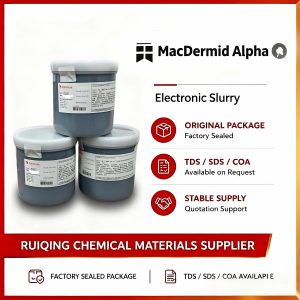
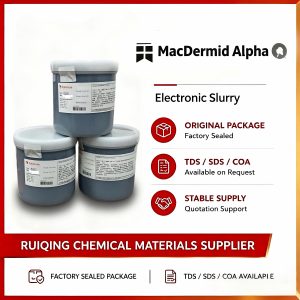
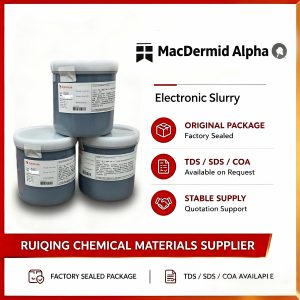
MacDermid Alpha Micromax 3500N is a screen-printable insulating glaze designed for stainless steel substrates — providing an electrically insulating layer for circuitry on steel. No pre-oxidation required, with 30-minute 850°C firing and ≥75μm fired thickness per TDS specifications. Ideal for heating element and steel-based circuit applications.
Micromax 3500N is an insulating glaze composition engineered for application on stainless steel sheets to form an electrically insulating layer, providing a dielectric substrate for electrical circuitry. Based on a high softening point partially crystallizable glass combined with a unique inorganic filler system, this dense dielectric minimizes bowing on 430 grade and similar stainless steels. The material requires no pre-oxidation of the steel surface prior to application, simplifying the manufacturing process. The glaze may be used with other system components, such as Micromax LF131 silver termination, to build complete circuits on steel substrates for applications including heating elements.
With a solid content of 75.5-80% and viscosity of 160-140 Pa.s per TDS specifications, Micromax 3500N is optimized for screen printing using 145-200 mesh screens. The glaze is applied in 3-4 prints, with each layer sequentially fired to achieve a minimum fired thickness of 75 μm. Drying is performed at 150°C for 15 minutes. The 30-minute firing cycle with a 10-minute peak at 850°C is carried out in a conveyor furnace in an air oxidizing atmosphere. Available in standard packaging.
Genuine MacDermid Alpha Micromax Imported Stock & Technical Support
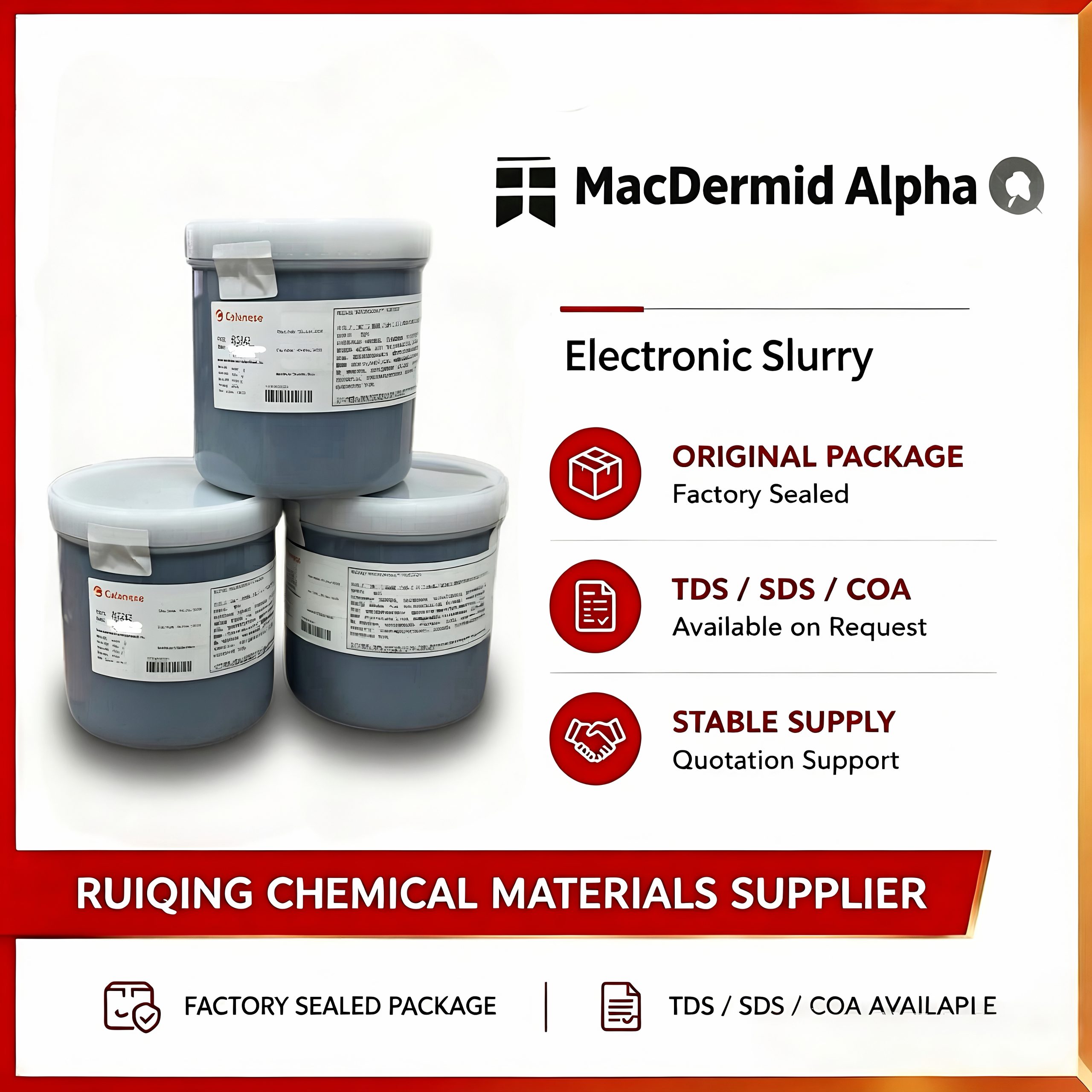
We maintain stable inventory of authentic MacDermid Alpha Micromax 3500N insulating glaze. Factory-original TDS and batch-specific COA can be provided upon request for your steel substrate circuit projects.
Request Sample, TDS & Quotation
Complete TDS, COA, and regulatory documentation available
Key Features of MacDermid Alpha Micromax 3500N
- Insulating glaze for stainless steel — dense dielectric layer for circuitry on steel substrates per TDS specifications
- No pre-oxidation required — simplifies processing on stainless steel surfaces per TDS specifications
- Minimized bowing — specially formulated for 430 grade stainless steel and derivatives per TDS specifications
- 30-minute firing profile — 10-minute peak at 850°C in air oxidizing atmosphere per TDS specifications
- ≥75 μm fired thickness — 3-4 prints with sequential firing per TDS specifications
- High solid content — 75.5-80% solid content for efficient deposition per TDS specifications
- Compatible with system components — works with Micromax LF131 silver termination per TDS specifications
- Cadmium, lead, nickel and phthalate free — formulated without intentional addition of restricted substances
Primary Applications
- Stainless steel substrate insulation — electrically insulating layer for circuitry on steel per TDS specifications
- Heating element applications — dielectric layer for resistive heating elements on steel substrates
- Steel-based hybrid circuits — insulating glaze for circuit fabrication on 430/444 grade stainless steel
- Automotive and industrial electronics — robust insulating layers for demanding steel substrate applications
Full Technical Specifications
| Property | Typical Value | TDS Reference |
| Product Type | Insulating glaze / dielectric | TDS: Insulating Glaze for steel |
| Application | Stainless steel substrate insulation | TDS: stainless steel sheets |
| Packaging Specification | Standard container | — |
| Solid Content | 75.5-80% | TDS: 75.5 to 80 % |
| Viscosity (Brookfield HBT 10 rpm) | 160-140 Pa.s | TDS: 160 to 140 Pa.s |
| Recommended Mesh | 145-200 mesh | TDS: 145-200 mesh stainless steel |
| Number of Prints | 3-4 layers | TDS: 3 – 4 prints |
| Recommended Fired Thickness | ≥75 μm | TDS: minimum of 75um fired thickness |
| Drying Temperature | 150°C | TDS: 150°C |
| Drying Time | 15 min | TDS: 15 minutes at 150°C |
| Firing Peak Temperature | 850°C | TDS: 850°C peak |
| Firing Cycle | 30 min | TDS: 30 minute profile, 10 min at peak |
| Firing Atmosphere | Air oxidizing atmosphere | TDS: air oxidizing atmosphere |
| Substrate Compatibility | 430/444 grade stainless steel | TDS: S430 or S444 grade |
| Surface Preparation | No pre-oxidation required | TDS: No pre-oxidation required |
| Thinner | Micromax 9179 | TDS: 9179 |
| System Components | Micromax LF131 silver termination | TDS: LF131 silver termination |
| Shelf Life | 6 months in unopened containers | TDS: 6 months |
| Storage Temperature | 5-30°C | TDS: 5-30°C |
Note: All listed values are typical and may vary by batch. Independent qualification testing is required prior to production use.
Recommended Processing Conditions
| Parameter | Recommended Value | TDS Reference |
| Mixing Prior to Use | Slow gentle hand-stirring with clean spatula, 0.5-1 minute | TDS: 0.5 – 1 minute |
| Optimal Printing Temperature | 20-23°C | TDS: 20°C – 23°C |
| Screen Mesh | 145-200 mesh stainless steel | TDS: 145-200 mesh |
| Number of Prints | 3-4 layers (each sequentially fired) | TDS: 3 – 4 prints |
| Leveling Time | 2-5 minutes at room temperature | TDS: 2 – 5 minutes |
| Drying Temperature | 150°C | TDS: 150°C |
| Drying Time | 15 minutes | TDS: 15 minutes |
| Firing Peak Temperature | 850°C | TDS: 850°C peak |
| Total Firing Cycle | 30 minutes (10 min at peak) | TDS: 30 minute profile |
| Firing Atmosphere | Air (oxidizing atmosphere) | TDS: air oxidizing atmosphere |
| Substrate | 430/444 grade stainless steel | TDS: S430 or S444 grade |
| Surface Finish | Dull polished or grit blasted | TDS: dull polished or grit blasted |
Handling and Storage Recommendations
| Storage Rules | Store in tightly sealed containers in clean, stable environment at 5-30°C. | TDS: 5-30°C |
| Shelf Life | 6 months in unopened containers from date of shipment. | TDS: 6 months |
| Pre-use Preparation | Thoroughly mix prior to use. Some settling may occur during storage. | — |
| Thinning | Not normally required; use Micromax 9179 thinner sparingly for evaporative losses. | TDS: 9179 |
Official Technical Documentation
| Document Type | Document Introduction | Document Request |
| TDS | MacDermid Alpha Micromax 3500N original factory technical data sheet | Request TDS |
| COA | Batch-specific certificate of analysis | Request COA |
| SDS | Safety Data Sheet for handling and storage | Request SDS |
Frequently Asked Questions
What is Micromax 3500N?
Micromax 3500N is an insulating glaze designed for stainless steel substrates, providing an electrically insulating layer for circuitry on steel. No pre-oxidation required per TDS specifications.
What substrates is Micromax 3500N compatible with?
Micromax 3500N is designed for 430 grade and 444 grade stainless steel substrates per TDS specifications.
Does Micromax 3500N require steel pre-oxidation?
No, Micromax 3500N does not require pre-oxidation of the steel surface prior to application per TDS specifications.
What is the recommended firing cycle for Micromax 3500N?
A 30-minute firing cycle with a 10-minute peak hold at 850°C in air oxidizing atmosphere per TDS specifications.
What is the recommended fired thickness for Micromax 3500N?
≥75 μm fired thickness, applied in 3-4 prints with each layer sequentially fired per TDS specifications.
What mesh screen is recommended for Micromax 3500N?
145-200 mesh stainless steel screens per TDS specifications.
What packaging options are available for Micromax 3500N?
Standard packaging containers are available. Contact our sales team for specific requirements.
Get MacDermid Alpha Micromax 3500N Bulk Pricing and Technical Support
We supply authentic MacDermid Alpha Micromax 3500N insulating glaze for stainless steel substrate applications. Contact our team for bulk quotations, sample availability, technical documentation, and application support.
Inquire Bulk Price & Technical Support
Disclaimer: All technical data on this page are for general guidance only and are not product specifications. Buyers must carry out independent trials and verify suitability before bulk ordering. Actual values may vary between production lots.