描述
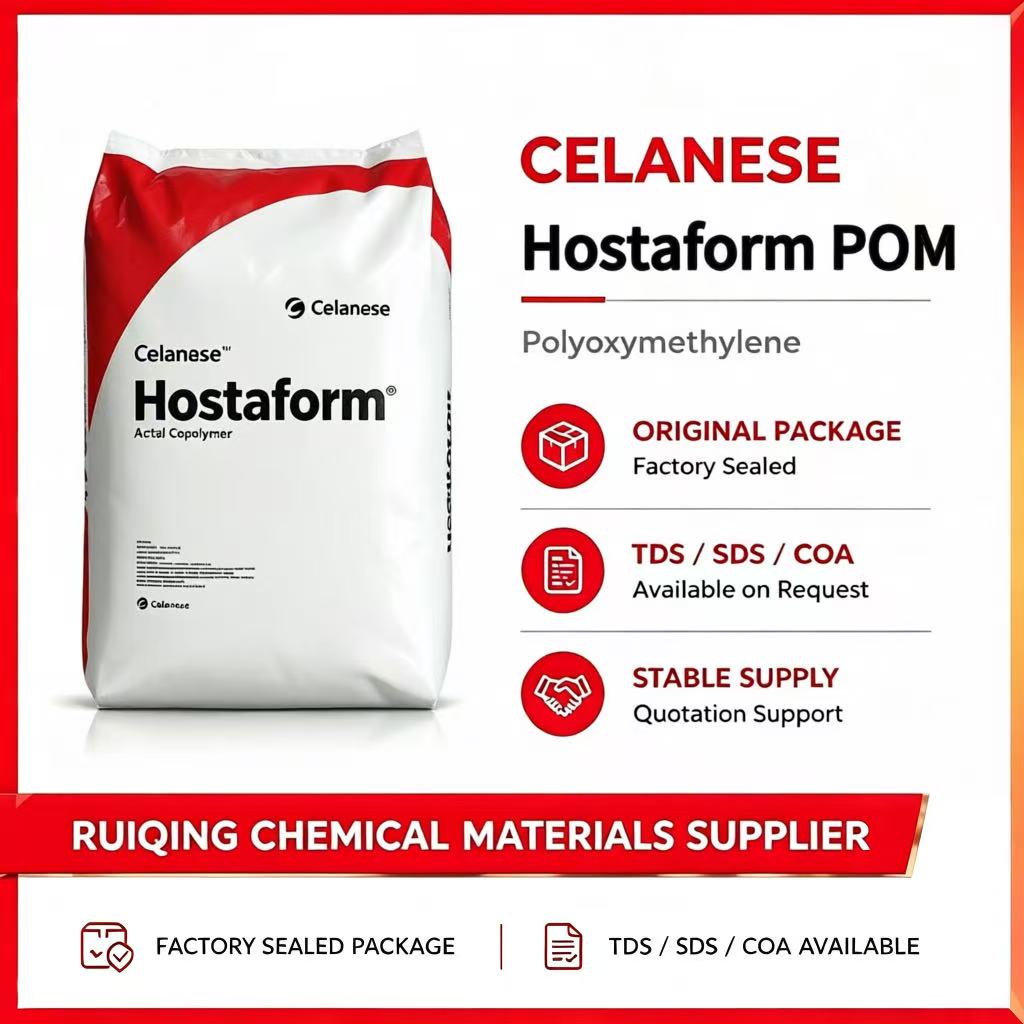
Hostaform M10AE is a stiff‑flowing, high melt strength POM‑C (Polyoxymethylene Copolymer) grade, genuinely manufactured by Celanese and imported as original product. As an authorized distributor and trader, we supply genuine material with full traceability and direct access to official Celanese technical documentation.
This unfilled acetal copolymer delivers ultra‑high viscosity with MVR 0.9 cm³/10min. Hostaform M10AE is purpose‑built for extrusion blow molding and injection molding of thick‑walled, void‑free molded parts. The “M” designation stands for high molecular weight and high melt strength, making this grade perfectly suited for jobs requiring stable melt performance throughout full processing cycles.
Hostaform M10AE delivers outstanding melt strength, reliable chemical resistance against solvents, fuels and strong alkalis, good hydrolysis resistance, plus strong resistance to thermal‑oxidative degradation. Monomers and additives comply with EU Regulation (EU) 10/2011 and FDA 21 CFR 177.2470 food‑contact requirements. We hold regular stock of Hostaform M10AE, supporting small trial orders and large‑volume bulk shipments for blow‑molding and thick‑wall injection‑molding end‑users.
Key Features of Hostaform M10AE
-
Very High Viscosity / High Melt Strength – MVR of 0.9 cm³/10min (190°C/2.16kg), providing excellent melt stability for extrusion blow molding
-
Stiff‑Flowing Grade – Hostaform M10AE is specifically designed for processing methods requiring high melt strength
-
Excellent Chemical Resistance – Resistant to solvents, fuels, and strong alkalis
-
Good Hydrolysis Resistance – Maintains core mechanical properties in moist operating environments
-
High Thermal & Oxidative Stability – High resistance to thermal and oxidative degradation
-
FDA & EU Food Contact Compliant – FDA compliant according to 21 CFR 177.2470; monomers and additives listed in EU Regulation (EU) 10/2011
-
Automotive Flammability Compliant – Burning rate ISO 3795 and FMVSS 302 <100 mm/min for thickness >1 mm
-
Good Mechanical Properties – Tensile modulus of 2800 MPa and yield stress of 65 MPa
-
Excellent Impact Resistance – Charpy notched impact strength of 10 kJ/m² at 23°C and 8 kJ/m² at -30°C
-
Versatile Processing – Suitable for extrusion blow molding and injection molding of thick‑walled parts
-
Heavy‑Metal Free – Environmentally friendly formulation
Typical Applications for Hostaform M10AE
| Industry | Typical Components & Considerations |
|---|---|
| Extrusion Blow Molding | Blow molded containers, fuel tanks, fluid reservoirs, automotive ducts. Hostaform M10AE guarantees stable parison performance during blow‑molding cycles. |
| Thick‑Wall Injection Molding | Thick‑walled, void‑free molded parts where the grade delivers high melt strength and zero‑void part quality. |
| Automotive | Fuel system components, fluid handling parts, structural brackets requiring chemical resistance and mechanical strength. FMVSS 302 compliant. |
| Industrial | Valve bodies, pump housings, fittings, thick‑walled structural components |
| Food Contact | Food processing and packaging components requiring FDA and EU food‑contact compliance |
| Chemical Processing | Components requiring resistance to solvents, fuels, and strong alkalis |
Explore our full range of engineering plastics solutions for more industry‑specific case studies. See also our full POM product portfolio .
Material Advantages of Hostaform M10AE
What makes Hostaform M10AE the preferred material for extrusion blow molding and thick‑wall injection‑molding projects? Below are its core practical advantages:
High Melt Strength for Blow Molding
With an extremely low MVR of 0.9 cm³/10min and stiff‑flowing characteristics, Hostaform M10AE supplies superior melt strength critical for parison stability in extrusion blow molding.
Void‑Free Thick‑Wall Molding
This grade is engineered for injection‑molded thick‑wall void‑free components, delivering consistent quality for demanding end‑use conditions.
Excellent Chemical & Hydrolysis Resistance
Outstanding resistance to solvents, fuels, strong alkalis, together with reliable hydrolysis resistance.
High Thermal Stability
Strong resistance to thermal‑oxidative degradation preserves long‑term performance under harsh working environments.
Food Contact Compliance
The material fully meets FDA 21 CFR 177.2470 and EU Regulation (EU) 10/2011 for food‑contact applications.
Good Mechanical Performance
Tensile modulus of 2800 MPa and yield stress of 65 MPa deliver dependable structural performance.
Excellent Impact Resistance
Notched impact strength of 10 kJ/m² at 23°C and 8 kJ/m² at -30°C.
Automotive Flammability Compliant
Burning rate <100 mm/min per FMVSS 302 for wall thickness >1 mm.
Heavy‑Metal Free
Environmentally friendly, heavy‑metal‑free formulation.
Batch‑to‑Batch Consistency
Celanese manufactures this grade under strict ISO quality standards for consistent property across shipments.
Reliable Supply
We maintain active inventory and stable supply chains for Hostaform M10AE. For more supply‑chain details, visit our company background page .
Typical Properties (ISO Standards)
Typical properties of Hostaform M10AE measured to ISO standards are listed below:
| Property | Test Standard | Typical Value | Unit |
|---|---|---|---|
| Physical Properties | |||
| Density | ISO 1183 | 1410 | kg/m³ |
| Melt Volume Flow Rate (MVR) | ISO 1133 (190°C/2.16 kg) | 0.9 | cm³/10min |
| Water Absorption (23°C/sat) | Sim. to ISO 62 | 0.65 | % |
| Humidity Absorption (23°C/50% RH) | Sim. to ISO 62 | 0.2 | % |
| Mechanical Properties | |||
| Tensile Modulus | ISO 527-1/-2 | 2800 | MPa |
| Tensile Stress at Yield | ISO 527-1/-2 | 65 | MPa |
| Tensile Strain at Yield | ISO 527-1/-2 | 9 | % |
| Nominal Strain at Break | ISO 527-1/-2 | 25 | % |
| Tensile Creep Modulus, 1 h | ISO 899-1 | 2400 | MPa |
| Tensile Creep Modulus, 1000 h | ISO 899-1 | 1200 | MPa |
| Charpy Notched Impact (23°C) | ISO 179/1eA | 10 | kJ/m² |
| Charpy Notched Impact (-30°C) | ISO 179/1eA | 8 | kJ/m² |
| Poisson’s Ratio | – | 0.37 | – |
| Thermal Properties | |||
| Melting Temperature | ISO 11357-1/-3 | 167 | °C |
| Heat Deflection Temp (1.8 MPa) | ISO 75-1/-2 | 97 | °C |
| CLTE, Parallel | ISO 11359-1/-2 | 130 | E-6/K |
| Electrical Properties | |||
| Volume Resistivity | IEC 62631-3-1 | 1×10¹² | Ω·m |
| Surface Resistivity | IEC 62631-3-2 | 1×10¹⁴ | Ω |
| Relative Permittivity (100 Hz / 1 MHz) | IEC 62631-2-1 | 4 | – |
| Electric Strength | IEC 60243-1 | 28 | kV/mm |
| Comparative Tracking Index (CTI) | IEC 60112 | 600 | V |
| Flammability | |||
| Burning Rate (thickness >1 mm) | FMVSS 302 / ISO 3795 | <100 | mm/min |
Important Notes on Typical Data:
Values listed are typical and sourced from Celanese official data sheets for Hostaform M10AE. They do not constitute binding product specification.
Batch‑to‑batch deviations may exist. For critical applications, validate performance with batch‑specific COA certificate.
Final part performance depends on component design, molding parameters and end‑use environment.
Celanese original TDS shall serve as definitive technical reference. Request the latest official Hostaform M10AE TDS from our sales team.
Processing Guidelines (Extrusion Blow Molding & Injection Molding)
Recommended processing parameters for Hostaform M10AE:
| Parameter | Recommended Setting |
|---|---|
| Drying Recommended | No |
| Drying Temperature (if required) | 100°C |
| Drying Time (Dehumidified Dryer) | 3 – 4 hours |
| Max. Processing Moisture Content | ≤0.2% |
| Zone 1 Temperature | 170 – 180°C |
| Zone 2 Temperature | 180 – 190°C |
| Optimum Melt Temperature | 190 – 210°C |
| Optimum Mold Temperature | 80 – 120°C |
| Hold Pressure Range | 60 – 120 MPa |
Critical Processing Warnings for Hostaform M10AE:
Blow‑Molding Considerations: Thanks to its ultra‑high viscosity (MVR 0.9), Hostaform M10AE offers excellent melt strength for parison stability during extrusion blow molding. Fine‑tune extrusion parameters (die geometry, melt temperature, blow pressure) for optimal component results.
Thermal Degradation Risk: POM‑based material can decompose under excessive heat and release formaldehyde vapors. Guarantee sufficient ventilation; avoid overly long barrel residence times.
Material Purity Requirement: Strictly prevent cross‑contamination with other polymer grades. Contamination will degrade the high‑melt‑strength performance.
Regrind / Recycled Material Notice: We do not recommend adding regrind for this high‑viscosity specialty grade. Reprocessing reduces molecular weight and compromises the core melt‑strength advantages. If regrind usage is mandatory, keep percentage below 10% and complete pre‑validation testing first.
Storage Guidance: Store pellets in cool, dry conditions; keep sealed in original factory packaging whenever possible.
Related Products
-
Explore Our Full POM Product Portfolio – Browse all POM copolymer and homopolymer grades we supply
-
High Viscosity POM Grades – Discover other high melt strength grades for blow molding and extrusion applications
-
POM for Blow Molding Applications – View grades specifically suited for extrusion blow molding
-
POM for Thick‑Wall Injection Molding – View grades for void‑free thick‑wall parts
-
About Our Company – Learn more about our supply capabilities and quality assurance
Technical Documents
We provide complete supporting documentation for material selection and compliance verification.
| Document Type | Description & Source |
|---|---|
| Celanese Official TDS | Complete physical, thermal, mechanical and processing properties, issued by Celanese original. |
| Celanese Official SDS | GHS‑compliant chemical safety documentation, original Celanese document. |
| Celanese Distributor Authorization Certificate | Proof of our authorized‑distributor qualification for Celanese Hostaform series, available upon request. |
| FDA Compliance Declaration | FDA 21 CFR 177.2470 compliance statement for food‑contact use. |
| EU 10/2011 Compliance Declaration | European food‑contact regulation compliance statement. |
| FMVSS 302 Compliance | Automotive flammability compliance document (<100 mm/min). |
| RoHS / REACH Compliance Declarations | Available upon customer request. |
| Processing & Molding Guide | Detailed molding operation guidance for high‑melt‑strength POM. |
Request any document above by:
-
Email:
ruiqingchem@gmail.com -
Online form: Our contact page
We reply within one working business day. Please clearly state material grade and document type you require.
External Reference
For further authoritative information, please visit the official Celanese Hostaform product portal and download the latest datasheet.
Major technical standards referenced inside this article:
-
ISO 1183 – Density measurement
-
ISO 527-1/-2 – Tensile properties
-
ISO 179/1eA – Notched impact resistance
-
ISO 75-1/-2 – Heat deflection temperature
-
ISO 1133 – Melt volume-flow rate
-
ISO 11357-1/-3 – Melting temperature
-
ISO 899-1 – Tensile creep modulus
-
ISO 11359-1/-2 – Coefficient of linear thermal expansion
-
ISO 62 – Water absorption
-
IEC 62631-3-1 – Volume resistivity
-
IEC 60112 – Comparative Tracking Index (CTI)
-
FMVSS 302 – Automotive flammability
-
FDA 21 CFR 177.2470 – U.S. Food and Drug Administration food contact regulation
-
EU 10/2011 – European food contact regulation
Our technical team can supply relevant standard excerpts for your engineering reference.
FAQ
Q1: What is Hostaform M10AE and what is it used for?
A: Hostaform M10AE is a stiff‑flowing, high‑melt‑strength POM‑C (Polyoxymethylene Copolymer) with ultra‑high viscosity (MVR 0.9 cm³/10min). It is purpose‑designed for extrusion blow molding and thick‑wall void‑free injection‑molded parts. Typical end‑uses include automotive fuel tanks, fluid reservoirs, ducts, industrial valve bodies, pump housings, blow‑molded containers, food‑processing and chemical‑processing components resisting solvents, fuels and strong alkalis.
Q2: What does “M10AE” mean in the grade name?
A: M stands for high molecular weight / high melt strength; 10 denotes product‑series number; AE stands for the specific formulation within the high‑melt‑strength Hostaform family.
Q3: What makes this grade different from standard POM grades?
A: It features extremely low MVR of 0.9 cm³/10min, delivering unmatched melt‑strength performance compared to conventional POM materials. It supports stable parison during blow‑molding and zero‑defect thick‑wall injection molding. Conventional POM grades normally show MVR 8-27 cm³/10min.
Q4: Is this material food‑contact compliant?
A: Yes. Hostaform M10AE complies with FDA 21 CFR 177.2470; monomers and additives satisfy EU Regulation (EU) 10/2011.
Q5: What are the key mechanical properties?
A: Tensile modulus 2800 MPa, tensile yield stress 65 MPa, nominal break strain 25%, Charpy notched impact strength 10 kJ/m² (at 23°C) / 8 kJ/m² (at -30°C), melting temperature 167°C, HDT 97°C under 1.8 MPa load.
Q6: What is the MVR?
A: Melt‑volume‑flow‑rate equals 0.9 cm³/10min measured under 190°C / 2.16 kg test condition.
Q7: Is drying required before processing?
A: Drying is not mandatory for fresh‑stock material. If material absorbs moisture, dry at 100°C for 3‑4 hours via dehumidifying dryer.
Q8: What are recommended processing‑temperature windows?
A: Zone 1: 170-180°C; Zone 2: 180-190°C; optimal mold temperature 80-120°C.
Q9: What is the automotive flammability rating?
A: Burning rate <100 mm/min for wall thickness >1 mm under FMVSS 302 / ISO 3795 test.
Q10: Can I buy this material and what is lead‑time?
A: Yes. Submit your inquiry via our quick inquiry form or email ruiqingchem@gmail.com, specify quantity, application and delivery address. Regular orders 1‑5 tons ship within 7‑10 working days after payment confirmation. Large‑volume or urgent orders can be negotiated separately.
Q11: What are limitations?
A: POM‑C does not resist strong mineral acids, powerful oxidizing agents, or continuous exposure to hot water >80°C. Consult our technical team for chemical‑compatibility data for your exact working environment.
CTA (Call to Action)
Ready to order Hostaform M10AE?
To get precise quotation and professional technical support, please share these details:
-
Required quantity (kg or tons)
-
Destination port or delivery address
-
Target application and part brief (blow‑molding / thick‑wall injection‑molding, part dimension description)
-
Core performance requirements (melt‑strength, chemical‑resistance, food‑contact compliance etc.)
-
Document requirement (FDA declaration, FMVSS 302 certificate, third‑party test report etc.)
Sample Policy:
-
Samples are for laboratory validation tests only, not for mass‑production use.
-
Buyer bears international sample‑shipping freight.
-
If bulk‑material performance deviates from sample reference, Celanese official TDS serves as authoritative benchmark.
Take action now:
-
Send Inquiry – Use our quick inquiry form
-
Email Us –
ruiqingchem@gmail.com -
Live Chat – Click bottom‑right chat widget to speak directly with our team
After-Sales Support
| Service | Details |
|---|---|
| Quality Inspection Period | All quality‑related claims must be submitted within 7 working‑days after delivery, supported by test data and photographic evidence. |
| Return / Exchange Policy | Confirmed material defects caused by our side trigger replacement or refund. Terms and conditions apply. Please check our full Terms & Conditions. |
| Logistics Damage | Report shipping damage directly to carrier immediately upon goods receipt. We assist with claim‑document preparation. |
| Technical Support | Remote technical guidance available. On‑site molding troubleshooting service can be arranged upon special request. |
| Export Documentation | We supply standard export documents: commercial invoice, packing list, bill of lading, COA. Additional compliance certificates can be provided on request. |
Disclaimer
DISCLAIMER: All technical data is referenced from original Celanese typical values. Our company acts as authorized distributor/trader rather than original manufacturer. Final component performance depends on part geometry, molding setup and end‑use environment. Buyers shall independently validate material suitability for individual applications. Our firm bears no liability for finished‑part failure caused by improper design or improper processing. Always reference latest Celanese official TDS as definitive specification.