描述
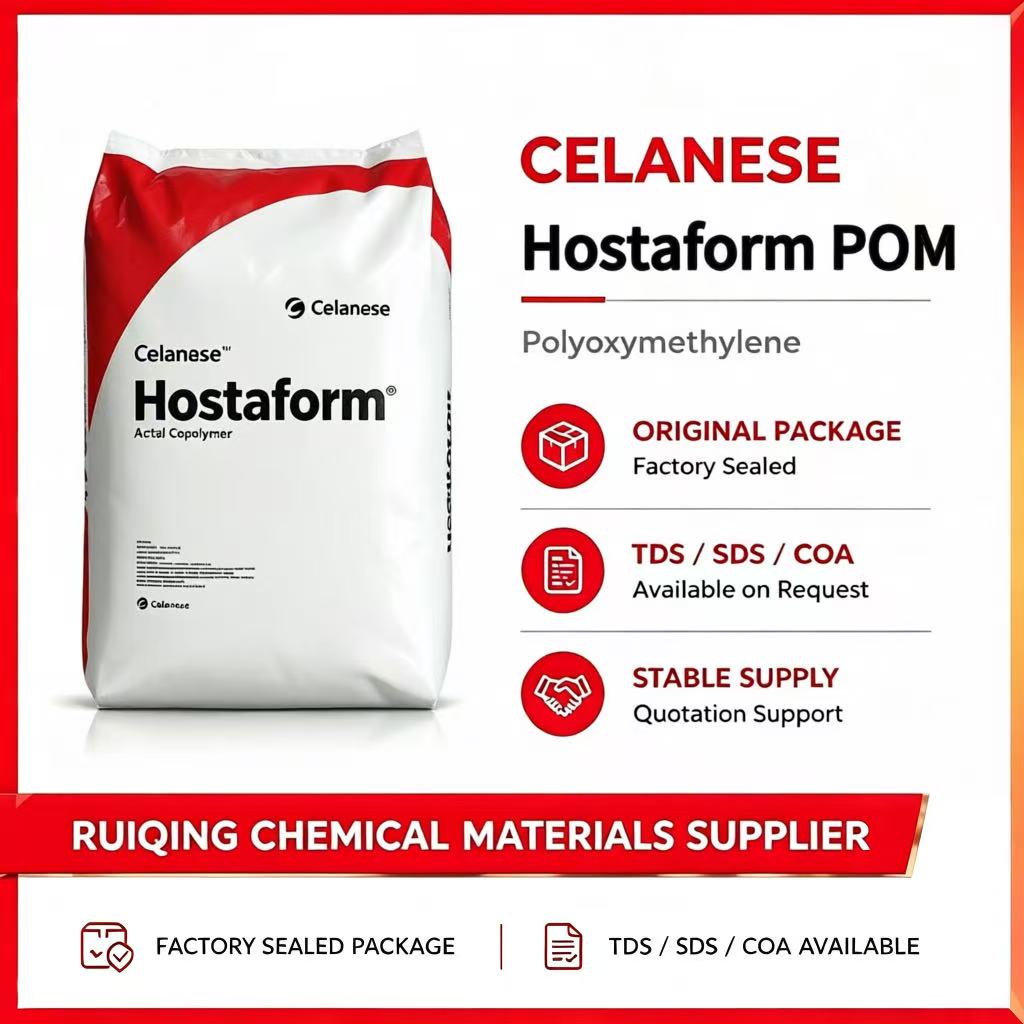
Hostaform C 9021 GV1/10 is a 10% glass fiber reinforced POM-C (Polyoxymethylene Copolymer) injection molding material, genuinely manufactured by Celanese and imported as original product. We supply this grade as an authorized distributor / trader, ensuring full traceability and access to official Celanese technical documentation.
This grade is specifically formulated with approximately 10% glass fiber reinforcement, delivering significantly higher strength, rigidity, and hardness compared to unreinforced POM grades.
The “GV1/10” designation indicates glass fiber reinforcement at 10% loading, which provides excellent load-bearing capacity, reduced thermal expansion, and low mold shrinkage.
It retains the chemical resistance and low friction properties of POM-C while offering superior mechanical performance. With regular stock availability, we support both trial orders and bulk shipments for automotive, industrial machinery, and high-load engineering applications.
Key Features
Hostaform C 9021 GV1/10 offers the following key performance benefits:
-
10% Glass Fiber Reinforced – Provides significantly increased tensile strength (90 MPa break stress), high rigidity (4800 MPa tensile modulus), and excellent dimensional stability.
-
High Strength & Rigidity – Delivers high strength and rigidity for molded parts requiring structural integrity and load-bearing capacity.
-
Excellent Thermal & Oxidative Stability – Offers high resistance to thermal and oxidative degradation, ensuring long-term performance in demanding environments.
-
Reduced Thermal Expansion & Shrinkage – Lower coefficient of thermal expansion and reduced mold shrinkage (parallel: 1.4%, normal: 1.1%) for precision components.
-
High Hardness – Ball indentation hardness of 170 MPa (H 358/30) for excellent wear and deformation resistance.
-
Excellent Electrical Properties – Retains POM’s superior electrical insulation with Comparative Tracking Index (CTI) up to 600V (PLC 0).
-
Regulatory Compliance – UL94 HB rated at 1.5mm and 3mm thickness. Meets RoHS and REACH requirements. Full SDS available upon request.
Typical Applications
| Industry | Typical Components & Considerations |
|---|---|
| Automotive | Structural housings, brackets, pulleys, sensor housings, throttle body components. FMVSS 302 compliant (<100 mm/min burning rate) |
| Industrial Machinery | High-load gears, pump housings, compressor components, valve bodies, structural frames. |
| Electrical & Electronics | Housings requiring high rigidity, connector blocks, relay housings,机电元件 (electromechanical components). CTI up to 600V for electrical safety. |
| Consumer Goods | Power tool housings, appliance structural parts, high-strength fastening components. |
| Aerospace / Transportation | Interior structural components, lightweight metal replacement parts. |
Explore our full range of engineering plastics solutions for more industry-specific case studies.
Material Advantages
The following material advantages make Hostaform C 9021 GV1/10 the preferred choice for structural and high-load applications:
-
10% Glass Fiber Reinforcement – Significantly improved stiffness and load-bearing capacity compared to standard POM-C, enabling metal replacement in many applications.
-
Superior Heat Resistance – Heat deflection temperature of 154°C at 1.8 MPa, allowing use in elevated temperature environments.
-
Reduced Shrinkage – Low mold shrinkage (parallel: 1.4%, normal: 1.1%) ensures consistent part dimensions and tight tolerances.
-
Excellent Creep Performance – Maintains dimensional stability under continuous stress (creep modulus: 3700 MPa at 1h, 2500 MPa at 1000h).
-
High Hardness – Ball indentation hardness of 170 MPa provides excellent wear and deformation resistance.
-
Cost-Effective Metal Replacement – Lightweight alternative to metal components while maintaining required structural performance.
-
Batch-to-Batch Consistency – Produced by Celanese under strict ISO standards, ensuring stable properties across all shipments.
-
Reliable Supply – We maintain inventory and a stable supply chain. For details on our supply capabilities, please see our company background .
Typical Properties (ISO Standards)
Typical properties of Hostaform C 9021 GV1/10 measured per ISO standards are listed below:
| Property | Test Standard / Condition | Typical Value | Unit |
|---|---|---|---|
| Density | ISO 1183 | 1.48 (black) | g/cm³ |
| Glass Fiber Content | – | ~10 | % |
| Melt Volume Flow Rate (MVR) | ISO 1133 (190°C/2.16kg) | 6 | cm³/10min |
| Tensile Modulus | ISO 527 | 4800 | MPa |
| Stress at Break | ISO 527 | 90 | MPa |
| Strain at Break | ISO 527 | 4 | % |
| Flexural Modulus | ISO 178 | 4500 | MPa |
| Flexural Strength | ISO 178 | 130 | MPa |
| Charpy Impact Strength (23°C) | ISO 179/1eU | 40 | kJ/m² |
| Charpy Impact Strength (-30°C) | ISO 179/1eU | 50 | kJ/m² |
| Charpy Notched Impact (23°C) | ISO 179/1eA | 6.5 | kJ/m² |
| Charpy Notched Impact (-30°C) | ISO 179/1eA | 6.5 | kJ/m² |
| Ball Indentation Hardness (H 358/30) | ISO 2039-1 | 170 | MPa |
| Melting Temperature | ISO 11357 (10°C/min) | 166 | °C |
| Heat Deflection Temp (1.8 MPa) | ISO 75-1/-2 | 154 | °C |
| Heat Deflection Temp (8.0 MPa) | ISO 75-1/-2 | 64 | °C |
| CTE, Parallel | ISO 11359-1/-2 | 80 | E-6/K |
| CTE, Normal | ISO 11359-1/-2 | 90 | E-6/K |
| Mold Shrinkage, Parallel | ISO 294-4 | 1.4 | % |
| Mold Shrinkage, Normal | ISO 294-4 | 1.1 | % |
| Comparative Tracking Index (CTI) | IEC 60112 | 600 | V |
| Flammability (1.5mm / 3mm) | UL94 | HB | – |
Important Notes on Typical Data:
Values listed are typical and based on Celanese official data sheets. They do not constitute a product specification.
Batch-to-batch variations may occur. Confirm properties with specific batch certificate for critical applications.
Final product performance depends on part design, molding conditions, and end-use environment.
Celanese original TDS remains the definitive reference. For detailed data, request the latest official TDS for Hostaform C 9021 GV1/10 from our team.
Processing Guidelines (Injection Molding)
The following injection molding parameters are recommended for Hostaform C 9021 GV1/10:
| Parameter | Recommended Setting & Critical Warnings |
|---|---|
| Pre-drying | 80–100°C for 2–4 hours. Required to prevent surface silver streaks. |
| Barrel Temperature | 190–230°C |
| Manifold / Hot Runner Temp | 190–210°C |
| Mold Temperature | 80–120°C (Higher improves crystallinity and surface quality) |
| Injection Pressure | Medium-to-high for thin-wall filling |
| Screw Speed | Medium speed to avoid excessive shear degradation and fiber breakage |
| Hold Pressure | As required |
| Back Pressure | As required |
| Melt Temperature | 190–230°C |
Critical Processing Warnings for Hostaform C 9021 GV1/10:
Thermal Degradation: POM can decompose at high temperatures, releasing formaldehyde gas. Ensure adequate ventilation and avoid prolonged residence time in the barrel.
Fiber Breakage: Avoid excessive screw speed or back pressure, as this can break glass fibers and reduce mechanical properties.
Material Purity: Strictly avoid contamination with other polymers, as this will compromise the glass-filled properties and mechanical performance.
Regrind/Recycled Material: Adding regrind is not recommended for this glass-filled grade. The glass fiber reinforcement is brittle and will degrade during re-processing, significantly compromising mechanical properties. If necessary, use a very small percentage (<10%) only with prior validation testing.
Mold Design: Consider the orientation of glass fibers in the mold design, as fiber orientation affects shrinkage and mechanical properties in the flow direction.
Moisture Content: Max. water content should be below 0.2%.
Storage: Store in a cool, dry place and use sealed, original packaging when possible.
Related Products
-
Explore Our Full POM Product Portfolio – Browse all POM copolymer and homopolymer grades we supply.
-
High-Performance POM-C Grades – Discover copolymer acetal options with enhanced impact and creep resistance.
-
POM-H / Homopolymer Alternatives – Compare high-stiffness homopolymer grades for precision mechanical parts.
-
Specialty POM Variants – Find glass-filled, wear-resistant, or UV-stabilized POM solutions.
-
POM for Structural & High-Load Applications – View grades specifically suited for reinforced and high-stiffness applications.
Technical Documents
We provide the following documentation to support your material selection and compliance needs:
| Document Type | Description & Source |
|---|---|
| Celanese Official TDS | Complete physical, thermal, and mechanical properties including glass fiber content. Issued by Celanese (original). |
| Celanese Official SDS | GHS-compliant chemical safety documentation. Issued by Celanese (original). |
| Celanese Distributor Authorization Certificate | Proof of our authorized distributor status with Celanese. Available upon request. |
| RoHS / REACH Compliance Declarations | Available upon request. |
| UL Yellow Card | UL94 HB rating documentation. |
| FMVSS 302 Compliance | Automotive flammability compliance (<100 mm/min). |
| Processing & Molding Guide | Detailed guidelines for optimal processing of glass-filled POM. |
To request any of the above documents, please contact us via:
Email:
ruiqingchem@gmail.comOnline form: Our contact page
We will respond within 1 working day. Please specify the document type and material grade.
External Reference
For additional information, please refer to the official Celanese Hostaform product portal and the latest material datasheets. Key technical standards referenced in this document include:
-
ISO 1183 – Density measurement
-
ISO 527 – Tensile properties
-
ISO 178 – Flexural properties
-
ISO 179 – Impact resistance
-
ISO 75 – Heat deflection temperature
-
ISO 1133 – Melt volume-flow rate
-
ISO 11357 – Melting temperature
-
ISO 294-4 – Mold shrinkage
-
ISO 2039-1 – Ball indentation hardness
-
IEC 60112 – Comparative Tracking Index (CTI)
-
UL94 – Flammability
-
FMVSS 302 – Automotive flammability
Our team can provide relevant excerpts from these standards for your reference.
FAQ
Q1: What is Hostaform C 9021 GV1/10 and what is it used for?
A: It is a 10% glass fiber reinforced POM-C (Polyoxymethylene Copolymer) injection molding material that offers significantly higher strength, rigidity, and heat resistance compared to unreinforced POM grades. It is widely used in automotive, industrial machinery, electrical and electronic components, and structural applications where high load-bearing capacity and precision are required. Typical parts include structural housings, high-load gears, pump housings, valve bodies, power tool components, and electromechanical components.
Q2: What does “GV1/10” mean in the grade name?
A: GV1 indicates Glass Fiber Reinforced Version 1, and /10 indicates approximately 10% glass fiber content by weight.
Q3: How does Hostaform C 9021 GV1/10 compare to standard POM-C?
A: The 10% glass fiber reinforcement provides significantly higher tensile modulus (4800 MPa vs ~3000 MPa), higher heat deflection temperature (154°C vs ~95°C), and lower mold shrinkage. However, it has lower elongation at break (4% vs >15%) and reduced impact strength compared to unreinforced grades.
Q4: What are the electrical properties of this material?
A: Hostaform C 9021 GV1/10 retains POM’s excellent electrical insulation properties, with a Comparative Tracking Index (CTI) up to 600V (PLC 0), making it suitable for electromechanical components and electrical applications.
Q5: Can I purchase this material and what is the lead time?
A: Yes, simply send your inquiry via our quick inquiry form or email us at ruiqingchem@gmail.com with your required quantity, application, and delivery address. Regular orders (1–5 tons) are typically delivered within 7–10 working days after order confirmation and payment receipt. Larger quantities or urgent orders can be discussed with our team.
Q6: What are the limitations of this material?
A: POM materials are not suitable for use with strong acids, strong oxidizing agents, or continuous high-temperature water (>80°C) . The glass-filled grade also has reduced impact strength compared to unreinforced grades and may be abrasive to molds and processing equipment. Please consult our technical team for specific application guidance.
CTA (Call to Action)
Ready to order Hostaform C 9021 GV1/10?
To provide you with an accurate quotation and technical support, please share the following information:
-
Estimated quantity (kg or tons)
-
Destination port or delivery address
-
Intended application and part design (e.g., wall thickness, dimensions, load requirements)
-
Key performance requirements (e.g., stiffness, heat resistance, tolerances)
-
Need for third-party testing or compliance documentation
Sample Policy:
-
Samples are provided for laboratory testing and validation only and are not for mass production.
-
International freight costs for samples are borne by the buyer.
-
If bulk material shows typical batch-to-batch variation from the sample, Celanese official TDS shall be the definitive reference standard.
Take action now:
-
Send Inquiry – Use our quick inquiry form
-
Email Us –
ruiqingchem@gmail.com -
Live Chat – Click the chat button at the bottom right to speak with our team
After-Sales Support
We provide the following after-sales support to ensure a smooth procurement experience:
| Service | Details |
|---|---|
| Quality Inspection Period | Any quality claims must be raised within 7 working days of delivery, with supporting data and photographic evidence. |
| Return / Exchange Policy | Defective material confirmed to be our responsibility will be replaced or refunded. Conditions apply – please refer to our full Terms & Conditions. |
| Logistics Damage | Any shipping damage must be reported to the carrier immediately upon receipt. We will assist with claim documentation. |
| Technical Support | Remote technical support is available. On-site molding troubleshooting assistance may be arranged upon request. |
| Export Documentation | We provide standard export documents (commercial invoice, packing list, bill of lading, COA). Additional certifications can be arranged upon request. |
Disclaimer
DISCLAIMER: All data provided is for reference based on manufacturer (Celanese) typical values. Our company is an authorized distributor/trader, not a manufacturer. Final product performance depends on part design, processing, and end-use. User is responsible for evaluating material suitability for their specific application. We shall not be liable for end-product performance or design failures. Please refer to the latest official Celanese TDS for definitive specifications.