描述
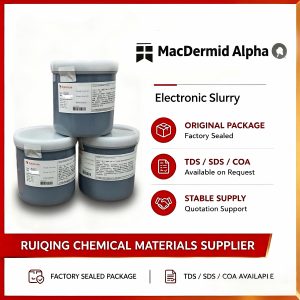
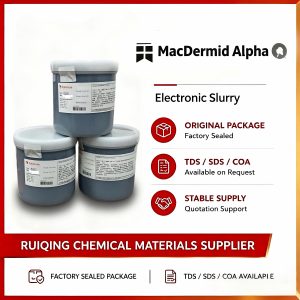
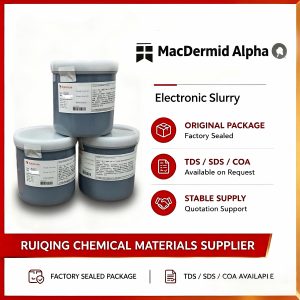
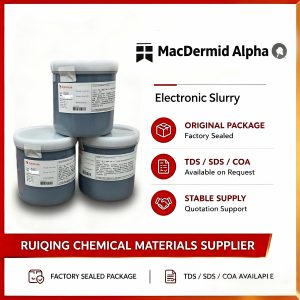
MacDermid Alpha Micromax 5065 Low Resistance Silver Conductor for RFID
Type: Silver Conductor Ink
Application: RFID, Printed Electronics
Solids: 68–71%
Shelf Life: 6 months
Micromax 5065 is a solvent-based silver conductor ink for printed electronics, particularly suited to RFID applications where low as-printed resistance is required. It uses a silver powder and resin system for high conductivity and outstanding RFID performance in both UHF and HF ranges.
Micromax 5065 from MacDermid Alpha is a solvent-based silver conductor developed for the printed electronics market. It is particularly well suited to RFID applications that require low as-printed resistance. The composition uses a silver powder and resin technology that delivers high conductivity, good printability, and high paste coverage. It is designed for semi-automatic and high volume reel-to-reel screen printing. Polyester, paper, and card are listed as compatible substrates.
The ink carries 68–71% solids and viscosity 10–20 Pa.s. Box-oven drying is 130°C for 10 minutes; reel-to-reel drying is 140°C for 2 minutes. Printed with a 200-mesh polyester screen, typical circuit line thickness is 10–12 μm. Pencil hardness reaches 5H on 125μm PET. Micromax 8260 is the listed solvent or thinner. Screen clean-up uses ethylene diacetate or methyl propasol acetate. Store sealed at 5–30°C; unopened shelf life is 6 months.
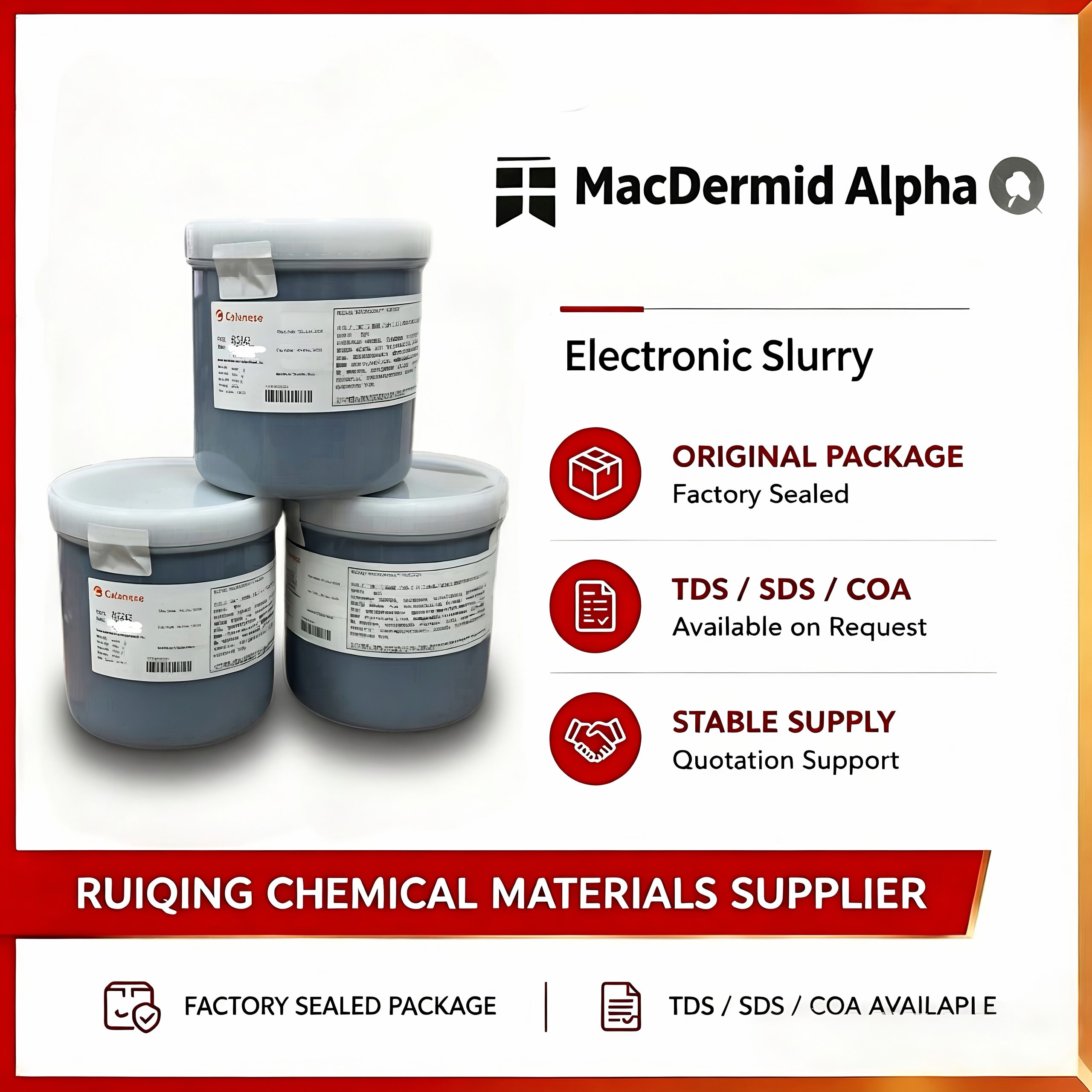
Genuine MacDermid Alpha Micromax Imported Stock & Technical Support
We hold regular stock of authentic MacDermid Alpha Micromax 5065 silver conductor ink. Original factory TDS and batch-specific COA are available on request for your RFID and printed electronics programs.
Request Sample, TDS & Quotation
Complete TDS, COA, and regulatory documentation available
Key Features of MacDermid Alpha Micromax 5065
- Silver conductor ink for RFID and printed electronics with low as-printed resistance
- Superior RFID performance in UHF and HF range (with low and high track thickness respectively)
- Outstanding electrical conductivity from silver powder and resin technology
- Good printability for semi-automatic and high volume reel-to-reel lines
- High paste coverage and excellent adhesion to various substrates
- Solids 68–71% for consistent deposition
- Viscosity 10–20 Pa.s for screen printing
- Screen build: 200-mesh polyester; line thickness 10–12 μm
- Box-oven dry: 130°C for 10 minutes; reel-to-reel dry: 140°C for 2 minutes
- Pencil hardness 5H (ASTM, on 125μm PET)
- Adheres to polyester, paper, and card
- Screen clean-up with ethylene diacetate or methyl propasol acetate
Primary Applications
- RFID antennas — UHF and HF inlays with low as-printed resistance
- Printed electronics — solvent-based silver traces on flexible substrates
- Membrane switch conductors — per TDS application field
- High volume production — reel-to-reel and semi-automatic printing
Full Technical Specifications
| Property | Typical Value | TDS Reference |
| Product Type | Silver conductor ink | TDS: Silver Conductor |
| Application | Membrane switch conductor | TDS: Membrane switch conductor |
| Solvent or Thinner | Micromax 8260 | TDS: Micromax 8260 |
| Solid Content | 68 to 71 % | TDS: 68 to 71 % |
| Viscosity | 10 to 20 Pa.s | TDS: Brookfield 0.5xRVT, spindle #14, 10 rpm |
| Substrate Compatibility | Polyester, paper, card | TDS: Polyester, paper, card |
| Screen Types | Polyester, stainless steel | TDS: Polyester, stainless steel |
| Printing Methods | Reel-to-reel, semi-automatic, manual | TDS: Reel-to-reel, semi-automatic, manual |
| Typical Circuit Line Thickness | 10 to 12 μm | TDS: 200-mesh polyester screen |
| Drying (Box Oven) | 130 °C for 10 minutes | TDS: 130°C for 10 min |
| Drying (Reel-to-Reel) | 140 °C for 2 minutes | TDS: 140°C for 2 min |
| Abrasion Resistance, Pencil Hardness | 5H | TDS: ASTM, printed on 125μm PET film |
| Clean-up Solvent | Ethylene diacetate or Methyl propasol acetate | TDS: Ethylene diacetate or Methyl propasol acetate |
| Shelf Life | 6 months | TDS: 6 months |
| Storage Temperature | 5 – 30 °C | TDS: 5°C – 30°C |
Note: All listed values are typical and may vary by batch. Values based on MacDermid Alpha official TDS. Independent qualification testing is required prior to production use.
Recommended Processing Conditions
| Parameter | Recommended Value | TDS Reference |
| Mixing Prior to Use | Thoroughly mix to redisperse solids | TDS: thoroughly mix |
| Screen Mesh | 200-mesh polyester for typical line thickness | TDS: 200-mesh polyester |
| Printing Methods | Reel-to-reel, semi-automatic, manual | TDS: Reel-to-reel, semi-automatic, manual |
| Drying (Box Oven) | 130°C for 10 minutes in a well-ventilated box oven | TDS: 130°C for 10 min |
| Drying (Reel-to-Reel) | 140°C for 2 minutes; optimize airflow for full solvent removal | TDS: 140°C for 2 min |
| Clean-up Solvent | Ethylene diacetate or Methyl propasol acetate | TDS: Ethylene diacetate or Methyl propasol acetate |
| Thinner | Micromax 8260 | TDS: Micromax 8260 |
Handling and Storage Recommendations
| Storage Rules | Store tightly sealed in a clean, stable environment at 5-30°C. | TDS: 5°C – 30°C |
| Shelf Life | 6 months in unopened containers from date of shipment. | TDS: 6 months |
| Pre-use Preparation | Thoroughly mix prior to use. Some settling of solids may occur during storage. | TDS: thoroughly mix |
| Transportation | Under normal shipping conditions, no temperature control is expected. For extended transport periods, confirm product suitability. | TDS: normal shipping conditions |
Official Technical Documentation
| Document Type | Document Introduction | Document Request |
| TDS | MacDermid Alpha Micromax 5065 original factory technical data sheet | Request TDS |
| COA | Batch-specific certificate of analysis | Request COA |
| SDS | Safety Data Sheet for handling and storage | Request SDS |
Frequently Asked Questions
Why is 5065 suitable for RFID antennas?
The TDS states that 5065 is particularly well suited to RFID applications where low as-printed resistance is required. It offers superior RFID performance in UHF and HF range, with low and high track thickness respectively.
Can 5065 run on reel-to-reel equipment?
Yes. The ink was designed for semi-automatic or high volume reel-to-reel screen printing. Reel-to-reel drying is 140°C for 2 minutes.
What line thickness can be printed with 5065?
Using a 200-mesh polyester screen, typical circuit line thickness is 10–12 μm.
How hard is the cured 5065 film?
Pencil hardness is 5H by ASTM, measured on 125μm PET film. This reflects the abrasion resistance of the printed silver layer.
What thinner should be used with 5065?
Micromax 8260 is the listed solvent or thinner. Using the recommended thinner helps keep viscosity and print behavior consistent.
Which substrates work with 5065?
Polyester, paper, and card are listed as compatible substrates. The typical physical properties in the TDS were measured on 125μm PET film.
How should opened containers of 5065 be stored?
Keep containers tightly sealed at 5–30°C in a clean, stable environment. Unopened shelf life is 6 months from shipment. Some settling may occur, so mix thoroughly before reuse.
Get MacDermid Alpha Micromax 5065 Bulk Pricing and Technical Support
We supply authentic MacDermid Alpha Micromax 5065 silver conductor ink for RFID and printed electronics programs. Contact our team for bulk quotations, sample availability, technical documentation, and application support.
Inquire Bulk Price & Technical Support
Disclaimer: All technical data on this page are for general guidance only and are not product specifications. Buyers must carry out independent trials and verify suitability before bulk ordering. Actual values may vary between production lots.