描述
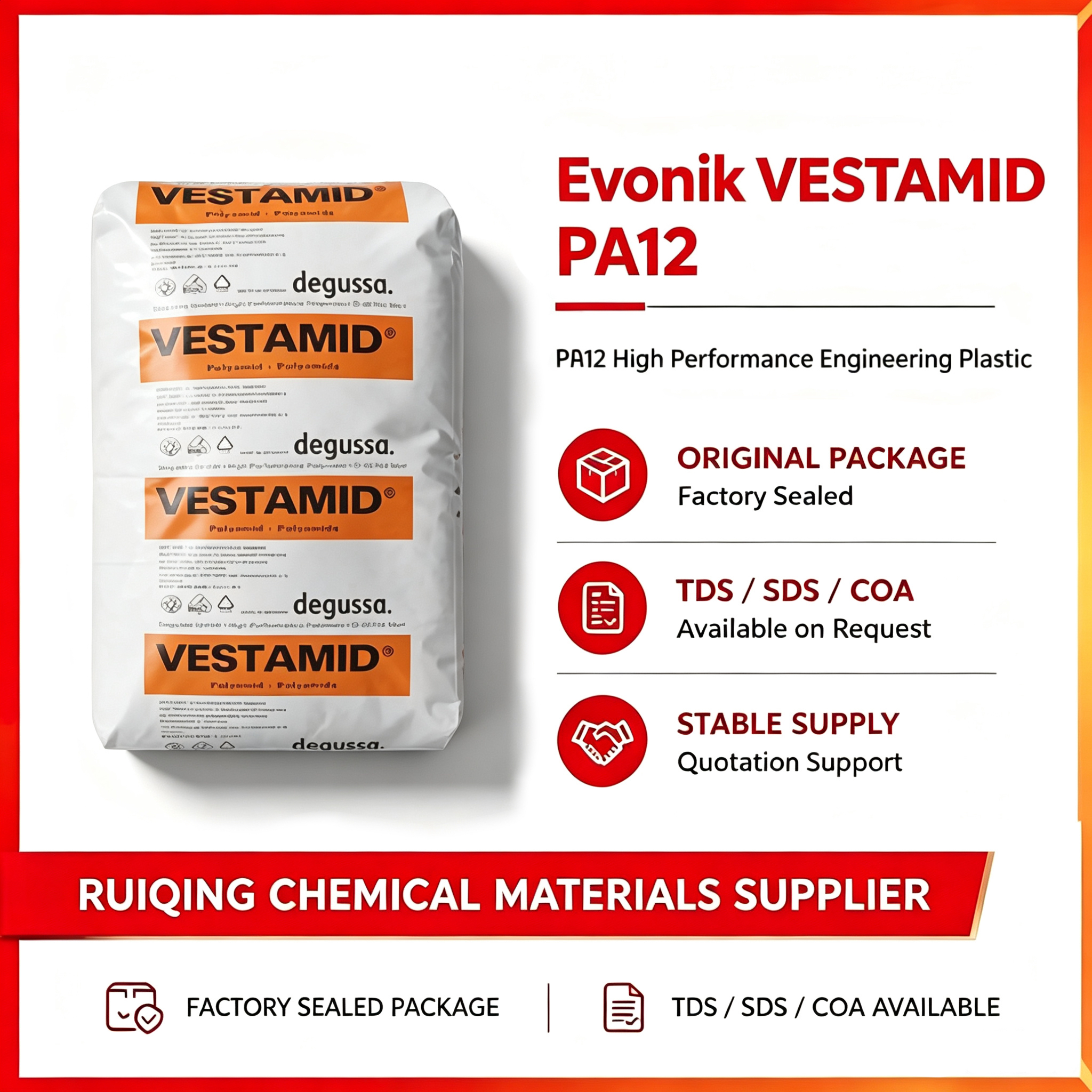
VESTAMID X7297 BK 9.7507 is a high-viscosity, plasticized, impact-modified, heat- and light-stabilized polyamide 12 compound from Evonik Operations GmbH developed for the extrusion of flexible tubing and hose, especially for demanding automotive applications.
The most important distinction of this grade is its strong positioning in multilayer automotive tubing systems. While several VESTAMID PA12 grades are used in monowall flexible tubing, VESTAMID X7297 BK 9.7507 has a long history as a PA12 layer in multilayer fuel-line constructions designed to reduce fuel permeation while retaining PA12 flexibility, low-temperature toughness and processing reliability.
Evonik’s historical product information specifically associates X7297 with multilayer tubing concepts including MLT 4300.1, 4500.1, 4540.1, 7000.1, 7040.1 and 7440.1. The grade has also been recommended where excellent bonding is required with modified ETFE and with VESTAMID SX8002 PA612 in multilayer structures.
This multilayer compatibility is commercially important. Modern automotive fuel systems frequently combine several polymers so that each layer performs a specific function. A PA12 outer layer can provide impact strength, abrasion resistance, flexibility and weather resistance, while an inner barrier layer can reduce fuel permeation.
Evonik’s current fuel-line technology continues to emphasize multilayer tubing because multi-layer structures can reduce hydrocarbon permeation by approximately one to two orders of magnitude compared with monowall tubing, depending on the system design.
VESTAMID X7297 BK 9.7507 provides the mechanical PA12 performance needed around those barrier layers. Current Evonik-derived data describes the material as easy to process with high impact strength at low temperature.
The grade is black, semi-crystalline and unfilled. It contains plasticizer, impact modifier, heat stabilizer and light/weathering stabilizer.
Its low moisture sensitivity is another important advantage. Current grade-specific data lists approximately 1.4% water absorption and 0.8% humidity absorption, which is low compared with many shorter-chain polyamides.
Current rheological data gives an MVR of approximately 13 cm³/10 min at 230°C / 5 kg, confirming the high-viscosity extrusion character of the grade.
Mechanical properties are tailored for flexible line systems. The dry tensile modulus is approximately 390 MPa, yield stress approximately 26 MPa, and yield strain approximately 37%. Nominal strain at break is greater than 50% in the current ISO dataset, while legacy product data for this grade has reported elongation above 200% under older test conditions.
Low-temperature impact performance remains a key strength. Current unnotched Charpy specimens show no break at both 23°C and -30°C, while notched Charpy is approximately 122 kJ/m² dry at 23°C and 6 kJ/m² dry at -30°C.
The grade melts at approximately 171°C and provides a dry HDT of approximately 51°C at 1.80 MPa and 135°C at 0.45 MPa.
For more PA12 products, visit our PA12 Polyamide 12 Product Category →.
For manufacturer information about multilayer automotive tubing, visit the Official Evonik VESTAMID Fuel-Line Systems Page →.
Key Features of VESTAMID X7297 BK 9.7507
| Feature | Engineering Benefit |
|---|---|
| High Viscosity | Provides stable melt behavior for tube and multilayer extrusion |
| Plasticized PA12 | Supports flexible tubing and tight routing |
| Impact Modified | Improves resistance to shock and cold-weather damage |
| Heat Stabilized | Supports long-term automotive line applications |
| Light / Weathering Stabilized | Improves outdoor and under-vehicle durability |
| Excellent Low-Temperature Toughness | Unnotched Charpy shows no break at -30°C |
| Multilayer Tubing Compatibility | Long-standing use in automotive multilayer line structures |
| Bonding with Modified ETFE | Supports selected low-permeation multilayer fuel-line designs |
| Bonding with VESTAMID SX8002 | Useful in PA12/PA612 multilayer structures |
| Low Moisture Absorption | Helps maintain dimensions and flexibility under humidity changes |
| Good Chemical Resistance | Suitable for automotive fuel and fluid environments |
| Low Coefficient of Friction | Supports assembly, routing and dynamic contact |
| Easy Processing | Evonik specifically describes optimized processing behavior |
The strongest reason to specify VESTAMID X7297 BK 9.7507 is its combination of flexible PA12 performance and suitability for multilayer automotive tubing.
Typical Applications for VESTAMID X7297 BK 9.7507
VESTAMID X7297 BK 9.7507 is primarily intended for automotive tube and hose extrusion.
| Application Area | Typical Use |
|---|---|
| Multilayer Fuel Lines | PA12 structural or outer layer in low-permeation fuel-line systems |
| Gasoline Fuel Lines | Flexible PA12-based multilayer tubing after full system qualification |
| Diesel Fuel Lines | Fuel-resistant multilayer or monowall tubing |
| Automotive Flexible Tubing | General fluid-line applications |
| Fuel Return Lines | Flexible return-line constructions |
| Vapor / Vent Lines | Selected multilayer systems requiring permeation control |
| Modified ETFE Multilayer Tubing | PA12 layer designed for strong interlayer compatibility |
| PA12 / PA612 Multilayer Tubing | Systems incorporating VESTAMID SX8002 |
| Industrial Flexible Hose | Chemical-resistant technical tubing |
| Profile Extrusion | Flexible technical profiles |
The grade is especially attractive when the design needs PA12 as a mechanically durable outer layer around a lower-permeation barrier structure.
Typical Properties of VESTAMID X7297 BK 9.7507
Physical & Rheological Properties
| Property | Typical Value | Test Method |
|---|---|---|
| Density | 1.02 g/cm³ | ISO 1183 |
| Water Absorption | 1.4% | Similar to ISO 62 |
| Humidity Absorption | 0.8% | Similar to ISO 62 |
| MVR | 13 cm³/10 min | ISO 1133 |
| MVR Condition | 230°C / 5 kg | ISO 1133 |
| Molding Shrinkage – Parallel | 0.9% | ISO 294-4 / 2577 |
| Molding Shrinkage – Normal | 1.3% | ISO 294-4 / 2577 |
| Structure | Semi-crystalline | Manufacturer information |
| Color | Black | Manufacturer information |
The MVR of 13 cm³/10 min at 230°C / 5 kg should always be quoted together with the test condition. MVR values measured at different temperatures or loads cannot be compared directly.
Mechanical Properties
| Property | Dry / Conditioned | Test Method |
|---|---|---|
| Tensile Modulus | 390 / 390 MPa | ISO 527 |
| Yield Stress | 26 / 25 MPa | ISO 527 |
| Yield Strain | 37 / 37% | ISO 527 |
| Nominal Strain at Break | >50 / >50% | ISO 527 |
| Charpy Impact, 23°C | No Break / No Break | ISO 179/1eU |
| Charpy Impact, -30°C | No Break / No Break | ISO 179/1eU |
| Charpy Notched Impact, 23°C | 122 / 130 kJ/m² | ISO 179/1eA |
| Charpy Notched Impact, -30°C | 6 / 8 kJ/m² | ISO 179/1eA |
Older Evonik-derived tubing information also reports approximately 400 MPa tensile modulus, 27 MPa yield stress, elongation above 200%, and no-break low-temperature impact in tubing-related testing. The current ISO dataset above should be preferred for current product-page property tables.
Thermal Properties
| Property | Typical Value | Test Method |
|---|---|---|
| Melting Temperature | 171°C | ISO 11357-1/-3 |
| Glass Transition Temperature | 41°C | ISO 11357-1/-2 |
| HDT @ 1.80 MPa | 51°C | ISO 75-1/-2 |
| HDT @ 0.45 MPa | 135°C | ISO 75-1/-2 |
| Vicat Softening Temperature B | 125°C | ISO 306 |
These standardized thermal values are resin properties. Maximum continuous fluid-line service temperature must be established from the complete tube construction, fluid, pressure and OEM specification.
Electrical Properties
| Property | Dry / Conditioned | Test Method |
|---|---|---|
| Relative Permittivity, 100 Hz | 11.4 / 13.7 | IEC 62631-2-1 |
| Relative Permittivity, 1 MHz | 3.6 / 3.8 | IEC 62631-2-1 |
| Dissipation Factor, 100 Hz | 0.185 / 0.226 | IEC 62631-2-1 |
| Dissipation Factor, 1 MHz | 0.104 / 0.157 | IEC 62631-2-1 |
| Volume Resistivity | 3.3 × 10⁹ / 6.3 × 10⁸ Ω·m | IEC 62631-3-1 |
| Electric Strength | 36 / 36 kV/mm | IEC 60243-1 |
Electrical properties are secondary to the fuel-line positioning but can be relevant in routed line systems near vehicle electronics.
Multilayer Fuel-Line Advantages
The most important application context for VESTAMID X7297 BK 9.7507 is multilayer tubing.
Evonik explains that multilayer automotive fuel lines were developed primarily to meet increasingly strict hydrocarbon-emission requirements. By combining PA12 with dedicated barrier polymers, permeation can be reduced substantially without giving up the mechanical advantages of PA12.
Typical multilayer design goals include:
- Reduced gasoline and ethanol-fuel permeation
- Excellent cold-impact resistance
- High flexibility
- Reliable interlayer adhesion
- Stable extrusion at automotive production speeds
- Low extractables in advanced systems
- Compatibility with conductive inner layers where required
- Long-term resistance to automotive fuels
Historical X7297 product literature highlights excellent bonding with modified ETFE and VESTAMID SX8002, making the grade particularly relevant where those materials form adjacent layers.
In multilayer constructions, the performance of the finished tube cannot be predicted solely from the property table of the individual X7297 compound. Layer sequence, thickness, adhesion, barrier resin, extrusion conditions, thermoforming and fitting design all affect final performance.
Why Choose VESTAMID X7297 BK 9.7507?
The main reason to choose VESTAMID X7297 BK 9.7507 is its suitability for flexible multilayer automotive tubing, particularly when interlayer compatibility is important.
A standard flexible PA12 can provide excellent toughness and chemical resistance, but multilayer fuel systems introduce another requirement: the layers must remain reliably bonded during extrusion, thermoforming, vehicle assembly and long-term fuel exposure.
X7297 has been used specifically in this type of construction.
Its high viscosity also supports stable extrusion and layer-thickness control. In a multilayer die, each polymer must flow consistently so that thin functional layers remain continuous.
The plasticized formulation provides flexibility for vehicle routing, while impact modification preserves toughness at low temperature.
Low moisture absorption reduces dimensional and mechanical changes caused by humidity.
The black heat- and light-stabilized formulation also supports exposed and underbody routing.
Evonik’s current fuel-line portfolio continues to emphasize PA12 multilayer systems for controlling permeation of ethanol-containing fuels while maintaining cold-impact performance.
For automotive suppliers designing fuel-line MLT structures using PA12, PA612, modified fluoropolymers or barrier layers, VESTAMID X7297 BK 9.7507 is therefore more application-specific than a general-purpose flexible PA12.
Processing Guidelines for VESTAMID X7297 BK 9.7507
VESTAMID X7297 BK 9.7507 is designed for:
- Pipe / tube extrusion
- Multilayer coextrusion
- Other extrusion
Current grade-specific standardized test conditions include:
| Processing Parameter | Published Value |
|---|---|
| MVR Test Temperature | 230°C |
| MVR Test Load | 5 kg |
| ISO Test Melt Temperature | 220°C |
| ISO Test Mold Temperature | 60°C |
| ISO Test Injection Velocity | 200 mm/s |
The 220°C / 60°C / 200 mm/s values are ISO test-specimen conditions, not a universal multilayer tube extrusion recipe.
For multilayer tubing, processors should optimize:
- Individual extruder-zone temperatures
- Adapter temperatures
- Multilayer die temperature
- Melt-pressure balance between layers
- Layer-thickness distribution
- Screw speed
- Line speed
- Draw-down ratio
- Calibration conditions
- Cooling-water temperature
- Interlayer adhesion
- Surface finish
- Ovality
- Final tube elongation
- Cold-impact performance
- Fuel permeation
The exact processing window should be established for the specific multilayer system because modified ETFE, PA612, EVOH or other barrier layers may require different thermal conditions.
Evonik supplies the grade ready for processing in moisture-proof bags. Material exposed to ambient moisture should be handled according to the latest VESTAMID PA12 drying recommendations before extrusion.
VESTAMID X7297 BK 9.7507 vs. VESTAMID X7293 BK 9.7507
| Feature | VESTAMID X7297 BK 9.7507 | VESTAMID X7293 BK 9.7507 |
|---|---|---|
| Base Polymer | Plasticized impact-modified PA12 | Plasticized impact-modified PA12 |
| Color | Black | Black |
| Viscosity | High | High |
| Main Application | Multilayer automotive tubing / fuel lines | Flexible automotive tubing and hose |
| Multilayer Positioning | Strong / specific | General flexible tubing |
| Bonding to Modified ETFE | Specifically recommended in legacy Evonik data | Not the defining feature |
| Bonding to VESTAMID SX8002 | Specifically recommended | Not the defining feature |
| MVR | 13 cm³/10 min @230°C/5 kg | 53 cm³/10 min @275°C/5 kg |
| Tensile Modulus | 390 MPa | Approx. 410 MPa |
| Melting Temperature | 171°C | Approx. 172°C |
| Main Selection Reason | Multilayer compatibility and bonding | General flexible-tubing performance |
The MVR values above use different test temperatures, so they must not be interpreted as a direct numerical comparison of flow.
Choose VESTAMID X7297 BK 9.7507 when the project specifically involves multilayer fuel-line architecture or bonding with adjacent modified ETFE / PA612 layers.
Choose VESTAMID X7293 BK 9.7507 when the priority is a proven flexible automotive tubing compound without the same multilayer-bonding emphasis.
Related Products
VESTAMID X7293 BK 9.7507 – High-viscosity plasticized impact-modified PA12 for flexible automotive tubing and hose.
VESTAMID SX8002 – PA612 used in selected multilayer automotive tubing systems together with X7297.
VESTAMID X7393 BK 9.7507 – Semi-rigid PA12 tubing grade with higher stiffness and burst-pressure positioning.
View More PA12 Polyamide 12 Materials →
For multilayer automotive tubing programs, VESTAMID X7297 BK 9.7507 should be evaluated together with the adjacent barrier and bonding layers rather than as an isolated resin. VESTAMID X7297 BK 9.7507 is especially relevant when the system requires flexible PA12 performance together with proven multilayer compatibility.
Technical Documents for VESTAMID X7297 BK 9.7507
| Document Type | Description |
|---|---|
| TDS | Current physical, rheological, mechanical, thermal and electrical data |
| SDS | Safety Data Sheet |
| Fuel-Line Systems Guide | Evonik monowall and multilayer automotive fuel-line information |
| Multilayer Tubing Information | Layer architecture, adhesion and barrier-system context |
| Processing Guide | PA12 extrusion and moisture-handling recommendations |
| COA | Batch-specific quality information where available |
Need technical documents for VESTAMID X7297 BK 9.7507?
📧 Email: ruiqingchem@gmail.com
📝 Online form: Contact Us →
Please state VESTAMID X7297 BK 9.7507 and the required document type when submitting your inquiry.
FAQ About VESTAMID X7297 BK 9.7507
Q1: What is VESTAMID X7297 BK 9.7507?
VESTAMID X7297 BK 9.7507 is a high-viscosity, plasticized, impact-modified, heat- and light-stabilized PA12 from Evonik for flexible automotive tube and multilayer fuel-line extrusion.
Q2: Is VESTAMID X7297 BK 9.7507 used for multilayer fuel lines?
Yes. Historical Evonik product information specifically associates X7297 with multiple MLT fuel-line structures and highlights its interlayer-bonding capability.
Q3: Can VESTAMID X7297 BK 9.7507 bond to modified ETFE?
Yes. Evonik-derived X7297 technical information specifically recommends the grade to obtain excellent bonding with modified ETFE.
Q4: Can it bond to VESTAMID SX8002?
Yes. X7297 has also been recommended for excellent bonding with VESTAMID SX8002 PA612 in multilayer tubing systems.
Q5: What is the density?
The current typical density is approximately 1.02 g/cm³.
Q6: What is the MVR?
Current grade-specific MVR is approximately 13 cm³/10 min at 230°C / 5 kg.
Q7: How does VESTAMID X7297 BK 9.7507 perform at low temperature?
Current ISO data reports no break in unnotched Charpy testing at -30°C. Notched Charpy is approximately 6 kJ/m² dry and 8 kJ/m² conditioned at -30°C.
Q8: What is the melting temperature?
The current melting temperature is approximately 171°C.
Q9: What is the difference between VESTAMID X7297 BK 9.7507 and X7293 BK 9.7507?
Both are flexible, plasticized, impact-modified PA12 grades. X7297 has stronger historical positioning for multilayer tubing and adhesion to modified ETFE / VESTAMID SX8002, while X7293 is primarily positioned as a general flexible automotive tubing compound.
Q10: Can you provide VESTAMID X7297 BK 9.7507 TDS and SDS?
Yes. Please request the latest documents through our Contact Page → or email ruiqingchem@gmail.com.
Request VESTAMID X7297 BK 9.7507 Price & Technical Support
For pricing, availability, technical documents or application support for VESTAMID X7297 BK 9.7507, please provide:
- Required quantity
- Destination country or port
- Monowall or multilayer tubing application
- Fuel type: gasoline, ethanol blend, diesel or other
- Multilayer structure
- Adjacent polymer layers
- Modified ETFE requirement
- VESTAMID SX8002 requirement
- Tube outside diameter
- Wall thickness
- Individual layer thicknesses
- Minimum cold-impact temperature
- Fuel permeation target
- Working pressure
- Continuous and peak temperature
- Extrusion-line information
- TDS, SDS or COA requirement
- Sample requirement, if applicable
📧 Email: ruiqingchem@gmail.com
📝 Send Inquiry →