描述
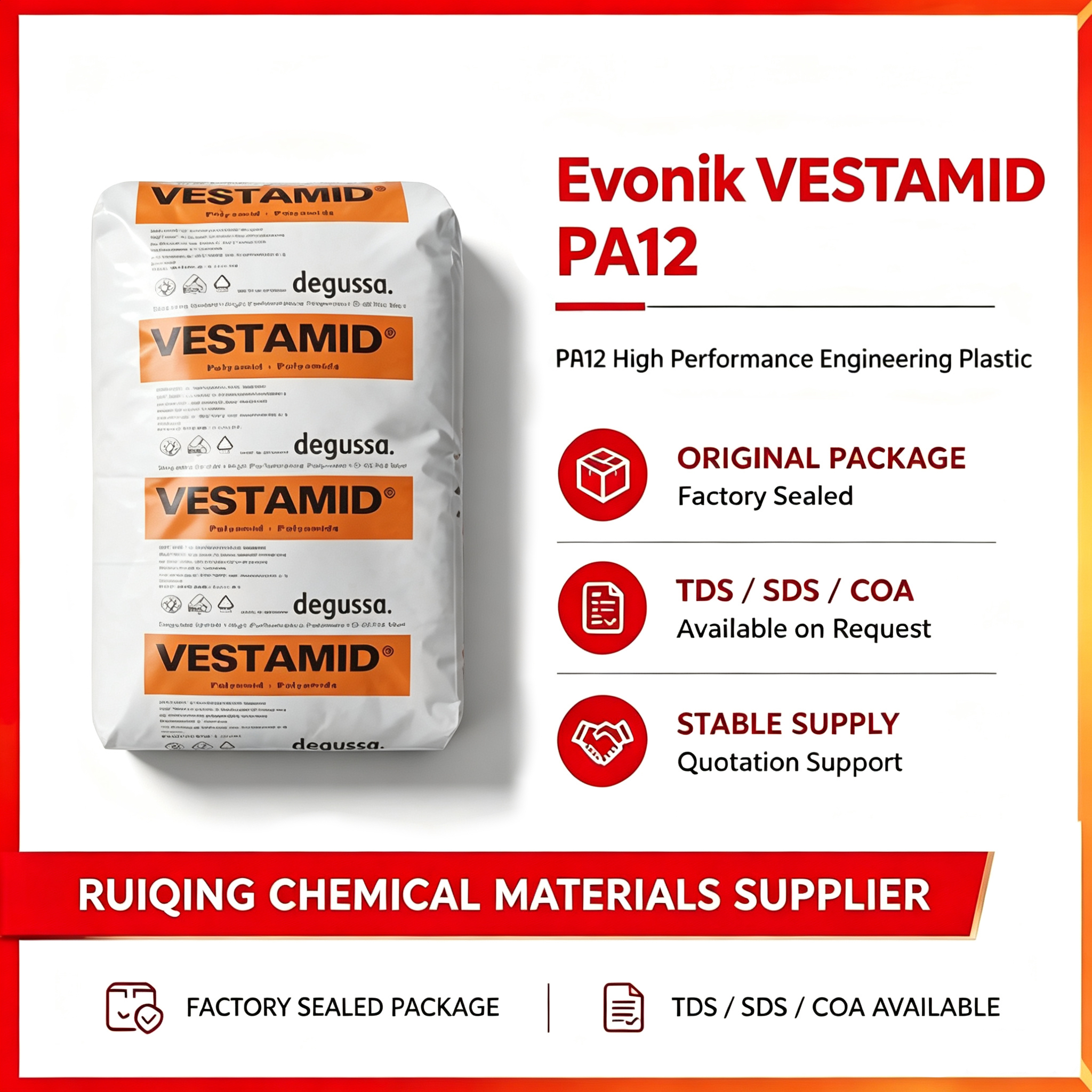
VESTAMID LXM8 is a medium-viscosity, glass-fiber-reinforced and heat-stabilized polyamide 12 compound from Evonik Operations GmbH developed for sports and lifestyle injection-molding applications, especially sports shoe soles.
The grade contains approximately 8% glass fiber, giving it a higher stiffness level than VESTAMID LXM4 while preserving the impact resistance, low moisture sensitivity and fatigue performance associated with PA12.
Evonik specifically highlights very good fatigue performance and excellent bonding ability to TPU as important features of VESTAMID LXM8. This is highly relevant for modern sports footwear, where a semi-rigid PA12 structural element is often combined with softer TPU sections.
The material is semi-crystalline and supplied in natural color with a translucent optical appearance. It is designed for injection molding and offers an efficient processing profile suitable for high-volume molded sports components.
PA12 is particularly valuable in footwear because its moisture uptake is much lower than that of many shorter-chain polyamides. Current grade-specific data lists approximately 0.25% water absorption and 0.14% moisture absorption, helping molded parts retain dimensions and mechanical performance under changing ambient humidity.
The 8% glass-fiber content increases stiffness without pushing the material into the behavior of a heavily reinforced structural compound. Typical tensile modulus is approximately 2.27 GPa, while flexural modulus is approximately 1.89 GPa.
At the same time, VESTAMID LXM8 retains meaningful ductility. Typical elongation at break is approximately 16%, and the grade maintains strong impact performance at both room and sub-zero temperatures.
Typical unnotched Charpy impact strength is approximately 90 kJ/m² at 23°C and 95 kJ/m² at -30°C. Typical notched impact strength is approximately 11 kJ/m² at 23°C and 6 kJ/m² at -30°C.
Current grade data also shows balanced molding shrinkage of approximately 0.6% in the flow direction and 0.4% transverse to flow, supporting good dimensional control in injection-molded footwear components.
The material is supplied as cylindrical granules in moisture-barrier packaging. Evonik states that unopened, undamaged packages have a shelf life of at least two years when stored dry at temperatures not exceeding 30°C.
For additional PA12 grades, visit our PA12 Polyamide 12 Product Category →.
For official manufacturer information on VESTAMID materials for sports applications, visit the Evonik VESTAMID Sports Page →.
Key Features of VESTAMID LXM8
| Feature | Benefit |
|---|---|
| 8% Glass Fiber Reinforcement | Provides higher stiffness than lightly reinforced PA12 such as LXM4 |
| Medium Viscosity | Supports stable injection molding and practical flow behavior |
| Sports & Lifestyle Grade | Developed for demanding visible and functional sports components |
| Sports Shoe Sole Focus | Suitable for molded sole structures and footwear elements |
| Excellent TPU Bonding | Supports hybrid footwear construction with TPU |
| Good Fatigue Resistance | Useful for components subjected to repeated flexing |
| High Impact Strength | Retains toughness at room and sub-zero temperatures |
| Low Moisture Absorption | Helps maintain dimensions and properties as humidity changes |
| Heat Stabilized | Supports stable long-term performance |
| UV / Light / Weathering Stabilized | Suitable for visible sports and lifestyle products |
| Low Coefficient of Friction | Useful where surfaces experience repeated sliding or contact |
| Translucent Natural Appearance | Supports aesthetic design and downstream coloration |
Typical Applications for VESTAMID LXM8
VESTAMID LXM8 is mainly used in sports and lifestyle injection-molded components.
| Application Area | Typical Use |
|---|---|
| Sports Shoe Soles | Reinforced PA12 sole components requiring stiffness and repeated-flex durability |
| Footwear Structural Inserts | Semi-rigid reinforcement elements bonded to TPU |
| TPU-Bonded Components | Hybrid parts combining PA12 and thermoplastic polyurethane |
| Sports Equipment Components | Lightweight molded parts requiring fatigue resistance |
| Wearable Technical Parts | Functional components requiring low water absorption |
| Lifestyle Products | Visible molded parts requiring dimensional stability and toughness |
| Thin or Extended Molded Features | Components requiring consistent mold filling and controlled shrinkage |
| General PA12-GF8 Injection-Molded Parts | Applications requiring more stiffness than unfilled or 4% GF PA12 |
Typical Properties of VESTAMID LXM8
Physical & Rheological Properties
| Property | Typical Value | Test Method |
|---|---|---|
| Density | 1.06 g/cm³ | ISO 1183 |
| Glass Fiber Content | 8% | Manufacturer / grade classification |
| Water Absorption | 0.25% | Similar to ISO 62 |
| Moisture Absorption | 0.14% | Similar to ISO 62 |
| Shore D Hardness | 75 | ISO 7619-1 |
| Molding Shrinkage – Flow | 0.6% | ISO 294-4 / 2577 |
| Molding Shrinkage – Transverse | 0.4% | ISO 294-4 / 2577 |
| Structure | Semi-crystalline | Manufacturer information |
| Optics | Translucent | Manufacturer information |
| Color | Natural Color | Manufacturer information |
Mechanical Properties
| Property | Typical Value | Test Method |
|---|---|---|
| Tensile Modulus | 2,270 MPa | ISO 527 |
| Tensile Strength at Break | 55 MPa | ISO 527 |
| Elongation at Break | 16% | ISO 527 |
| Flexural Modulus | 1,890 MPa | ISO 178 |
| Charpy Impact Strength, 23°C | 90 kJ/m² | ISO 179/1eU |
| Charpy Impact Strength, -30°C | 95 kJ/m² | ISO 179/1eU |
| Charpy Notched Impact, 23°C | 11 kJ/m² | ISO 179/1eA |
| Charpy Notched Impact, -30°C | 6 kJ/m² | ISO 179/1eA |
Thermal Properties
| Property | Typical Value | Test Method |
|---|---|---|
| Melting Temperature | 180°C | ISO 11357-1/-3 |
| Heat Stabilization | Yes | Manufacturer information |
| UV / Light / Weathering Stabilization | Yes | Manufacturer information |
Optical Properties
| Property | Typical Value | Test Method |
|---|---|---|
| Color L | 63.7 | CIE |
| Color a | -2.7 | CIE |
| Color b | 4.0 | CIE |
| Optics | Translucent | Manufacturer information |
Sustainability Data
| LCA Property | Published Value | Standard |
|---|---|---|
| LCA Certificate | VESTAMID CW modified GF | ISO 14040 / 14044 |
| LCA Certifier | TÜV Rheinland | ISO 14040 / 14044 |
| Blue Water Consumption | 237.7 kg | ISO 14040 / 14044 |
Why Choose VESTAMID LXM8?
The main reason to choose VESTAMID LXM8 is its balance of higher stiffness, impact resistance, fatigue performance and TPU bonding.
Sports footwear parts are exposed to repeated bending, shock and contact with softer elastomeric materials. A polymer that is too rigid may crack under repeated flexing, while a polymer that is too soft may not provide enough structural support.
The 8% glass-fiber reinforcement increases stiffness to approximately 2.27 GPa tensile modulus, giving designers more structural support than LXM4 while keeping the material much less heavily reinforced than conventional 15–50% glass-filled PA12 grades.
The approximately 16% elongation at break is especially important because it shows that the material retains useful ductility.
TPU bonding is another core differentiator. Modern footwear frequently combines hard and soft zones in one assembly. Evonik specifically identifies excellent bonding strength to TPU as a key feature of LXM8, making the grade highly suitable for this type of hybrid design.
Low water absorption also helps maintain fit and geometry. Humidity changes can strongly affect conventional nylons, but PA12 experiences far smaller dimensional shifts.
Finally, the grade is designed for efficient injection-molding cycle times, making it suitable not only for technical prototypes but also for commercial-scale footwear production.
Processing Guidelines for VESTAMID LXM8
VESTAMID LXM8 is intended for injection molding.
| Processing Parameter | Published Value |
|---|---|
| Primary Process | Injection Molding |
| Melt Temperature | 240°C |
| Mold Temperature | 60°C |
| Delivery Form | Cylindrical Pellets / Granules |
| Packaging | Moisture-Barrier Bags |
| Shelf Life | At least 2 years at ≤30°C in original undamaged packaging |
For production molding, evaluate melt temperature, mold temperature, injection speed, holding pressure, cooling time, gate position, flow length, wall thickness, fiber orientation and TPU bonding area.
Glass-fiber orientation can influence local stiffness and shrinkage, so gate design and flow direction should be considered during tool development.
Because many LXM8 applications involve bonding to TPU, the molding process and subsequent joining process should be evaluated as one complete material system.
VESTAMID LXM8 vs. VESTAMID LXM4
| Feature | VESTAMID LXM8 | VESTAMID LXM4 |
|---|---|---|
| Base Polymer | PA12 | PA12 |
| Glass Fiber | 8% | 4% |
| Density | 1.06 g/cm³ | 1.03 g/cm³ |
| Tensile Modulus | 2,270 MPa | 1,600 MPa |
| Flexural Modulus | 1,890 MPa | 1,320 MPa |
| Elongation at Break | 16% | Approx. 18.8% |
| 23°C Unnotched Charpy | 90 kJ/m² | Approx. 130 kJ/m² |
| -30°C Unnotched Charpy | 95 kJ/m² | Approx. 131 kJ/m² |
| Melting Temperature | 180°C | 180°C |
| TPU Bonding | Excellent | Good / excellent |
| Main Selection Reason | Higher stiffness and structural support | More ductility and impact performance |
Choose VESTAMID LXM8 when the footwear or sports component requires higher stiffness and reinforcement.
Choose VESTAMID LXM4 when lower density, more ductility and higher unnotched impact strength are preferred.
Related Products
VESTAMID LXM4 – 4% glass-fiber-reinforced PA12 for sports shoe soles requiring more ductility and high impact performance.
VESTAMID LX9012 T10 – Translucent PA12 for injection-molded sports shoe soles with good bonding and high flow.
VESTAMID LX9012 Bio30 – 30% bio-based PA12 for sustainable sports and lifestyle injection-molded applications.
View More PA12 Polyamide 12 Materials →
Technical Documents for VESTAMID LXM8
| Document Type | Description |
|---|---|
| TDS | Physical, mechanical, thermal, optical and processing data for LXM8 |
| SDS | Safety Data Sheet |
| COA | Batch-specific Certificate of Analysis where available |
| Processing Information | Injection-molding guidance for PA12-GF8 |
| Sports Application Support | Shoe-sole, fatigue and TPU-bonding evaluation |
| LCA Information | TÜV Rheinland-certified environmental data |
Need technical documents for VESTAMID LXM8?
📧 Email: ruiqingchem@gmail.com
📝 Online form: Contact Us →
FAQ About VESTAMID LXM8
Q1: What is VESTAMID LXM8?
VESTAMID LXM8 is a medium-viscosity, heat- and UV-stabilized PA12 compound from Evonik reinforced with approximately 8% glass fiber.
Q2: What is the main application of VESTAMID LXM8?
Its main positioning is sports and lifestyle injection molding, especially sports shoe soles requiring good fatigue performance and strong TPU bonding.
Q3: How much glass fiber does VESTAMID LXM8 contain?
The grade is classified as PA12-GF8, corresponding to approximately 8% glass fiber reinforcement.
Q4: What is the density of VESTAMID LXM8?
The typical density is approximately 1.06 g/cm³ according to ISO 1183.
Q5: What is the tensile modulus of VESTAMID LXM8?
The typical tensile modulus is approximately 2,270 MPa according to ISO 527.
Q6: What is the elongation at break?
Typical elongation at break is approximately 16%.
Q7: What is the impact strength of VESTAMID LXM8?
Typical unnotched Charpy impact strength is approximately 90 kJ/m² at 23°C and 95 kJ/m² at -30°C.
Q8: Is VESTAMID LXM8 suitable for bonding to TPU?
Yes. Evonik specifically identifies excellent bonding strength to TPU as one of the key properties of this grade.
Q9: What molding conditions are published?
Current grade-specific data lists approximately 240°C melt temperature and 60°C mold temperature.
Q10: What is the difference between VESTAMID LXM8 and LXM4?
LXM8 contains approximately 8% glass fiber and has higher stiffness. LXM4 contains approximately 4% glass fiber and offers a more ductile, lower-density balance with higher unnotched impact strength.
Request VESTAMID LXM8 Price & Technical Support
For pricing, availability, technical documents or grade-selection support for VESTAMID LXM8, please provide:
- Required quantity
- Destination country or port
- Sports shoe sole or other application
- Part dimensions and wall thickness
- Required stiffness and flexibility
- TPU grade to be bonded
- Fatigue requirement
- Minimum service temperature
- Appearance / translucency requirement
- Injection-molding machine information
- TDS, SDS or COA requirements
- Sample requirement, if applicable
📧 Email: ruiqingchem@gmail.com
📝 Send Inquiry →