描述
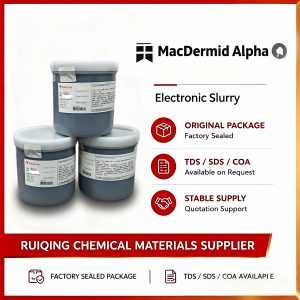
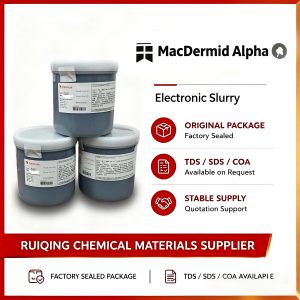
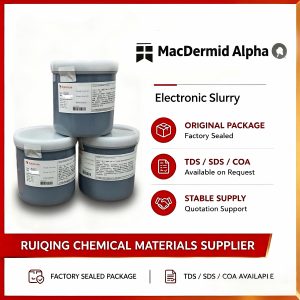
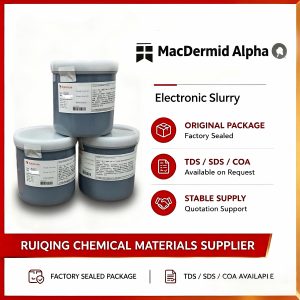
MacDermid Alpha Micromax 5890 Carbon-Containing Ag/AgCl Electrode Ink for High-Resolution Screen Printing
Type: Ag/AgCl Electrode Ink
Application: Electrochemical Sensors
Ag:AgCl: 3 / 1
Shelf Life: 6 months
Micromax 5890 is a solvent-based silver/silver chloride composition designed for screen printing onto polyester film, suitable as an electrode or reference counter electrode for electrochemical sensors. It contains carbon black and offers good adhesion, good abrasion resistance, high stability, fast drying, and low viscosity for good printing resolution.
Micromax 5890 from MacDermid Alpha is a solvent-based silver/silver chloride composition developed for screen printing onto polyester film. It is suitable for use as an electrode or reference counter electrode for electrochemical sensors. The composition contains carbon black, which supports conductivity and print consistency. The Ag:AgCl ratio is 3/1, giving a silver-rich formulation that balances conductivity with electrochemical behavior. The paste also offers good adhesion, good abrasion resistance, and high stability, making it suitable for long-term printed sensor use.
The paste has a density of 2.38 g/cm³, solids 80–82%, and a low viscosity range of 14–20 Pa.s for good printing resolution. Micromax 4987 is the listed solvent or thinner, to be used sparingly for viscosity adjustments or to replace evaporation losses. Polyester film substrates should be used. 5890 can also be printed over silver (Micromax 5000, 5025) or over carbon (Micromax 7105). Care should be taken to minimize contact of silver/silver chloride compositions with metals, especially reactive metals such as aluminum or brass; no contact should occur. Components made of these materials can be protected by taping or covering with an inert material. It is best to use a polyester screen when printing to minimize contact with reactive metals.
Mix thoroughly with a plastic or coated spatula before use. If settling is found after long storage, mix and then jar-roll the composition sample overnight before use. Theoretical coverage is approximately 200 cm²/g when printed with a 325 stainless steel mesh. Box oven drying is 110–120°C for 8–10 minutes with adequate airflow. Reel-to-reel drying is 120–130°C for 3–4 minutes with adequate airflow. Clean-up uses ethylene glycol diacetate or dipropylene glycol methyl ether. Store sealed at 5–30°C; unopened shelf life is 6 months.
Genuine MacDermid Alpha Micromax Imported Stock & Technical Support
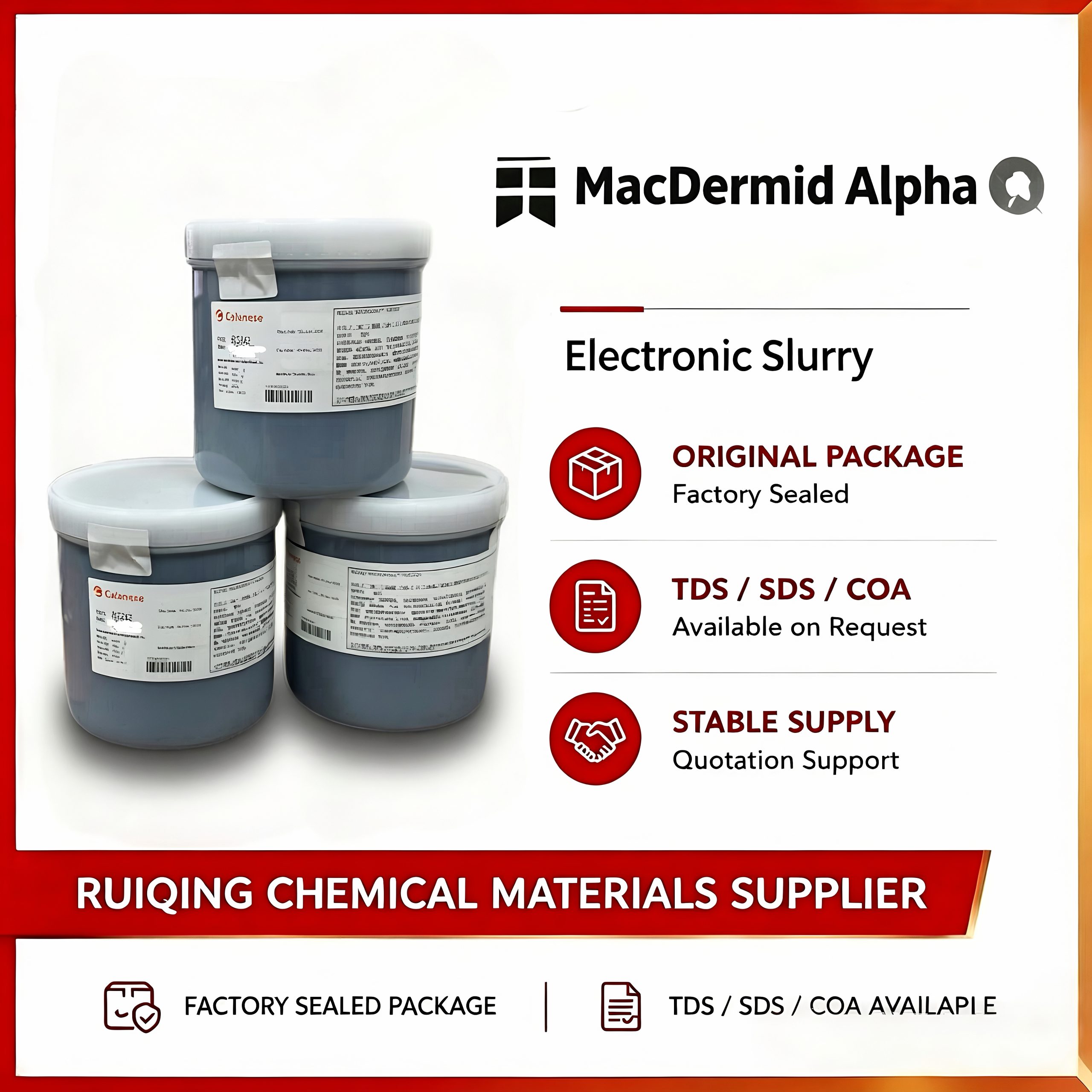
We hold regular stock of authentic MacDermid Alpha Micromax 5890 Ag/AgCl electrode ink. Original factory TDS and batch-specific COA are available on request for your electrochemical sensor programs.
Request Sample, TDS & Quotation
Complete TDS, COA, and regulatory documentation available
Key Features of MacDermid Alpha Micromax 5890
- Solvent-based silver/silver chloride composition for screen printing onto polyester film
- Suitable as an electrode or reference counter electrode for electrochemical sensors
- Ag:AgCl ratio 3/1 for silver-rich electrochemical behavior
- Contains carbon black for conductivity and print consistency
- Good adhesion and good abrasion resistance
- High stability for long-term printed sensor use
- Fast drying for efficient production
- Low viscosity for good printing resolution
- Can be printed over silver (Micromax 5000, 5025) or carbon (Micromax 7105)
- Density 2.38 g/cm³; solids 80–82%; viscosity 14–20 Pa.s
- Theoretical coverage approximately 200 cm²/g on 325 stainless steel mesh
- Drying: 110–120°C / 8–10 min (box oven); 120–130°C / 3–4 min (reel-to-reel)
- Thinner Micromax 4987; clean-up ethylene glycol diacetate or dipropylene glycol methyl ether
Primary Applications
- Electrochemical sensors — electrode or reference counter electrode layer
- Printed sensor builds — carbon-containing Ag/AgCl layer for consistent performance
- Circuits with silver or carbon underlay — can be printed over Micromax 5000, 5025, or 7105
- Membrane switch conductor — per TDS application table
Full Technical Specifications
| Property | Typical Value | TDS Reference |
| Product Type | Solvent-based Ag/AgCl composition for screen printing | TDS: Silver/Silver Chloride Composition for Screen Printing |
| Application | Membrane switch conductor (TDS table); electrode or reference counter electrode for electrochemical sensors | TDS: Product Description |
| Solvent or Thinner | Micromax 4987 | TDS: Micromax 4987 |
| Density | 2.38 g/cm³ | TDS: 2.38 g/cm³ |
| Solid Content | 80 to 82 % | TDS: 80 to 82 % |
| Ag:AgCl Ratio | 3 / 1 | TDS: 3 / 1 |
| Viscosity | 14 to 20 Pa.s | TDS: Brookfield 0.5RVT, SC4-14/6R, 10 rpm, 25°C |
| Substrate | Polyester film; can be printed over silver (Micromax 5000, 5025) or carbon (Micromax 7105) | TDS: Design |
| Reactive Metal Contact | Minimize; no contact with aluminum or brass. Protect components by taping or covering with inert material | TDS: Design |
| Screen Type | Polyester screen recommended to minimize contact with reactive metals | TDS: Printing |
| Theoretical Coverage | Approx. 200 cm²/g (325 stainless steel mesh) | TDS: Approx. 200 |
| Drying (Box Oven) | 110–120°C for 8–10 minutes with adequate airflow | TDS: Drying |
| Drying (Reel-to-Reel) | 120–130°C for 3–4 minutes with adequate airflow | TDS: Drying |
| Carbon Black | Contains carbon black | TDS: Product benefits |
| Adhesion | Good | TDS: Product benefits |
| Abrasion Resistance | Good | TDS: Product benefits |
| Stability | High | TDS: Product benefits |
| Fast Drying | Yes | TDS: Product benefits |
| Low Viscosity for Printing Resolution | Yes | TDS: Product benefits |
| Clean-up Solvent | Ethylene glycol diacetate or Dipropylene glycol methyl ether | TDS: Clean-up solvent |
| Shelf Life | 6 months | TDS: 6 months |
| Storage Temperature | 5 – 30 °C | TDS: 5°C – 30°C |
Note: All listed values are typical and may vary by batch. Values based on MacDermid Alpha official TDS. Independent qualification testing is required prior to production use.
Recommended Processing Conditions
| Parameter | Recommended Value | TDS Reference |
| Mixing Prior to Use | Mix thoroughly with a plastic or coated spatula. If settling is found after long storage, mix and jar-roll overnight before use | TDS: Printing |
| Substrate | Polyester film; can be printed over silver (Micromax 5000, 5025) or carbon (Micromax 7105) | TDS: Design |
| Reactive Metal Contact | Minimize; no contact with aluminum or brass | TDS: Design |
| Screen Type | Polyester screen recommended | TDS: Printing |
| Thinning | Micromax 4987, used sparingly for viscosity adjustments or solvent loss compensation | TDS: Thinning |
| Drying (Box Oven) | 110–120°C for 8–10 minutes with adequate airflow | TDS: Drying |
| Drying (Reel-to-Reel) | 120–130°C for 3–4 minutes with adequate airflow | TDS: Drying |
| Clean-up Solvent | Ethylene glycol diacetate or Dipropylene glycol methyl ether | TDS: Clean-up solvent |
Handling and Storage Recommendations
| Storage Rules | Store tightly sealed in a clean, stable environment at 5-30°C. | TDS: 5°C – 30°C |
| Shelf Life | 6 months in unopened containers from date of shipment. | TDS: 6 months |
| Pre-use Preparation | Thoroughly mix prior to use. Some settling of solids may occur during storage. | TDS: thoroughly mix |
| Transportation | Under normal shipping conditions, no temperature control is expected. For extended transport periods, confirm product suitability. | TDS: normal shipping conditions |
Official Technical Documentation
| Document Type | Document Introduction | Document Request |
| TDS | MacDermid Alpha Micromax 5890 original factory technical data sheet | Request TDS |
| COA | Batch-specific certificate of analysis | Request COA |
| SDS | Safety Data Sheet for handling and storage | Request SDS |
Frequently Asked Questions
What is the role of carbon black in 5890?
The TDS lists carbon black as part of the composition. Carbon black supports conductivity and print consistency, and combined with the silver-rich Ag:AgCl ratio of 3/1, this makes 5890 suitable as an electrode or reference counter electrode layer in electrochemical sensors.
Why is low viscosity important for 5890?
The TDS lists low viscosity for good printing resolution as a product benefit. With a viscosity of 14–20 Pa.s, 5890 supports fine-feature printing without sacrificing the electrochemical performance of the Ag/AgCl layer.
How does the Ag:AgCl ratio of 3/1 affect performance?
A silver-rich ratio of 3/1 supports conductivity and stable electrochemical behavior. This is different from the chloride-rich 32/68 ratio of 5876, which is positioned as a cathode, and from the 75/25 ratio of 5881, which emphasizes high conductivity.
Can 5890 be printed over silver or carbon layers?
Yes. 5890 can be printed over silver (Micromax 5000, 5025) or over carbon (Micromax 7105). Avoid contact with reactive metals such as aluminum or brass, and use a polyester screen to minimize metal contact.
What are the drying conditions for 5890?
Box oven drying is 110–120°C for 8–10 minutes with adequate airflow. Reel-to-reel drying is 120–130°C for 3–4 minutes with adequate airflow.
What is the theoretical coverage of 5890?
Theoretical coverage is approximately 200 cm²/g when printed with a 325 stainless steel mesh, per the TDS footnote.
How should 5890 be stored?
Store tightly sealed at 5–30°C in a clean, stable environment. Unopened shelf life is 6 months from shipment. Some settling may occur, so mix thoroughly before reuse.
Get MacDermid Alpha Micromax 5890 Bulk Pricing and Technical Support
We supply authentic MacDermid Alpha Micromax 5890 Ag/AgCl electrode ink for electrochemical sensor programs. Contact our team for bulk quotations, sample availability, technical documentation, and application support.
Inquire Bulk Price & Technical Support
Disclaimer: All technical data on this page are for general guidance only and are not product specifications. Buyers must carry out independent trials and verify suitability before bulk ordering. Actual values may vary between production lots.