描述
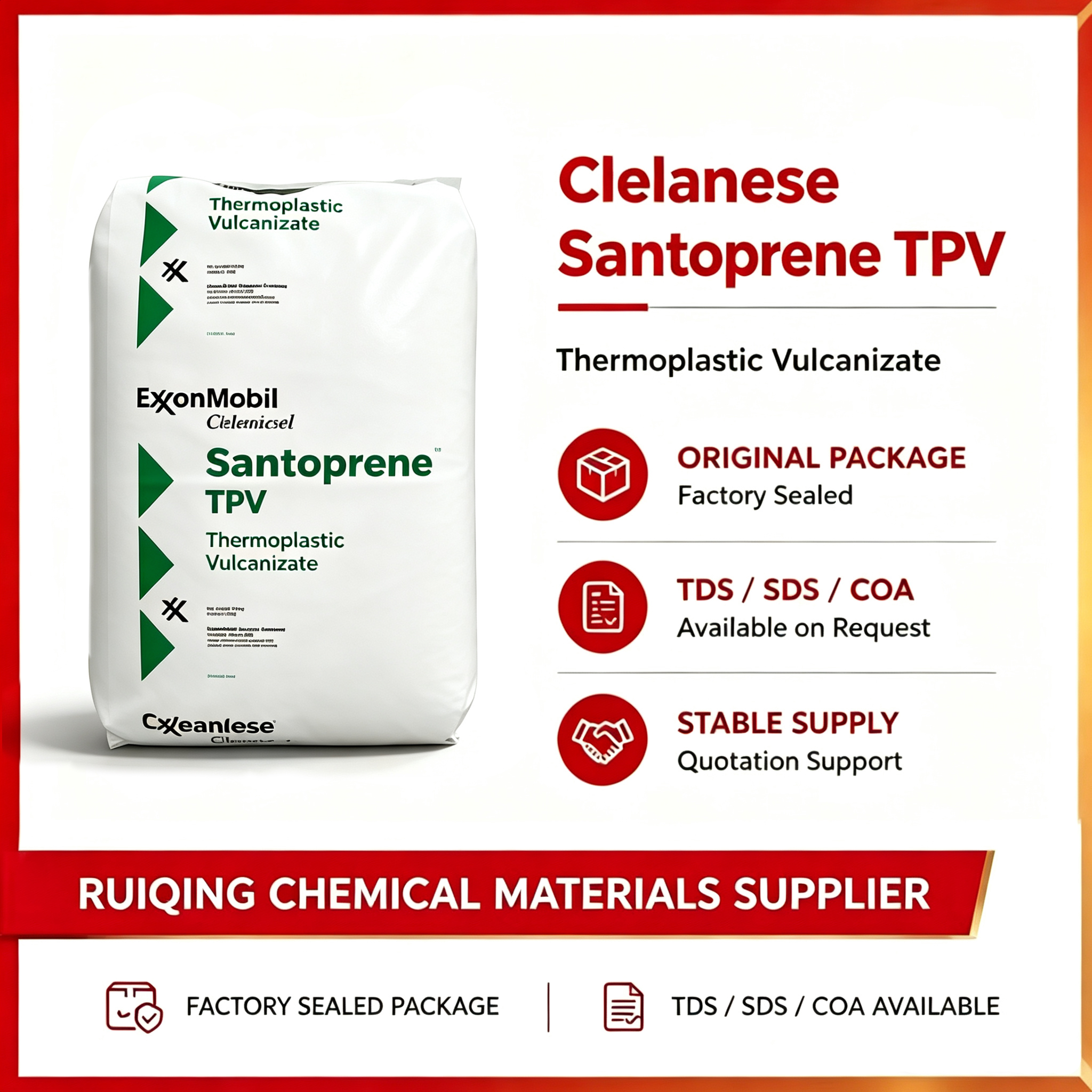
Santoprene 191-55 PA is a soft, black thermoplastic vulcanizate (TPV) from Celanese specially formulated to bond to polyamide 6 (PA6) and polyamide 66 (PA66) compounds through a 2K injection molding process.
This adhesion function is the defining feature of the grade.
Standard TPV materials do not automatically provide reliable direct adhesion to polar engineering plastics such as PA6 and PA66. Santoprene 191-55 PA is designed specifically for applications where a soft elastomeric layer must be molded directly onto a compatible polyamide substrate during two-component molding.
Celanese states that the grade is not recommended for the cold insert process. For this reason, the material should be considered primarily for controlled 2K overmolding where the polyamide substrate, TPV melt temperature, mold conditions and injection sequence can be optimized for adhesion.
The current publicly available Celanese Materials Database sheet describes Santoprene 191-55 PA as a soft black TPV with a Shore A hardness of approximately 58.
Mechanical data includes approximately 1.8 MPa tensile stress at 100% elongation, 3.0 MPa stress at break and 300% elongation at break.
The grade retains the characteristic fatigue performance associated with Santoprene TPV while adding the specialized PA-bonding function.
Celanese also highlights UV resistance and states that the grade has passed typical f1 weathering requirements, making it suitable for outdoor applications where a PA/TPV composite is exposed to sunlight and weather.
The material is polyolefin based and shear dependent. Like other Santoprene TPV grades, its apparent melt viscosity decreases as shear rate increases. This behavior is important during overmolding because fast filling and sufficient shear can help achieve good cavity filling and interfacial contact.
The current grade sheet specifically recommends fast injection for optimum adhesion, with a typical filling time of approximately 0.5 to 2 seconds, depending on part volume, runner and gate style, cavity location and injection pressure.
Adhesion is strongly influenced by the temperature of Santoprene 191-55 PA during overmolding. Celanese’s current processing guidance gives approximately 270–280°C for bonding to PA6 compounds and approximately 280°C for bonding to PA66 compounds.
This is substantially hotter than the processing temperatures used for many general-purpose Santoprene grades because the application objective is not only to fill the mold but also to develop a strong interface with the polyamide substrate.
For more thermoplastic vulcanizates, visit our TPV Thermoplastic Vulcanizates Product Category →.
For the current Santoprene portfolio and grade-selection information, see the Official Celanese Santoprene & Geolast Product Finder →.
Key Features of Santoprene 191-55 PA
| Feature | Engineering Benefit |
|---|---|
| PA6 Bonding | Designed to adhere to compatible polyamide 6 compounds in 2K molding |
| PA66 Bonding | Designed to adhere to compatible polyamide 66 compounds in 2K molding |
| Shore A 58 | Soft elastomeric surface for seals, grips and flexible interfaces |
| 300% Elongation | Allows substantial deformation without brittle failure |
| Santoprene Fatigue Performance | Supports repeated flexing and cyclic deformation |
| UV Resistance | Suitable for weather-exposed components |
| Typical f1 Weathering Performance | Supports outdoor-use design evaluation |
| 2K Injection Molding | Enables integrated hard/soft PA-TPV components |
| Shear-Dependent Flow | Fast injection and higher shear can improve cavity filling |
| Polyolefin-Based TPV | Combines rubber-like behavior with thermoplastic processing |
| Manufacturing-Stream Recyclability | Controlled process scrap can be recyclable within the manufacturing stream |
| Black Color | Suitable for technical, automotive and outdoor components |
The primary value of Santoprene 191-55 PA is the ability to combine a rigid or semi-rigid polyamide structure with a soft Santoprene TPV surface in a single molded assembly.
Typical Applications for Santoprene 191-55 PA
Santoprene 191-55 PA is intended for two-component applications involving PA6 or PA66 substrates.
| Application Area | Typical Function |
|---|---|
| 2K PA6 Overmolding | Soft TPV layer directly molded onto compatible PA6 |
| 2K PA66 Overmolding | Soft TPV layer directly molded onto compatible PA66 |
| Soft-Touch Handles | Elastomeric grip over a structural polyamide core |
| Sealing Interfaces | Integrated soft sealing lips on rigid PA components |
| Protective Covers | Soft outer zones on polyamide technical parts |
| Outdoor Components | UV-resistant PA/TPV assemblies |
| Automotive Components | Integrated hard/soft parts using PA structural sections |
| Power-Tool Components | Soft grip or damping areas over polyamide housings |
| Industrial Handles | Comfort and anti-slip overmolded surfaces |
| Vibration-Damping Features | Flexible TPV zones integrated into PA structures |
Actual bond strength depends strongly on the exact PA6 or PA66 compound, additives, glass-fiber level, moisture condition, substrate temperature, mold design and processing conditions. Therefore, adhesion should be validated with the exact production substrate.
Typical Properties of Santoprene 191-55 PA
The current publicly available Celanese Materials Database sheet for Santoprene 191-55 PA is marked PRELIMINARY and revised May 23, 2024. The values below follow that current grade-specific sheet.
Product Identification
| Property | Value | Standard |
|---|---|---|
| Resin Identification | TPV | ISO 1043 |
| Part Marking Code | >TPV< | ISO 11469 |
| Color | Black | Manufacturer information |
| Product Form | Pellets / Granules | Manufacturer information |
| Primary Processing Method | 2K Injection Molding | Manufacturer information |
| Compatible Substrate Family | PA6 and PA66 compounds | Manufacturer information |
Mechanical Properties
| Property | Typical Value | Test Method |
|---|---|---|
| Shore A Hardness, 15 s | 58 | ISO 48-4 / ISO 868 |
| Tensile Stress at 100% Elongation, Perpendicular | 1.8 MPa | ISO 37 |
| Stress at Break, Perpendicular | 3.0 MPa | ISO 527-1/-2 or ISO 37 |
| Elongation at Break, Perpendicular | 300% | ISO 527-1/-2 or ISO 37 |
| Compression Set, 23°C / 24 h | 24% | ISO 815 |
| Compression Set, 70°C / 24 h | 44% | ISO 815 |
| Compression Set, 125°C / 70 h | 50% | ISO 815 |
These values position Santoprene 191-55 PA as a soft TPV suitable for compliant overmolded surfaces and sealing functions.
The nominal “55” in the grade name should not be interpreted as the exact current Shore A value. The current grade-specific sheet reports approximately 58 Shore A.
PA6 and PA66 Bonding Performance
The special purpose of Santoprene 191-55 PA is adhesion to polyamide through a two-component injection process.
Celanese specifically states that the grade adheres to:
- Polyamide 6 compounds
- Polyamide 6.6 / PA66 compounds
The current processing guidance indicates that adhesion is highly dependent on TPV melt temperature.
Recommended Adhesion Temperatures
| Polyamide Substrate | Santoprene Melt Temperature for Adhesion |
|---|---|
| PA6 compounds | 270–280°C |
| PA66 compounds | Approx. 280°C |
These values are important because a lower melt temperature may provide acceptable flow but insufficient interfacial energy for strong adhesion.
For production validation, the exact PA compound should always be tested because fillers, heat stabilizers, lubricants, flame retardants and other additives can change surface chemistry and bonding behavior.
Why Choose Santoprene 191-55 PA?
Santoprene 191-55 PA is useful when a designer wants to eliminate a separate adhesive, mechanical interlock or secondary assembly operation between a polyamide component and a soft elastomer.
A conventional solution may require a rigid PA6 or PA66 part to be molded first, followed by a separate gasket, rubber insert or bonded elastomer component.
With a suitable 2K tool and compatible materials, Santoprene 191-55 PA can allow the soft TPV portion to be molded directly onto the polyamide substrate.
This can reduce part count and simplify assembly.
Integrated hard/soft construction can also improve product design by placing elastomer only where it is needed, such as grip surfaces, sealing lips, damping zones, protective edges, flexible interfaces and anti-slip surfaces.
The grade also retains important Santoprene TPV characteristics, including good fatigue behavior and thermoplastic processability.
UV resistance expands its usefulness to outdoor assemblies. Celanese states that the material passed typical f1 weathering requirements.
The black color is also practical for outdoor and technical components where long-term appearance and UV exposure are relevant.
For applications involving PA6 or PA66 plus a soft elastomeric overmold, Santoprene 191-55 PA offers a much more targeted solution than a standard general-purpose TPV grade.
Processing Guidelines for Santoprene 191-55 PA
Processing conditions are especially important because adhesion is the main purpose of the grade.
Pre-Drying
| Parameter | Current Celanese Guidance |
|---|---|
| Drying Temperature | 80°C |
| Drying Time | 4 hours |
| Dryer Type | Dehumidified dryer |
Celanese’s current preliminary grade sheet recommends drying unopened material at 80°C for 4 hours before processing.
2K Injection Molding Equipment
For overmolding, Celanese recommends a general-purpose polyolefin-type screw with:
| Equipment Parameter | Recommended Range |
|---|---|
| Screw Compression Ratio | 2:1 to 2.5:1 |
| Screw L/D Ratio | 16:1 to 22:1 |
| Screw Speed | 100–200 rpm |
| Back Pressure | Approx. 3.5–7 bar |
| Hold Pressure | 10–20 MPa |
| Typical Cushion | 3–6 mm |
| Barrel Capacity Used per Shot | 40–80% |
Using approximately 40–80% of barrel capacity per shot helps avoid excessive residence time.
Injection Speed
For optimum adhesion, Celanese recommends fast injection.
A typical cavity filling time is approximately 0.5–2 seconds.
The exact value depends on part volume, runner design, gate style and size, cavity location, injection pressure and substrate geometry.
Fast filling helps maintain melt temperature and improves interfacial contact with the PA substrate.
Mold Temperature
The current Celanese processing notes recommend approximately 40–45°C mold temperature.
Stable mold temperature is important for both dimensional control and adhesion consistency.
PA6 Overmolding
For Santoprene 191-55 PA over compatible PA6 compounds, Celanese recommends a TPV melt temperature of approximately 270–280°C.
PA66 Overmolding
For bonding to compatible PA66 compounds, the recommended TPV melt temperature is approximately 280°C.
These high melt temperatures are specifically associated with achieving optimum PA adhesion.
Cold Insert Process
Celanese explicitly states that Santoprene 191-55 PA is not recommended for the cold insert process.
The grade should therefore be evaluated in a true 2K or controlled overmolding process rather than assuming that the same bond performance will be obtained over a fully cooled polyamide insert.
Related Products
Santoprene 191-70 PA – PA6/PA66 bondable TPV with higher hardness for 2K overmolding applications requiring a firmer elastomeric layer.
Santoprene 191-85 PA – Higher-hardness PA-bondable Santoprene TPV for rigid-feel overmolded interfaces.
Santoprene 101 Series – General-purpose black TPV grades for molding and extrusion where direct PA bonding is not the primary requirement.
View More TPV Thermoplastic Vulcanizates →
Technical Documents for Santoprene 191-55 PA
| Document Type | Description |
|---|---|
| TDS | Grade-specific mechanical and 2K overmolding processing information |
| SDS | Safety Data Sheet |
| Santoprene Product Finder | Celanese grade-selection information |
| Processing Guide | Santoprene injection-molding and process setup guidance |
| PA Overmolding Information | Processing conditions for PA6 and PA66 adhesion |
| COA | Batch-specific quality information where available |
Need documents for Santoprene 191-55 PA?
📧 Email: ruiqingchem@gmail.com
📝 Online form: Contact Us →
Please include the grade name, PA6 or PA66 substrate, application and required document type.
FAQ About Santoprene 191-55 PA
Q1: What is Santoprene 191-55 PA?
Santoprene 191-55 PA is a soft black Celanese TPV specially formulated for adhesion to PA6 and PA66 compounds through 2K injection molding.
Q2: What is the hardness of Santoprene 191-55 PA?
The current grade-specific Celanese sheet reports approximately Shore A 58.
Q3: Can Santoprene 191-55 PA bond directly to PA6?
Yes. It is specifically formulated for bonding to compatible PA6 compounds in a 2K injection-molding process.
Q4: Can Santoprene 191-55 PA bond to PA66?
Yes. Celanese also identifies compatible PA66 compounds as intended substrates.
Q5: What melt temperature is recommended for PA6 adhesion?
The current Celanese processing guidance recommends approximately 270–280°C for PA6 compounds.
Q6: What melt temperature is recommended for PA66 adhesion?
For PA66 compounds, Celanese recommends approximately 280°C.
Q7: Is Santoprene 191-55 PA suitable for cold insert molding?
No. Celanese specifically states that this grade is not recommended for the cold insert process.
Q8: What is the elongation at break?
Current grade data lists approximately 300% elongation at break.
Q9: Is Santoprene 191-55 PA suitable for outdoor applications?
Yes. Celanese highlights UV resistance and states that the grade has passed typical f1 weathering requirements.
Q10: Does Santoprene 191-55 PA need drying?
Yes. Current Celanese guidance recommends drying at approximately 80°C for 4 hours before processing.
Request Santoprene 191-55 PA Price & Technical Support
For pricing, availability, technical documents or application support for Santoprene 191-55 PA, please provide:
- Required quantity
- Destination country or port
- PA6 or PA66 substrate
- Exact polyamide grade
- Glass-fiber content, if applicable
- 2K molding machine configuration
- Part geometry
- Required Shore hardness
- Bonding / peel-strength target
- Outdoor or UV exposure requirement
- Operating temperature
- TDS, SDS or COA requirement
- Sample requirement, if applicable
📧 Email: ruiqingchem@gmail.com
📝 Send Inquiry →