描述
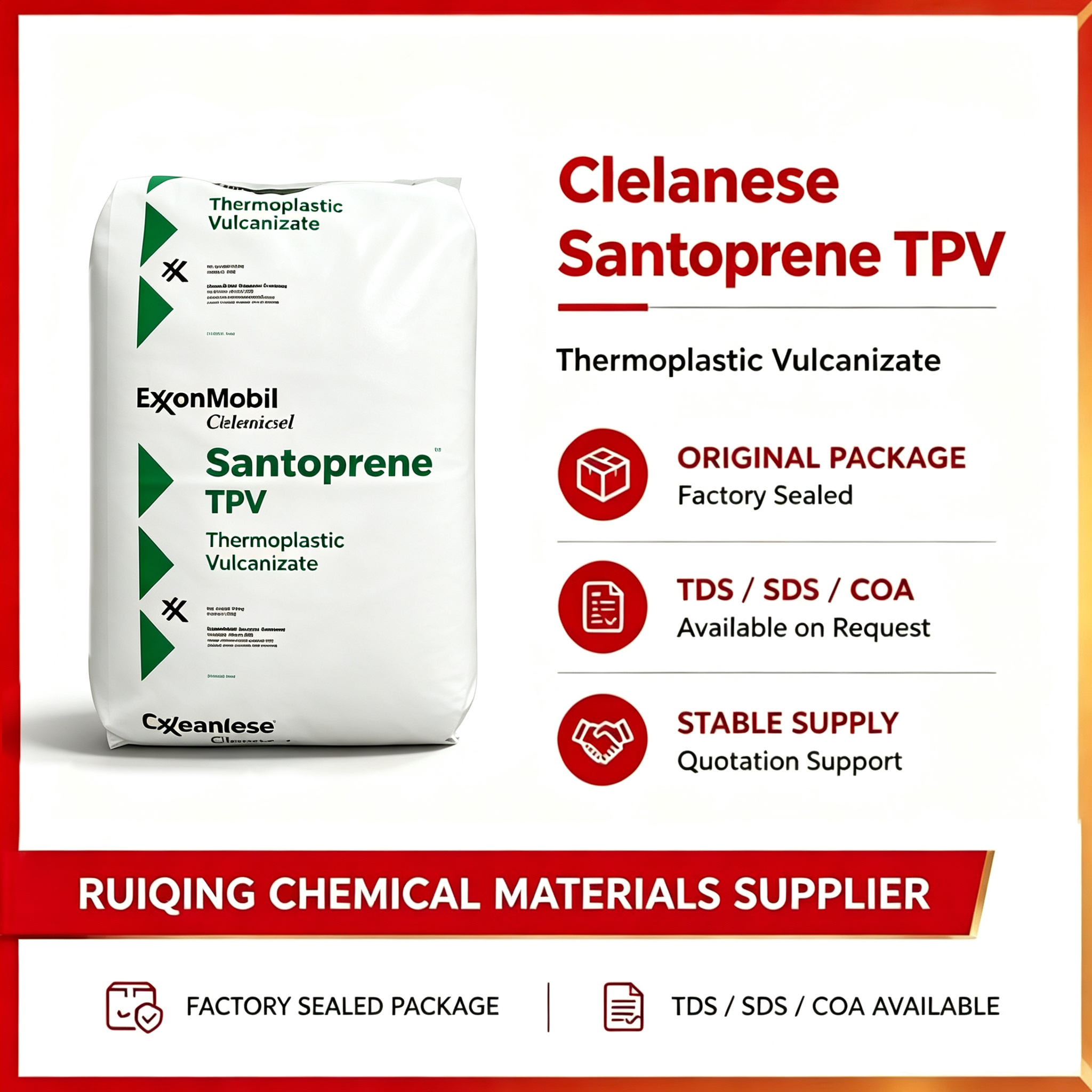
Santoprene 123-52W242 is a hard, black thermoplastic vulcanizate (TPV) from Celanese developed specifically as a low-friction slip-coat extrusion material for weatherseal applications.
This is not a general-purpose soft sealing TPV. Its role is more specialized: it is intended to form a relatively hard, smooth and wear-resistant surface layer on weathersealing systems where low friction is required.
Celanese’s current Santoprene automotive grade slate identifies Santoprene 123-52W242 as a 52 Shore D black slip-coat grade with low-friction performance. Celanese’s construction and glazing-seal solution information also positions the same grade as a UV-stabilized slip-coat grade for low-coefficient-of-friction surfaces.
A slip-coat layer is particularly useful in sealing profiles that contact moving glass, painted panels, trim surfaces or other components. Reducing surface friction helps limit drag, sticking, squeak and surface wear during repeated movement.
Santoprene 123-52W242 is therefore especially relevant to automotive weatherseals and related profile systems where a harder surface is needed over a more flexible elastomeric body.
The grade is polyolefin based and can be coextruded with other olefin thermoplastic rubbers. This enables manufacturers to build a multi-functional weatherseal in one continuous extrusion process: a softer TPV section can provide sealing and compliance, while Santoprene 123-52W242 forms the low-friction contact surface.
The grade has a published Shore D hardness of approximately 52. Shore D is important here because this material is considerably harder than common 60A–80A Santoprene sealing grades. The higher hardness helps create the durable slip surface needed for repeated sliding contact.
The published density is approximately 0.950 g/cm³, which is low for a hard engineering surface material and consistent with its polyolefin-based TPV chemistry.
Celanese describes the grade as shear dependent. As with other Santoprene TPV materials, its apparent viscosity changes with shear rate. Proper screw design, line speed, die design and shear conditions are therefore important for stable extrusion and smooth surface quality.
The product is designed for excellent wear resistance, excellent weather resistance, a low friction factor, and excellent surface smoothness and flexibility as a slip-coating material.
These characteristics make Santoprene 123-52W242 useful where a conventional soft weatherseal material alone cannot provide the required sliding surface performance.
The current Celanese product finder continues to list the grade as a black 52 Shore D slip-coat extrusion material, confirming that its primary commercial positioning remains focused on low-friction and wear-resistant weatherseal surfaces.
For more TPV materials, visit our TPV Thermoplastic Vulcanizates Product Category →.
For Celanese’s current TPV portfolio, see the Official Celanese Santoprene & Geolast Product Finder →.
Key Features of Santoprene 123-52W242
| Feature | Engineering Benefit |
|---|---|
| 52 Shore D Hardness | Creates a harder contact surface than conventional soft weatherseal TPV |
| Low Friction | Reduces drag between the sealing profile and moving mating surfaces |
| Excellent Wear Resistance | Supports long-term sliding-contact durability |
| Excellent Weather Resistance | Suitable for exposed automotive weatherseal applications |
| UV-Stabilized Positioning | Supports exterior sealing systems exposed to sunlight |
| Smooth Surface | Helps produce a clean, uniform slip-coat finish |
| Slip-Coat Flexibility | Maintains useful flexibility while providing a hard surface |
| Coextrusion Capability | Can be combined with other olefin thermoplastic rubbers |
| Low Density | Approx. 0.950 g/cm³ |
| Black Color | Matches common automotive weatherseal systems |
| Shear-Dependent Rheology | Process behavior can be optimized through screw speed and shear |
| Thermoplastic Processing | Processed on conventional extrusion equipment |
| Manufacturing-Stream Recyclability | Polyolefin-based TPV can be recyclable within controlled manufacturing streams |
The main value of Santoprene 123-52W242 is not simply hardness. Its key advantage is the combination of hardness, low friction, wear resistance, weatherability and coextrusion capability in one dedicated slip-coat grade.
Typical Applications for Santoprene 123-52W242
Santoprene 123-52W242 is mainly intended for extrusion and coextrusion applications where a low-friction contact surface is required.
| Application Area | Typical Use |
|---|---|
| Automotive Weatherseals | Low-friction surface layer on sealing profiles |
| Glass Run Channels | Contact surface for moving automotive glass |
| Window Sealing Profiles | Slip layer where glass or trim moves against the seal |
| Door Weatherstrips | Wear-resistant surface sections |
| Automotive Exterior Trim | Hard TPV surface sections exposed to weather |
| Coextruded TPV Profiles | Hard slip-coat layer over softer TPV sealing bodies |
| Seals & Gaskets | Specialized low-friction sealing surfaces |
| Outdoor Profiles | Weather-resistant sliding or contact surfaces |
| Non-Automotive Pipe Seals | Selected seal designs requiring a harder low-friction surface |
The strongest fit is weatherseal coextrusion, where different TPV grades are used together to create multiple functions within one profile.
Typical Properties of Santoprene 123-52W242
Physical Properties
| Property | Typical Value | Test Method |
|---|---|---|
| Density | 0.950 g/cm³ | ISO 1183 |
| Specific Gravity | 0.950 | ASTM D792 |
| Shore D Hardness, 15 s | 52 | ISO 868 / ISO 48-4 |
| Color | Black | Manufacturer information |
| Product Form | Pellets | Manufacturer information |
| Polymer Base | Polyolefin-based TPV | Manufacturer information |
The combination of 52 Shore D hardness and 0.950 g/cm³ density distinguishes Santoprene 123-52W242 from softer Santoprene sealing grades.
Mechanical Property Availability
Celanese’s currently available public product finder does not publish a conventional tensile-strength, elongation-at-break, tear-strength or compression-set data set for Santoprene 123-52W242.
That is consistent with the product’s specialized role as a slip-coat surface material, where low friction, wear resistance, weather resistance and surface quality are more important selection criteria than the tensile data normally emphasized for bulk sealing compounds.
For this reason, numerical tensile or compression-set values from nearby Santoprene grades should not be transferred to Santoprene 123-52W242.
Surface & Functional Performance
| Property / Feature | Published Positioning |
|---|---|
| Friction | Low friction / low coefficient of friction |
| Wear Resistance | Excellent |
| Weather Resistance | Excellent |
| Surface Smoothness | Excellent |
| Slip-Coat Flexibility | Designed for flexible slip-coat surfaces |
| Coextrusion | Coextrudable with other olefin thermoplastic rubbers |
| Weatherseal Use | Dedicated slip-coat grade |
| UV Stabilization | Yes, in Celanese weatherseal/construction positioning |
For a weatherseal engineer, these functional characteristics are the most important reason to evaluate the grade.
Why Choose Santoprene 123-52W242?
The main reason to select Santoprene 123-52W242 is to solve a surface-friction problem without giving up the manufacturing advantages of a TPV-based weatherseal system.
A typical automotive weatherseal often needs two very different behaviors.
The main body must be flexible enough to compress and seal. The contact surface, however, may need to be harder, smoother and more wear resistant because it repeatedly touches moving glass, metal or painted surfaces.
Using the same soft TPV for both functions can create too much friction or excessive surface wear.
Santoprene 123-52W242 is designed to provide the second function.
Its 52 Shore D hardness gives the surface more rigidity and abrasion resistance than a conventional soft TPV.
The low-friction formulation helps reduce sliding resistance, which is especially important for glass run channels and window weatherseals.
Wear resistance helps the surface survive repeated movement over long service periods.
Weather resistance and UV-stabilized positioning support exterior use where the profile may see sunlight, heat, moisture and atmospheric exposure.
Coextrusion capability is also critical. Santoprene 123-52W242 can be applied as a functional surface layer while another olefinic TPV forms the softer sealing portion.
This can simplify profile design and eliminate the need for a separately applied friction-reducing treatment in some systems.
The material is also thermoplastic, so the profile can be produced on conventional extrusion equipment without a separate rubber-vulcanization step.
For manufacturers looking for a hard black TPV slip-coat with low friction and good weathering performance, Santoprene 123-52W242 is a highly specialized grade rather than a generic elastomer.
Processing Guidelines for Santoprene 123-52W242
The primary processing method for Santoprene 123-52W242 is extrusion / coextrusion.
Published Processing Guidance
| Processing Parameter | Published Guidance |
|---|---|
| Recommended Drying Temperature | 65°C |
| Recommended Drying Time | 4 hours |
| General Processing Temperature Window | 175–230°C |
| Primary Process | Extrusion / Coextrusion |
| Material Behavior | Shear dependent |
The grade-specific datasheet recommends desiccant drying for 4 hours at 65°C before processing.
The same datasheet gives a broad Santoprene TPV processing window of approximately 175–230°C.
Because Santoprene 123-52W242 is a surface-quality slip-coat grade, extrusion conditions should be optimized not only for output rate but also for:
- Surface smoothness
- Layer uniformity
- Slip-coat thickness
- Adhesion to the coextruded TPV body
- Die lines
- Melt fracture
- Draw-down stability
- Dimensional consistency
- Friction performance after cooling
Shear-Dependent Rheology
Santoprene TPV is shear dependent, meaning apparent viscosity decreases as shear rate increases.
In practical extrusion work, this means that changes in:
- Screw speed
- Die gap
- Land length
- Melt pressure
- Throughput
- Temperature profile
can materially influence flow and surface quality.
For a thin slip-coat layer, stable melt delivery and consistent die design are particularly important.
Coextrusion Considerations
Santoprene 123-52W242 is specifically described as coextrudable with other olefin thermoplastic rubbers.
The grade can therefore be considered for multi-layer or multi-component profiles where:
- A softer TPV body provides sealing
- A harder TPV layer provides low friction
- Both materials are processed in one extrusion line
This architecture is common in automotive weatherseal systems.
Material Compatibility
Celanese’s grade-specific processing information states that Santoprene TPV is incompatible with acetal (POM) and PVC.
When an extrusion line has previously processed POM or PVC, the barrel, screw, adapter and die should be properly purged before introducing Santoprene 123-52W242.
Automotive Weatherseal Design Role
Santoprene 123-52W242 should be understood as a functional surface material, not merely a high-hardness TPV.
In automotive weatherseal design, the profile may include:
- Soft sealing lips
- Structural carrier sections
- Cosmetic outer surfaces
- Bonding zones
- Low-friction contact areas
The grade is intended for the low-friction contact area.
Celanese’s automotive grade slate places Santoprene 123-52W242 specifically under Slip Coat, with black color, 52D hardness, and low friction as the defining feature.
This makes its intended function much clearer than selecting a grade only from hardness.
The material can also provide excellent surface smoothness, helping improve the appearance and consistency of an exposed weatherseal surface.
Technical Documents for Santoprene 123-52W242
| Document Type | Description |
|---|---|
| TDS | Grade-specific density, hardness, processing and application information |
| SDS | Safety Data Sheet |
| Santoprene Product Finder | Current Celanese grade positioning |
| Automotive Grade Slate | Celanese weatherseal and slip-coat grade selection |
| Extrusion Guide | General Santoprene extrusion and die-design guidance |
| COA | Batch-specific quality information where available |
Need technical documents for Santoprene 123-52W242?
📧 Email: ruiqingchem@gmail.com
📝 Online form: Contact Us →
Please state Santoprene 123-52W242 and the required document type when submitting your inquiry.
FAQ About Santoprene 123-52W242
Q1: What is Santoprene 123-52W242?
Santoprene 123-52W242 is a hard black Celanese TPV designed as a low-friction slip-coat extrusion material for weatherseal applications.
Q2: What is the hardness of Santoprene 123-52W242?
The published hardness is approximately 52 Shore D.
Q3: What is the density?
The published density is approximately 0.950 g/cm³.
Q4: What is the main application?
The main application is automotive weatherseal slip coating, including low-friction surface sections on coextruded sealing profiles.
Q5: Is Santoprene 123-52W242 suitable for glass run channels?
Yes. Its low-friction and wear-resistant surface positioning makes it relevant to weatherseal systems that contact moving glass.
Q6: Can Santoprene 123-52W242 be coextruded?
Yes. Celanese specifically states that it is coextrudable with other olefin thermoplastic rubbers.
Q7: Is the grade weather resistant?
Yes. Excellent weather resistance is one of the published key features, and Celanese also positions it as UV stabilized in weatherseal-related material guidance.
Q8: What drying conditions are recommended?
The grade-specific datasheet recommends 4 hours at 65°C in a desiccant dryer.
Q9: What processing temperature is recommended?
The published Santoprene TPV processing window for this grade is approximately 175–230°C.
Q10: Is Santoprene 123-52W242 a general-purpose molding grade?
No. Its primary positioning is extrusion / coextrusion as a low-friction slip-coat material rather than general-purpose molding.
Request Santoprene 123-52W242 Price & Technical Support
For pricing, availability, technical documents or application support for Santoprene 123-52W242, please provide:
- Required quantity
- Destination country or port
- Automotive or industrial application
- Weatherseal or profile design
- Slip-coat layer thickness
- Mating surface or glass-contact condition
- Friction requirement
- Wear-resistance requirement
- UV / outdoor exposure
- Extrusion or coextrusion process
- Main substrate TPV grade
- Profile dimensions
- TDS, SDS or COA requirement
- Sample requirement, if applicable
📧 Email: ruiqingchem@gmail.com
📝 Send Inquiry →