描述
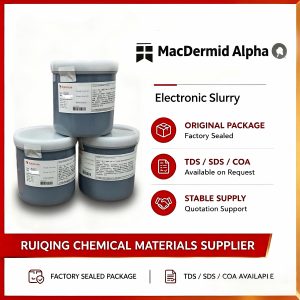
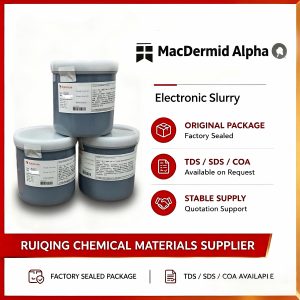
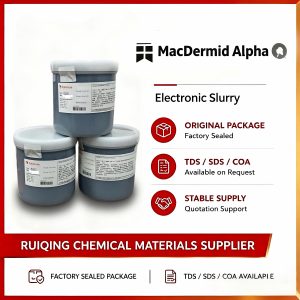
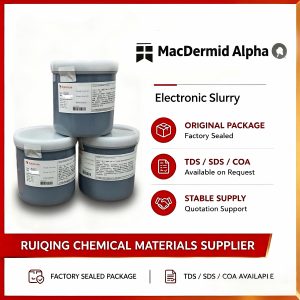
MacDermid Alpha Micromax 5483 Blue Thermoset Epoxy Encapsulant for Hybrid Circuits & Chip Components
Type: Thermoset Epoxy Encapsulant
Application: Hybrid Circuits, Chip Components
Color: Blue
Shelf Life: 3 months refrigerated
Micromax 5483 is a blue, single-component thermoset epoxy encapsulant for hybrid circuits, resistor networks, and chip components. It delivers a smooth surface with excellent hardness, high adhesion, good printability, and good solvent and environmental resistance. Cures at 180–200°C for 20–30 minutes.
Micromax 5483 from MacDermid Alpha is part of the 548X polymer composition series, developed for encapsulation on hybrid circuits, resistor networks, and chip components. The polymer is applied to ceramic substrates by screen printing and then cured at 180–200°C. It is a non-flammable single-component epoxy type, which simplifies handling and eliminates mixing errors. The cured film provides a smooth surface with excellent hardness, high adhesion, good printability, and good solvent and environmental resistance.
The paste carries a viscosity range of 85–150 Pa.s and uses Micromax 5490 as the recommended thinner. For optimum smoothness, double-pass squeegee printing is recommended. A 200 mesh stainless steel screen with 20 μm emulsion and a 70 durometer squeegee gives a cured thickness of 12–14 μm. Print at 20–23°C after bringing the material to that temperature. Allow prints to level 5–10 minutes at room temperature, then dry at 150°C for 10 minutes. Cure at 180–200°C for 20–30 minutes; higher curing temperatures will darken the polymer film, and fast curing can be achieved with an infrared dryer. After PCT, bulk resistivity exceeds 1×10¹² Ω·cm and insulation resistivity exceeds 3×10¹² Ω·cm. No appearance change occurs after 5-hour immersion in acetone, MEK, 10 wt% NaOH, or 10 vol% HCl at 25°C. Store refrigerated at 0–5°C; unopened shelf life is 3 months.
Genuine MacDermid Alpha Micromax Imported Stock & Technical Support
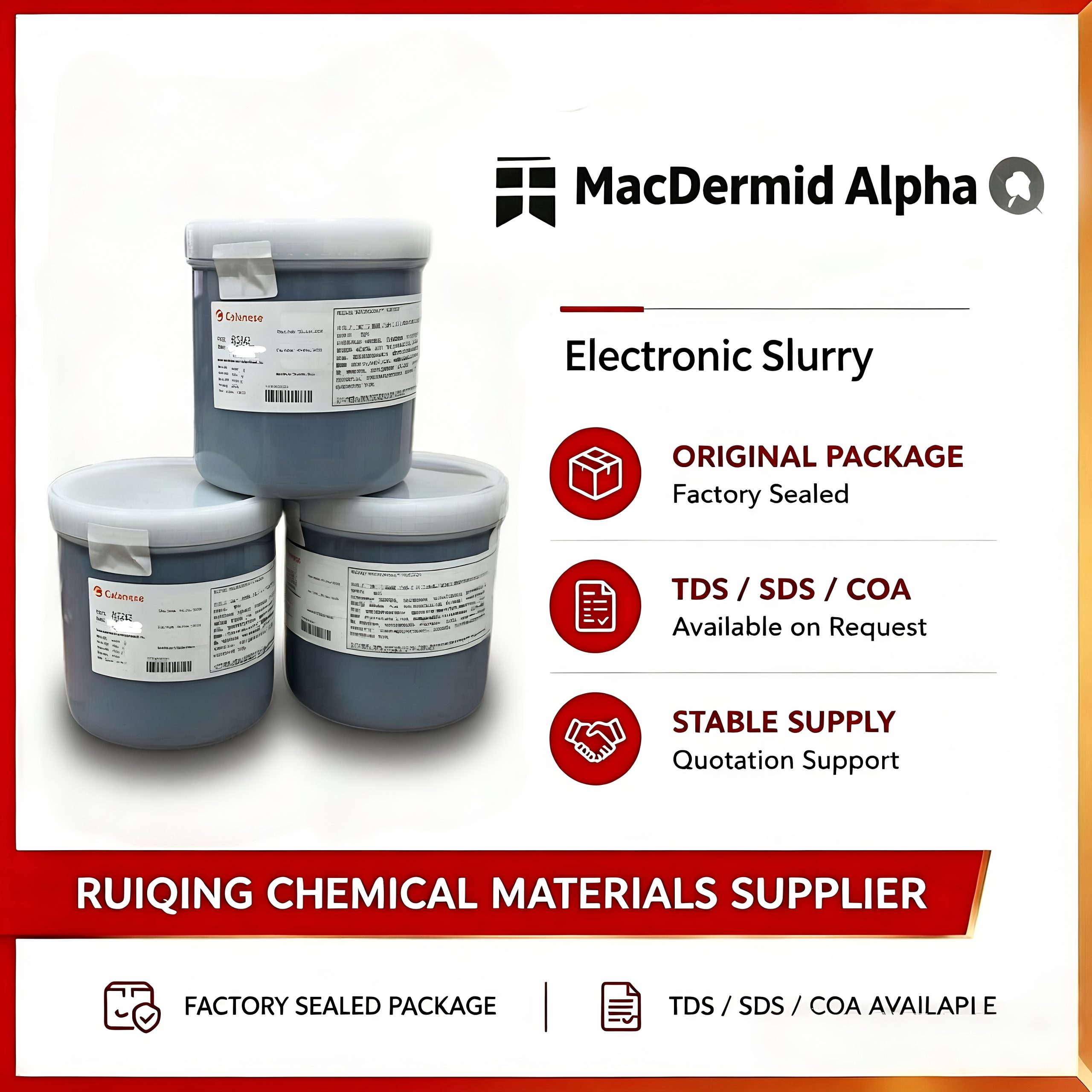
We hold regular stock of authentic MacDermid Alpha Micromax 5483 blue thermoset epoxy encapsulant. Original factory TDS and batch-specific COA are available on request for your hybrid circuit and chip component programs.
Request Sample, TDS & Quotation
Complete TDS, COA, and regulatory documentation available
Key Features of MacDermid Alpha Micromax 5483
- Blue, single-component thermoset epoxy encapsulant
- Smooth surface with excellent hardness
- Non-flammable single-component epoxy type
- Thermoset process at 180–200°C for 20–30 minutes
- High adhesion on glass and alumina substrates
- Good printability for hybrid circuits and chip components
- Good solvent and environmental resistance
- Viscosity 85–150 Pa.s for consistent screen printing
- Screen: 200 mesh stainless steel, 20 μm emulsion, 70 durometer squeegee
- Cured thickness 12–14 μm
- Solvent resistance: no appearance change in acetone or MEK
- Acid and alkali resistance: no appearance change in 10% HCl or 10% NaOH
Primary Applications
- Hybrid circuit encapsulation — protective layer over hybrid circuit assemblies
- Resistor networks — encapsulation for network-type resistor components
- Chip components — encapsulation for chip-type electronic components
- Ceramic substrate circuits — screen-printed encapsulant for 180–200°C cure processes
Full Technical Specifications
| Property | Typical Value | TDS Reference |
| Product Type | Thermoset epoxy encapsulant | TDS: Polymer Series Composition |
| Application | Encapsulant | TDS: Encapsulant |
| Color | Blue | TDS: Blue |
| Solvent or Thinner | Micromax 5490 | TDS: Micromax 5490 |
| Blend Member or Series | 548Xsrs | TDS: 548Xsrs |
| Viscosity | 85 to 150 Pa.s | TDS: Brookfield HBT, UC&SP, SC4-14/6R, 10 rpm, 25°C±0.5°C |
| Mask Mesh | 200 | TDS: 200 |
| Cured Thickness | 12 to 14 μm | TDS: 12-14 μm cured |
| Printing Screen | 200 mesh stainless steel, 20 μm emulsion, 70 durometer squeegee | TDS: 200 mesh, 20 μm, 70 durometer |
| Printing Room Temperature | 20 to 23 °C | TDS: 20°C – 23°C |
| Leveling Time | 5 to 10 minutes at room temperature | TDS: 5-10 minutes |
| Drying Schedule | 10 minutes at 150°C | TDS: 150°C for 10 min |
| Curing Schedule | 180 to 200°C for 20 to 30 minutes | TDS: 180-200°C for 20-30 min |
| Bulk Resistivity After PCT | > 1×10¹² Ω·cm | TDS: > 1×10¹² |
| Insulation Resistivity After PCT | > 3×10¹² Ω·cm | TDS: > 3×10¹² |
| Solvent Resistance (Acetone) | No appearance change (5 hrs immersion at 25°C) | TDS: No appearance change |
| Solvent Resistance (MEK) | No appearance change (5 hrs immersion at 25°C) | TDS: No appearance change |
| Alkali Resistance (10 wt% NaOH) | No appearance change (5 hrs immersion at 25°C) | TDS: No appearance change |
| Acid Resistance (10 vol% HCl) | No appearance change (5 hrs immersion at 25°C) | TDS: No appearance change |
| Adhesion (Glass Substrate) | OK, initial and after PCT | TDS: OK |
| Adhesion (Alumina Substrate) | OK, initial and after PCT | TDS: OK |
| Shelf Life | 3 months | TDS: 3 months |
| Storage Temperature | 0 to 5 °C refrigerated | TDS: 0°C – 5°C |
Note: All listed values are typical and may vary by batch. Values based on MacDermid Alpha official TDS. Independent qualification testing is required prior to production use. PCT: pressure cooker test at 125°C, 2 atmospheres, for 3 hours. Adhesion test: crosscut Scotch tape peel test on 100 pads.
Recommended Processing Conditions
| Parameter | Recommended Value | TDS Reference |
| Mixing Prior to Use | Slow, gentle hand stirring 1–2 minutes with a clean burr-free flexible plastic spatula; avoid air entrapment | TDS: 1-2 minutes |
| Room Temperature Before Printing | 20 to 23 °C | TDS: 20°C – 23°C |
| Screen Mesh | 200 mesh stainless steel, 20 μm emulsion, 70 durometer squeegee | TDS: 200 mesh, 20 μm, 70 durometer |
| Printing Method | Double pass squeegee recommended for optimum smoothness | TDS: Design |
| Cured Thickness | 12–14 μm | TDS: 12-14 μm cured |
| Leveling | 5–10 minutes at room temperature | TDS: 5-10 minutes |
| Drying | 150°C for 10 minutes | TDS: 150°C for 10 min |
| Curing | 180–200°C for 20–30 minutes | TDS: 180-200°C for 20-30 min |
| Thinning | Not normally required; Micromax 5490 for minor adjustment | TDS: Micromax 5490 |
Handling and Storage Recommendations
| Storage Rules | Store tightly sealed in a clean, stable environment at refrigerated temperature between 0°C and 5°C. Room temperature storage is not recommended. | TDS: 0°C – 5°C |
| Shelf Life | 3 months in unopened containers from date of shipment. | TDS: 3 months |
| Ageing Behavior | Gradual polymerization with viscosity increase and mechanical separation can be expected over a few months. | TDS: Storage and shelf life |
| Refrigerated Handling | Allow material to equilibrate to room temperature before opening to prevent moisture pickup from condensation. | TDS: Storage and shelf life |
| Transportation | Under normal shipping conditions, no temperature control is expected. For extended transport periods, confirm product suitability. | TDS: normal shipping conditions |
Official Technical Documentation
| Document Type | Document Introduction | Document Request |
| TDS | MacDermid Alpha Micromax 5483 original factory technical data sheet | Request TDS |
| COA | Batch-specific certificate of analysis | Request COA |
| SDS | Safety Data Sheet for handling and storage | Request SDS |
Frequently Asked Questions
How does 5483 differ from 5480?
Both belong to the 548X polymer series with the same cure schedule (180–200°C for 20–30 minutes) and the same electrical and chemical resistance profile. 5483 is blue with viscosity 85–150 Pa.s, while 5480 is white with viscosity 40–70 Pa.s. The color difference helps distinguish the encapsulant visually on the assembly.
What electrical performance does 5483 provide after PCT?
Bulk resistivity after PCT is greater than 1×10¹² Ω·cm, and insulation resistivity after PCT is greater than 3×10¹² Ω·cm. The PCT is a pressure cooker test at 125°C, 2 atmospheres, for 3 hours.
How does 5483 handle chemical exposure?
The TDS reports no appearance change after 5-hour immersion at 25°C in acetone, MEK, 10 wt% NaOH, or 10 vol% HCl. This covers common solvents, alkali, and acid exposure.
How is adhesion tested on 5483?
Adhesion is tested by crosscut Scotch tape peel on 100 pads, on both glass and alumina substrates, both initial and after PCT. The TDS reports OK results in all four cases.
How should 5483 be cured?
Cure at 180–200°C for 20–30 minutes. Higher curing temperatures will cause darkening of the polymer film. Fast curing can be achieved with an infrared dryer, with conditions optimized for dryer type and paste color.
How should 5483 be stored?
Store refrigerated at 0–5°C. Room temperature storage is not recommended. Unopened shelf life is 3 months. Allow the material to equilibrate to room temperature before opening to prevent moisture pickup from condensation.
What is the recommended screen setup for 5483?
A 200 mesh stainless steel screen with 20 μm emulsion thickness and a 70 durometer squeegee, printing to a cured thickness of 12–14 μm. Double-pass squeegee printing is recommended for optimum smoothness.
Get MacDermid Alpha Micromax 5483 Bulk Pricing and Technical Support
We supply authentic MacDermid Alpha Micromax 5483 blue thermoset epoxy encapsulant for hybrid circuit and chip component programs. Contact our team for bulk quotations, sample availability, technical documentation, and application support.
Inquire Bulk Price & Technical Support
Disclaimer: All technical data on this page are for general guidance only and are not product specifications. Buyers must carry out independent trials and verify suitability before bulk ordering. Actual values may vary between production lots.