描述
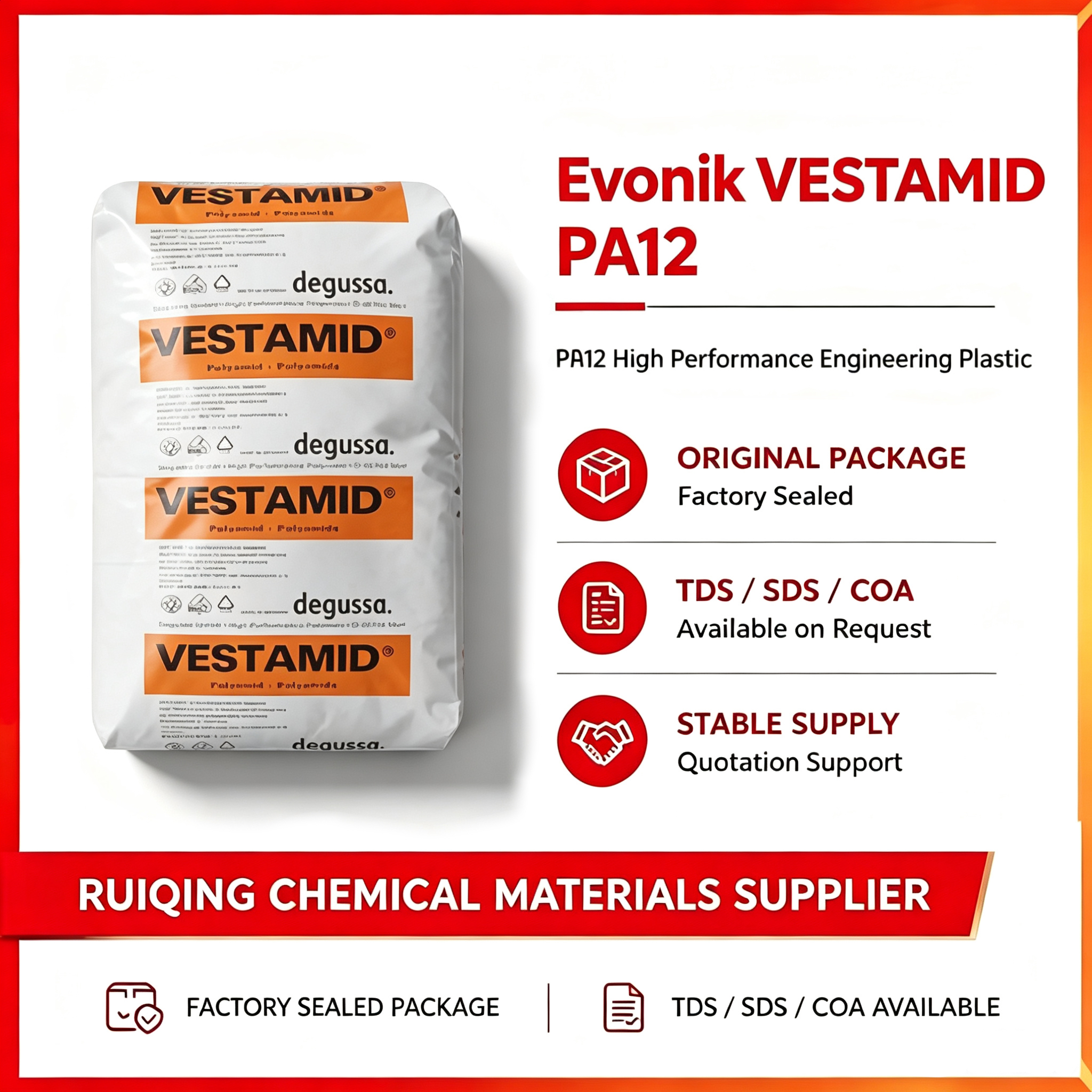
VESTAMID L1670 NC is a natural-color, low-viscosity, heat- and light-stabilized polyamide 12 compound from Evonik Operations GmbH. It was developed especially for the extrusion of thin wire insulation and cable jacketing, giving cable manufacturers a PA12 material that combines easy extrusion with the durability and low moisture uptake associated with PA12.
A major advantage of VESTAMID L1670 NC is its low coefficient of friction. The finished PA12 coating helps cables move more easily during laying and installation, which is useful where insulated wires or jacketed cables must pass through guides, conduits or other constrained routing systems.
The grade is also suitable for switchboard wiring. Published product information notes that wiring insulated with VESTAMID L1670 can be soldered without interference from the polymer insulation, allowing soldering without first stripping the insulating layer in the described application.
VESTAMID L1670 NC is based on partially crystalline PA12 and has low water absorption. As a result, molded or extruded parts can retain good dimensional stability when ambient humidity changes. The material also combines useful toughness, abrasion resistance and chemical resistance for electrical and industrial cable applications.
Another application benefit is cable protection in demanding environments. Evonik literature identifies PA12 as a material for cable and wire coating, polymer optical-fiber protection and selected underground-cable protection systems.
Explore more materials in our PA12 Polyamide 12 Product Category →.
For manufacturer information on PA12 cable materials, visit the Official Evonik Cable Sheathing Guide →.
Key Features of VESTAMID L1670 NC
| Feature | Benefit |
|---|---|
| Low Viscosity | Supports efficient thin-layer wire and cable extrusion |
| Natural Color | Suitable where a non-black base resin is required |
| Heat Stabilized | Supports stable performance during processing and service |
| Light / UV Stabilized | Suitable for applications exposed to light |
| Low Coefficient of Friction | Helps reduce drag during cable laying and installation |
| Low Water Absorption | Helps retain dimensions under changing humidity |
| Good Dimensional Stability | Useful for precision insulation and cable-jacket geometry |
| General Chemical Resistance | Resistant to many oils, fuels, alcohols and industrial chemicals |
| High Electrical Resistivity | Suitable for electrically insulating applications |
| High CTI | Typical CTI value of 600 supports electrical insulation design |
| Wire & Cable Extrusion Grade | Developed specifically for thin wire insulation and cable jacketing |
| Profile Extrusion Capability | Can also be used for technical extruded profiles |
The combination of low viscosity, low sliding friction and PA12 durability makes VESTAMID L1670 NC a highly application-specific grade rather than a general-purpose PA12 resin.
Typical Applications for VESTAMID L1670 NC
VESTAMID L1670 NC is primarily designed for extrusion applications in the electrical, electronic and cable industries.
| Application Area | Typical Use |
|---|---|
| Thin Wire Insulation | Extruded PA12 insulation for fine electrical wires |
| Cable Jacketing | Protective outer sheathing for electrical and industrial cables |
| Copper Wire Insulation | Insulating layers requiring abrasion and chemical resistance |
| Switchboard Wiring | Wire insulation for applications where soldering behavior is important |
| Polymer Optical Fiber Protection | Mono-layer PA12 protection for polymer optical fibers |
| Tight / Semi-Tight Fiber Coating | Protective secondary coating systems for optical fibers |
| Profile Extrusion | Low-viscosity PA12 for selected technical profiles |
| Industrial Electrical Systems | Insulation and protective coatings exposed to humidity and chemicals |
Evonik’s cable-industry guide identifies VESTAMID L1670 as a recommended PA12 grade for copper-wire insulation, tight or semi-tight fiber-optic buffer applications, and mono-layer protection of polymer optical fibers.
Typical Properties of VESTAMID L1670 NC
Physical & Rheological Properties
| Property | Typical Value | Test Method |
|---|---|---|
| Density | 1.01 g/cm³ | ISO 1183 |
| Water Absorption | 1.4% | Similar to ISO 62 |
| Humidity Absorption | 0.7% | Similar to ISO 62 |
| Shore D Hardness | 75 | ISO 7619-1 |
| Melt Volume-Flow Rate (MVR) | 84 cm³/10 min | ISO 1133 |
| MVR Test Condition | 230°C / 2.16 kg | — |
| Molding Shrinkage – Parallel | 0.9% | ISO 294-4 / 2577 |
| Molding Shrinkage – Normal | 1.1% | ISO 294-4 / 2577 |
| Viscosity Number | 120 cm³/g | ISO 307 / 1157 / 1628 |
The high MVR and viscosity number data are consistent with the low-viscosity positioning of VESTAMID L1670 NC, supporting thin-section extrusion and wire/cable coating.
Mechanical Properties
| Property | Typical Value (Dry / Conditioned) | Test Method |
|---|---|---|
| Tensile Modulus | 1,400 / 1,090 MPa | ISO 527 |
| Tensile Strength | 44 / 40 MPa | ISO 527 |
| Yield Stress | 44 / 40 MPa | ISO 527 |
| Yield Strain | 5 / 13% | ISO 527 |
| Stress at 50% Strain | 31 / 30 MPa | ISO 527 |
| Stress at Break | 50 / 60 MPa | ISO 527 |
| Nominal Strain at Break | >50 / >50% | ISO 527 |
| Charpy Impact Strength, 23°C | No Break / No Break | ISO 179/1eU |
| Charpy Impact Strength, -30°C | No Break / No Break | ISO 179/1eU |
| Charpy Notched Impact, 23°C | 4 / 4 kJ/m² | ISO 179/1eA |
| Charpy Notched Impact, -30°C | 5 / 4 kJ/m² | ISO 179/1eA |
| Flexural Modulus, 23°C | 1,350 / 1,100 MPa | ISO 178 |
| Flexural Strength, 23°C | 57 / 48 MPa | ISO 178 |
These properties show why VESTAMID L1670 NC is useful for cable and wire applications: it combines useful stiffness with ductility and strong unnotched impact behavior.
Thermal Properties
| Property | Typical Value | Test Method |
|---|---|---|
| Melting Temperature | 178°C | ISO 11357-1/-3 |
| Glass Transition Temperature | 45°C | ISO 11357-1/-2 |
| HDT @ 1.80 MPa | 50°C | ISO 75-1/-2 |
| HDT @ 0.45 MPa | 120°C | ISO 75-1/-2 |
| Vicat Softening Temperature A | 176°C | ISO 306 |
| Vicat Softening Temperature B | 140°C | ISO 306 |
| CTE – Parallel | 150 × 10⁻⁶/K | ISO 11359-1/-2 |
| CTE – Normal | 150 × 10⁻⁶/K | ISO 11359-1/-2 |
| Flammability @ 1.6 mm | HB | IEC 60695-11-10 |
| GWFI | 960°C @ 1 mm / 2 mm | IEC 60695-2-12 |
| GWIT | 850°C @ 1 mm / 2 mm | IEC 60695-2-13 |
Electrical Properties
| Property | Typical Value | Test Method |
|---|---|---|
| Volume Resistivity, Dry | >1 × 10¹³ Ω·m | IEC 62631-3-1 |
| Volume Resistivity, Conditioned | 3.2 × 10¹² Ω·m | IEC 62631-3-1 |
| Relative Permittivity, 50 Hz | 3.9 | IEC 62631-2-1 |
| Relative Permittivity, 100 Hz | 3.8 | IEC 62631-2-1 |
| Relative Permittivity, 1 MHz | 3.0 | IEC 62631-2-1 |
| Dielectric Strength, Dry | 27 kV/mm | Similar to IEC 60243-1 |
| Dielectric Strength, Conditioned | 33 kV/mm | IEC 60243-1 |
| Comparative Tracking Index (CTI) | 600 | IEC 60112 |
| Insulation Group | I | DIN EN 60664-1 |
The high electrical resistivity and CTI of VESTAMID L1670 NC support its role as an insulating PA12 for cable and wire applications.
Why Choose VESTAMID L1670 NC?
The main reason to choose VESTAMID L1670 NC is its combination of low viscosity, cable-processing performance and PA12 durability.
For thin wire insulation, material flow is important because the polymer must form a consistent, relatively thin layer around the conductor. The low viscosity of this grade supports this processing requirement.
The low coefficient of friction is another practical advantage. It helps reduce resistance when finished cables are pulled or laid through installation pathways, improving handling during assembly and installation.
PA12 also absorbs much less moisture than many conventional polyamides. This helps maintain dimensional and electrical stability when humidity changes, which is especially useful in wire insulation and cable-jacket applications.
Compared with the black L1670 BK 9.7504 version, VESTAMID L1670 NC provides a natural-color base where a non-black appearance or subsequent color strategy is preferred.
Processing Guidelines for VESTAMID L1670 NC
VESTAMID L1670 NC is suitable for profile extrusion and wire/cable extrusion. Published material data lists an overall melt-processing range of approximately 180–220°C.
| Processing Item | Typical / Recommended Guidance |
|---|---|
| Primary Processing | Wire / Cable Extrusion, Profile Extrusion |
| General Melt Temperature Range | Approx. 180–220°C |
| Injection-Molding Test Melt Temperature | Approx. 200°C |
| Injection-Molding Test Mold Temperature | Approx. 60°C |
| Injection Velocity | Approx. 200 mm/s |
| Holding Pressure | Approx. 70 MPa |
| Maximum Moisture Before Processing | Approx. 0.10% |
| Hopper Dryer Temperature | Approx. 60–80°C when needed |
Evonik supplies VESTAMID compounds dry in moisture-proof packaging. Material from intact packaging generally does not require additional drying before processing. During production, however, a dehumidifying hopper dryer is recommended because exposed PA12 granules can absorb moisture from the atmosphere.
Granules from opened or damaged bags should be dried. Evonik’s cable-processing guidance recommends a desiccant dryer for at least about 2 hours at 90–100°C for VESTAMID materials, with moisture content brought below approximately 0.10%.
Actual extrusion settings for VESTAMID L1670 NC should be optimized according to conductor diameter, insulation thickness, die design, line speed and extrusion-equipment configuration.
VESTAMID L1670 NC vs. VESTAMID L1670 BK 9.7504
| Feature | VESTAMID L1670 NC | VESTAMID L1670 BK 9.7504 |
|---|---|---|
| Base Polymer | PA12 | PA12 |
| Viscosity | Low | Low |
| Color | Natural | Black |
| Primary Processing | Wire / Cable & Profile Extrusion | Wire / Cable Extrusion |
| Main Application | Thin wire insulation, cable sheathing, fiber protection | Thin wire insulation and black cable jacketing |
| Low-Friction Coating | Yes | Yes |
| PA12 Moisture Resistance | Yes | Yes |
| Selection Reason | Natural-color base | Black ready-colored grade |
Choose VESTAMID L1670 NC when the project requires the L1670 cable-extrusion performance in a natural-color grade.
Choose VESTAMID L1670 BK 9.7504 when a ready-colored black cable or insulation compound is preferred.
Related Products
VESTAMID L1670 BK 9.7504 – Black low-viscosity PA12 for thin wire insulation and cable jacketing.
VESTAMID L1940 – Medium-viscosity PA12 for cable, fiber-optic and wire applications.
VESTAMID LX9057 – Flame-retardant PA12 grade for demanding cable applications.
View More PA12 Polyamide 12 Materials →
Technical Documents for VESTAMID L1670 NC
| Document Type | Description |
|---|---|
| TDS | Technical Data Sheet with physical, mechanical, thermal and electrical properties |
| SDS | Safety Data Sheet |
| COA | Batch-specific Certificate of Analysis where available |
| Compliance Documents | Relevant regulatory and material compliance documents subject to availability |
Need technical documentation for VESTAMID L1670 NC?
📧 Email: ruiqingchem@gmail.com
📝 Online form: Contact Us →
Please state VESTAMID L1670 NC and the required document type when submitting your inquiry.
FAQ About VESTAMID L1670 NC
Q1: What is VESTAMID L1670 NC?
VESTAMID L1670 NC is a natural-color, low-viscosity, heat- and light-stabilized PA12 compound from Evonik developed especially for thin wire insulation and cable jacketing.
Q2: What does NC mean in VESTAMID L1670 NC?
NC identifies the natural-color version of the grade, as opposed to a black pre-colored variant such as VESTAMID L1670 BK 9.7504.
Q3: What are the main applications of VESTAMID L1670 NC?
The main applications are wire insulation, cable jacketing, copper-wire insulation, profile extrusion and selected polymer optical-fiber protection systems.
Q4: What is the density of VESTAMID L1670 NC?
The typical density is approximately 1.01 g/cm³ according to ISO 1183.
Q5: What is the tensile modulus of VESTAMID L1670 NC?
The typical tensile modulus is approximately 1,400 MPa dry and 1,090 MPa conditioned according to ISO 527.
Q6: What is the MVR of VESTAMID L1670 NC?
The typical melt volume-flow rate is approximately 84 cm³/10 min at 230°C / 2.16 kg, which is consistent with its low-viscosity classification.
Q7: What is the dielectric strength of VESTAMID L1670 NC?
The published typical dielectric strength is approximately 27 kV/mm in the dry state and 33 kV/mm in the conditioned state, depending on the test configuration.
Q8: What processing temperature is recommended for VESTAMID L1670 NC?
Published material data gives a general melt-processing range of approximately 180–220°C. Actual extrusion settings should be optimized for the cable design and equipment.
Q9: Does VESTAMID L1670 NC need drying before extrusion?
Material from intact moisture-proof packaging normally does not require additional drying. If the packaging has been opened or damaged, dry the material and reduce moisture content to below approximately 0.10% before processing.
Q10: Can you provide VESTAMID L1670 NC TDS, SDS and COA?
Yes. Please request the required documents through our Contact Page → or email ruiqingchem@gmail.com.
Request VESTAMID L1670 NC Price & Technical Support
For pricing, availability, technical documents or grade-selection support for VESTAMID L1670 NC, please provide:
- Required quantity
- Destination country or port
- Cable / wire application
- Conductor or cable type
- Target insulation or jacket thickness
- Processing method
- TDS, SDS or COA requirements
- Sample requirement, if applicable
📧 Email: ruiqingchem@gmail.com
📝 Send Inquiry →