描述
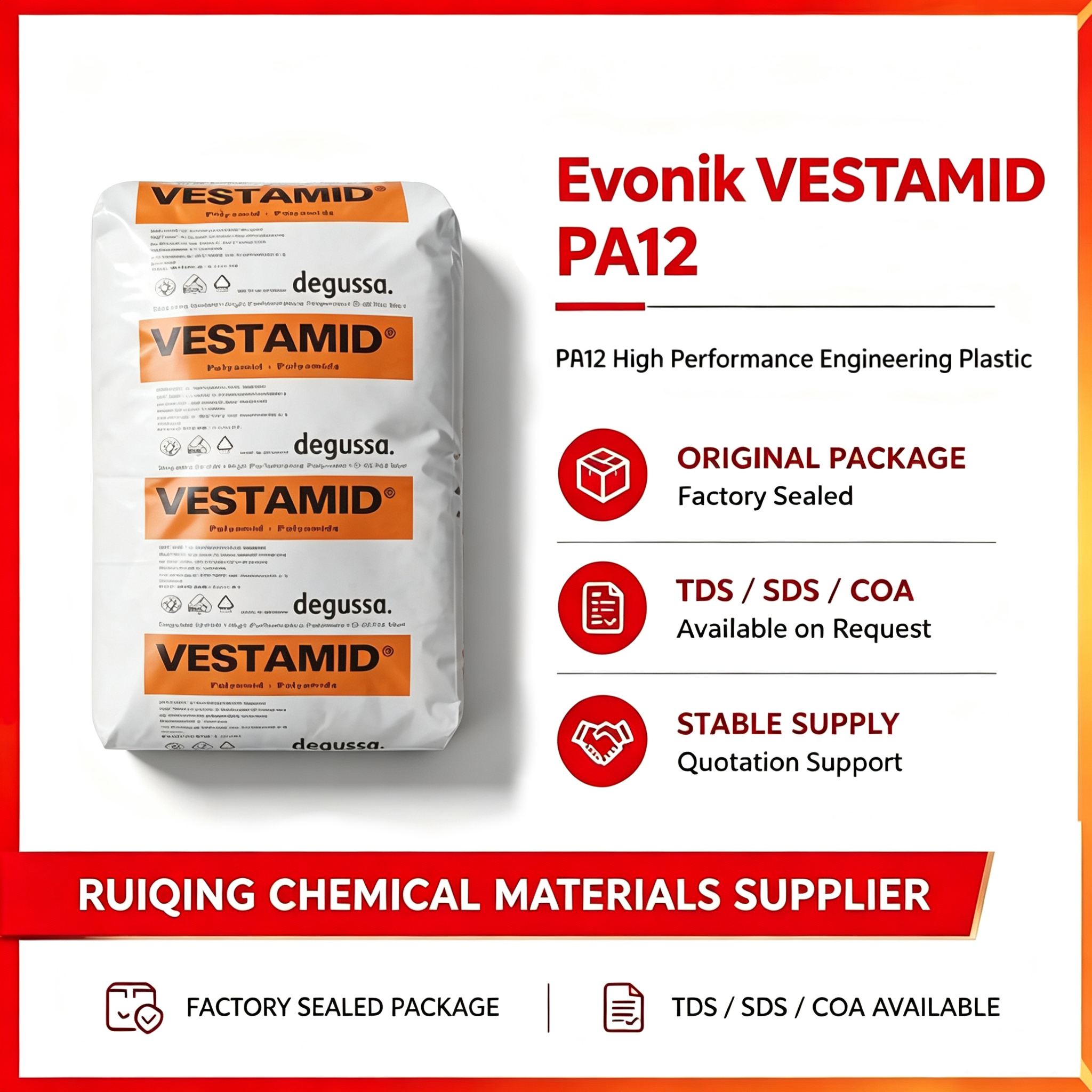
VESTAMID LX9112 BK is a conductive, heat-stabilized and light-resistant polyamide 12 compound from Evonik Operations GmbH developed especially for the pore-free extrusion coating of steel tubing.
This grade combines the corrosion-protection benefits of a tough PA12 coating with controlled electrical conductivity. That combination is particularly important for automotive steel tubes carrying liquid fuels, because fuel flow can generate electrostatic charge. Evonik states that steel tubing coated with VESTAMID LX9112 BK meets requirements of the U.S. automotive industry intended to prevent electrostatic charging caused by flowing liquid fuels.
The grade is also designed to process differently from many conventional conductive extrusion compounds. Evonik specifically highlights its significantly lower melt viscosity, which provides outstanding extrusion characteristics even when the application requires a very thin coating.
This is a major technical advantage. Conductive compounds often contain conductive additives that can increase viscosity and make smooth, thin, pore-free coating more difficult. VESTAMID LX9112 BK is formulated to maintain conductivity while still providing a processing profile suitable for steel-tube coating.
The current product information lists Extrusion and Coating as the principal processing routes. It also lists Automotive and Mobility, Industry and Engineering, and sustainability-related applications among the relevant industrial sectors.
The formulation is unfilled and includes a bonding agent. Historical Evonik product information also describes the grade as containing an adhesion promoter. This is important because the performance of a protective polymer layer depends on reliable adhesion between the PA12 and the prepared steel surface.
The coating provides more than electrostatic control. Evonik states that the seamless PA12 coating improves corrosion resistance because PA12 itself offers excellent impact strength together with good abrasion and chemical resistance.
Current electrical data confirms that this is not a standard insulating PA12. Typical dry volume resistivity is approximately 43,000 Ω·m, while a bar-method value of approximately 1.0 × 10³ Ω·m is also published. Typical dry surface resistivity is approximately 2.0 × 10⁶ Ω/sq.
The material is supplied as black cylindrical pellets in moisture-proof packaging. Evonik states that it has a shelf life of at least two years in original, undamaged packaging stored dry at temperatures not exceeding 30°C.
For more PA12 materials, visit our PA12 Polyamide 12 Product Category →.
For official manufacturer information about the product family, visit the Evonik VESTAMID Page →.
Key Features of VESTAMID LX9112 BK
| Feature | Benefit |
|---|---|
| Conductive PA12 | Helps dissipate electrostatic charge in fuel-carrying steel tubing |
| Anti-Static Function | Supports automotive electrostatic-control requirements |
| Low Melt Viscosity | Improves extrusion behavior compared with many conductive compounds |
| Thin-Coating Capability | Supports very thin, pore-free extrusion coatings |
| Bonding Agent / Adhesion Promoter | Supports adhesion between PA12 coating and properly prepared steel |
| Heat Stabilized | Supports thermal durability in automotive and engineering use |
| Light / UV / Weathering Resistant | Helps maintain properties during environmental exposure |
| Oil / Fuel Resistance | Supports fuel-line and automotive tube environments |
| Impact Resistance | Helps protect coated tube surfaces from mechanical damage |
| Abrasion Resistance | Improves coating durability against wear |
| Chemical Resistance | Supports demanding automotive and industrial environments |
| Black Color | Ready-colored conductive formulation |
The defining advantage of VESTAMID LX9112 BK is that it combines conductivity, adhesion and thin-coating processability in one PA12 extrusion compound.
Typical Applications for VESTAMID LX9112 BK
VESTAMID LX9112 BK is primarily intended for conductive coating of steel tubes.
| Application Area | Typical Use |
|---|---|
| Automotive Fuel Lines | Conductive PA12 coating on steel tubing carrying liquid fuels |
| Fuel Return Lines | Electrostatic-control coating for metallic fuel-return tubes |
| Steel Tube Extrusion Coating | Thin, pore-free conductive protective layers |
| Corrosion-Protected Metal Lines | PA12 outer coating for improved corrosion resistance |
| Automotive Metal Tubing | Coated lines requiring fuel, abrasion and impact resistance |
| Industrial Steel Tubes | Conductive protective coating in engineering systems |
| Thin-Wall Coating Applications | Applications benefiting from relatively low melt viscosity |
| Electrostatic-Controlled Tube Systems | Metal-line systems where charge dissipation is required |
The strongest commercial positioning is conductive extrusion coating of steel tubing for fuel-related automotive applications.
Typical Properties of VESTAMID LX9112 BK
Physical & Rheological Properties
| Property | Typical Value | Test Method |
|---|---|---|
| Density | 1.12 g/cm³ | ISO 1183 |
| Water Absorption | 1.11% | Similar to ISO 62 |
| Humidity Absorption | 0.65% | Similar to ISO 62 |
| Melt Volume-Flow Rate (MVR) | 34 cm³/10 min | ISO 1133 |
| MVR Test Condition | 240°C / 10 kg | — |
| Molding Shrinkage – Parallel | 1.2% | ISO 294-4 / 2577 |
| Molding Shrinkage – Normal | 1.5% | ISO 294-4 / 2577 |
| Color | Black | Manufacturer information |
| Additives | Conductive agent, heat stabilizer, light stabilizer, bonding agent | Manufacturer information |
The MVR of 34 cm³/10 min at 240°C / 10 kg supports the grade’s comparatively low-viscosity extrusion behavior.
Mechanical Properties
| Property | Typical Value (Dry / Conditioned) | Test Method |
|---|---|---|
| Tensile Modulus | 2,120 / 1,690 MPa | ISO 527 |
| Tensile Strength | 54 / 48 MPa | ISO 527 |
| Yield Stress | 54 / 48 MPa | ISO 527 |
| Yield Strain | 4 / 13% | ISO 527 |
| Stress at Break | 41 / 39 MPa | ISO 527 |
| Nominal Strain at Break | 32 / >50% | ISO 527 |
| Charpy Impact Strength, 23°C | No Break / No Break | ISO 179/1eU |
| Charpy Impact Strength, -30°C | No Break / No Break | ISO 179/1eU |
| Charpy Notched Impact, 23°C | 4.0 / 3.0 kJ/m² | ISO 179/1eA |
| Charpy Notched Impact, -30°C | 3.0 / 3.0 kJ/m² | ISO 179/1eA |
| Flexural Modulus, 23°C | 1,900 / 1,700 MPa | ISO 178 |
| Flexural Strength, 23°C | 74 / 62 MPa | ISO 178 |
The no-break unnotched Charpy results at room temperature and -30°C demonstrate the toughness required for protective automotive tube coatings.
Thermal Properties
| Property | Typical Value | Test Method |
|---|---|---|
| Melting Temperature | 176°C | ISO 11357-1/-3 |
| Glass Transition Temperature | 44°C | ISO 11357-1/-2 |
| HDT @ 1.80 MPa | 52°C | ISO 75-1/-2 |
| HDT @ 0.45 MPa | 150°C | ISO 75-1/-2 |
| Vicat Softening Temperature A | 174°C | ISO 306 |
| Vicat Softening Temperature B | 156°C | ISO 306 |
| CTE – Parallel | Approx. 105 × 10⁻⁶/K | ISO 11359-1/-2 |
| CTE – Normal | Approx. 124 × 10⁻⁶/K | ISO 11359-1/-2 |
These standardized thermal values should be used as material-property references rather than direct service-temperature ratings for a complete coated tube assembly.
Electrical Properties
| Property | Typical Value (Dry / Conditioned) | Test Method |
|---|---|---|
| Volume Resistivity | 43,000 / 29,000 Ω·m | IEC 62631-3-1 |
| Volume Resistivity on Bar | 1.0 × 10³ Ω·m dry | Similar to IEC 62631-3-1 |
| Surface Resistivity | 2.0 × 10⁶ / 1.3 × 10⁶ Ω/sq | IEC 62631-3-2 |
| Surface Resistance | 1.0 × 10⁶ Ω dry | IEC 62631-3-2 |
| Electrical Classification | Anti-static / Conductive | Manufacturer information |
These values clearly distinguish VESTAMID LX9112 BK from conventional electrically insulating PA12 grades.
Sustainability & LCA Data
The current product information includes TÜV Rheinland-certified life-cycle-assessment data.
| LCA Property | Published Value | Standard |
|---|---|---|
| LCA Certificate | VESTAMID L Compound high | ISO 14040 / 14044 |
| LCA Certifier | TÜV Rheinland | ISO 14040 / 14044 |
| Blue Water Consumption | 23.9 kg | ISO 14040 / 14044 |
| GWP incl. Biogenic Carbon incl. LUC | 5.8 kg CO₂ eq./kg | ISO 14040 / 14044 |
| GWP excl. Biogenic Carbon incl. LUC | 5.8 kg CO₂ eq./kg | ISO 14040 / 14044 |
| Land Use – ReCiPe 2016 | 0.1 annual crop eq.·y | ISO 14040 / 14044 |
| GWP Saving vs. 2023 Reference | 2.1 kg CO₂ eq./kg lower | ISO 14040 / 14044 |
Why Choose VESTAMID LX9112 BK?
The main reason to choose VESTAMID LX9112 BK is the combination of electrical conductivity and practical thin-wall extrusion coating performance.
Conductive polymers are often more difficult to process than standard thermoplastics because the conductive additive can increase melt viscosity. That can make smooth, thin and pore-free coatings difficult to achieve.
Evonik specifically developed LX9112 to address this issue. Its lower melt viscosity provides better extrusion characteristics than many conventional conductive compounds, even when the desired coating is very thin.
The conductive function is also directly relevant to fuel systems. Flowing liquid fuel can create electrostatic charge. A conductive coating helps dissipate that charge rather than allowing it to accumulate on the tube system.
At the same time, the PA12 base provides a durable protective layer. Impact resistance helps protect the steel tube during installation and service. Abrasion resistance reduces wear. Chemical and fuel resistance support automotive fluid environments.
The bonding-agent system also helps the coating remain attached to a properly prepared steel substrate. Good adhesion is essential because delamination can reduce both corrosion protection and electrostatic-control performance.
For automotive steel tubing where conductivity, corrosion protection, thin coating and reliable extrusion all matter, VESTAMID LX9112 BK is more application-specific than a standard conductive PA12 or a conventional non-conductive steel-coating grade.
Processing Guidelines for VESTAMID LX9112 BK
VESTAMID LX9112 BK is primarily designed for extrusion coating of steel tubing.
The current grade-specific product information publishes these reference conditions:
| Processing Parameter | Published Value |
|---|---|
| Primary Processing | Extrusion / Coating |
| MVR Test Temperature | 240°C |
| MVR Test Load | 10 kg |
| Standard Test Melt Temperature | 240°C |
| Standard Test Mold Temperature | 60°C |
| Standard Test Injection Velocity | 200 mm/s |
| Delivery Form | Cylindrical pellets / granules |
| Packaging | Moisture-proof packaging |
| Shelf Life | At least 2 years at ≤30°C in original undamaged packaging |
The 240°C melt and 60°C mold values above are standardized specimen-production conditions. They should not automatically be used as a complete steel-tube coating recipe.
For real extrusion coating, the processor should optimize:
- Barrel-temperature profile
- Adapter and die temperature
- Steel-tube preheating
- Steel surface cleaning and preparation
- Extrusion pressure
- Line speed
- Coating thickness
- Die centering
- Cooling conditions
- Adhesion testing
- Surface-resistance testing
- Pore-free coating inspection
Because conductivity depends on the conductive network inside the compound, excessive shear, contamination or inappropriate processing conditions should be avoided.
The steel surface must also be properly prepared. The product’s bonding-agent system can only deliver reliable adhesion when the substrate preparation and coating process are controlled correctly.
VESTAMID LX9112 BK vs. VESTAMID LX9041 BK 9.7504
| Feature | VESTAMID LX9112 BK | VESTAMID LX9041 BK 9.7504 |
|---|---|---|
| Base Polymer | PA12 | PA12 |
| Color | Black | Black |
| Primary Application | Steel-tube extrusion coating | Steel-tube extrusion coating |
| Electrical Function | Conductive / anti-static | Primarily insulating |
| Conductive Agent | Yes | No conductive positioning |
| Bonding Agent | Yes | Adhesion-promoted coating |
| Fuel Electrostatic Control | Key application benefit | Not the main function |
| Thin Conductive Coating | Major grade advantage | Conventional protective coating |
| MVR | 34 cm³/10 min @ 240°C / 10 kg | 17 cm³/10 min @ 240°C / 2.16 kg |
| Main Selection Reason | Conductivity + pore-free thin coating | Protective steel coating without conductive requirement |
The MVR values use different loads and should not be treated as a direct flow comparison.
Choose VESTAMID LX9112 BK when electrostatic dissipation or conductive fuel-line coating is required.
Choose VESTAMID LX9041 BK 9.7504 when the main requirement is a conventional PA12 protective coating with adhesion, abrasion resistance and corrosion protection.
Related Products
VESTAMID LX9041 BK 9.7504 – Medium-viscosity PA12 for protective steel-tube extrusion coating.
VESTAMID LX9001 BK 9.7504 – High-viscosity PA12 for steel-tube extrusion coating.
VESTAMID LX9102 BK – Conductive, plasticized PA12 family grade for electrically conductive tubing.
VESTAMID LX9117 BK – Conductive reinforced PA12 for technical applications requiring increased stiffness.
View More PA12 Polyamide 12 Materials →
Technical Documents for VESTAMID LX9112 BK
| Document Type | Description |
|---|---|
| TDS | Current physical, mechanical, thermal, electrical and rheological data |
| SDS | Safety Data Sheet |
| COA | Batch-specific Certificate of Analysis where available |
| Electrical Data | Volume/surface resistivity and anti-static performance |
| Processing Information | Extrusion-coating and PA12 handling guidance |
| Automotive Documentation | Relevant fuel-line and automotive qualification information |
Need technical documents for VESTAMID LX9112 BK?
📧 Email: ruiqingchem@gmail.com
📝 Online form: Contact Us →
Please state VESTAMID LX9112 BK and the required document type when submitting your inquiry.
FAQ About VESTAMID LX9112 BK
Q1: What is VESTAMID LX9112 BK?
VESTAMID LX9112 BK is a black, conductive, heat- and light-stabilized PA12 from Evonik developed for pore-free extrusion coating of steel tubing.
Q2: Is VESTAMID LX9112 BK electrically conductive?
Yes. It is specifically classified as anti-static and conductive. Typical dry volume resistivity is approximately 43,000 Ω·m, with other published test methods showing even lower values.
Q3: What is the main application of VESTAMID LX9112 BK?
The main application is conductive extrusion coating of steel tubing, especially automotive fuel-carrying metal lines.
Q4: Why is conductivity important in fuel lines?
Flowing liquid fuels can generate electrostatic charge. A conductive coating helps dissipate charge and supports automotive requirements intended to prevent electrostatic buildup.
Q5: What is the density of VESTAMID LX9112 BK?
The typical density is approximately 1.12 g/cm³ according to ISO 1183.
Q6: What is the MVR of VESTAMID LX9112 BK?
The typical MVR is approximately 34 cm³/10 min at 240°C / 10 kg according to ISO 1133.
Q7: What is the tensile modulus?
Typical tensile modulus is approximately 2,120 MPa dry and 1,690 MPa conditioned.
Q8: What is the melting temperature of VESTAMID LX9112 BK?
The typical melting temperature is approximately 176°C according to ISO 11357.
Q9: How is VESTAMID LX9112 BK different from LX9041 BK 9.7504?
Both are PA12 steel-tube coating grades, but LX9112 BK is specifically conductive and anti-static, while LX9041 BK 9.7504 is primarily a conventional protective PA12 coating grade.
Q10: Can you provide VESTAMID LX9112 BK TDS, SDS and COA?
Yes. Please request the required technical documents through our Contact Page → or email ruiqingchem@gmail.com.
Request VESTAMID LX9112 BK Price & Technical Support
For pricing, availability, technical documents or material-selection support for VESTAMID LX9112 BK, please provide:
- Required quantity
- Destination country or port
- Steel-tube application
- Fuel or fluid type
- Tube outside diameter
- Required coating thickness
- Steel grade and surface-preparation method
- Target surface or volume resistance
- Electrostatic-control requirement
- Service temperature
- Extrusion-coating line information
- Adhesion and corrosion requirements
- TDS, SDS or COA requirements
- Sample requirement, if applicable
📧 Email: ruiqingchem@gmail.com
📝 Send Inquiry →