
描述
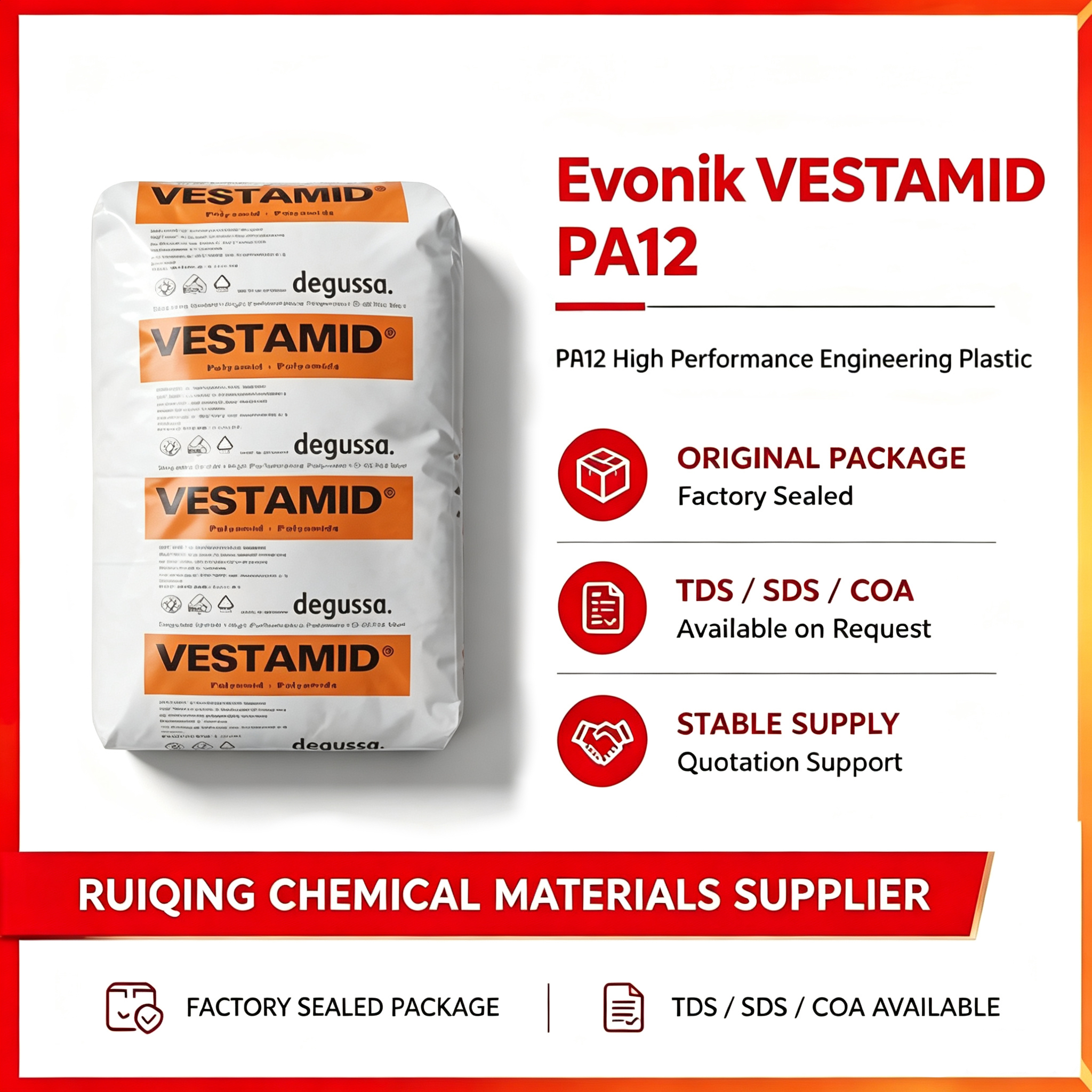
VESTAMID LC-GF15 NC is a semi-crystalline, heat- and UV-stabilized polyamide 12 compound from Evonik Operations GmbH reinforced with 15% glass fiber. It was developed primarily for injection-molded connectors and is especially suitable for automotive and mobility applications.
Evonik positions the LC-GF family as fiberglass-reinforced PA12 for high-quality lightweight automotive components. The family is available with different glass-fiber contents, allowing designers to choose a balance between stiffness, strength and flexibility. VESTAMID LC-GF15 NC is the 15% glass-fiber, natural-color grade in this portfolio.
A major design objective of VESTAMID LC-GF15 NC is to combine reinforcement with comparatively high strain at break. The current product information describes it as a glass-fiber-reinforced PA12 compound with high strain at break for injection molding. This makes it particularly attractive for quick connectors and other components that need more rigidity than unfilled PA12 without sacrificing all of the ductility and impact behavior associated with PA12.
The semi-crystalline PA12 base absorbs only small amounts of water. Because of this, molded components maintain good dimensional accuracy when ambient humidity changes. This is important for quick connectors, clips, housings and other precision parts where dimensional variation can affect fit, sealing or assembly.
The 15% glass-fiber reinforcement increases stiffness and thermal load capacity while keeping the material lighter than metal alternatives. Evonik also highlights the potential to reduce wall thickness in components, which can contribute to lower component weight and manufacturing cost.
VESTAMID LC-GF15 NC is heat stabilized and UV/light/weathering stabilized. The current product information also identifies the grade as fuel resistant, electrically insulating and laser absorbing.
For more reinforced PA12 materials, visit our PA12 Polyamide 12 Product Category →.
For exact manufacturer positioning of this LC-GF family, see the Official Evonik VESTAMID LC-GF Quick Connector Material Guide →.
Key Features of VESTAMID LC-GF15 NC
| Feature | Benefit |
|---|---|
| 15% Glass Fiber Reinforcement | Increases stiffness and strength while retaining useful flexibility |
| High Strain at Break | Helps the component tolerate assembly stress and mechanical deformation |
| Heat Stabilized | Supports demanding automotive and engineering environments |
| UV / Light / Weathering Stabilized | Helps maintain performance where light exposure is relevant |
| Low Water Absorption | Reduces humidity-related dimensional changes |
| Good Dimensional Stability | Supports precision connector geometry and consistent fit |
| Strong Low-Temperature Impact Performance | Useful for automotive parts exposed to cold environments |
| Fuel Resistance | Relevant to automotive connector and fluid-system environments |
| Electrical Insulation | Suitable for selected connector and electrical-component applications |
| Laser Absorbing | Current Evonik product information identifies this optical characteristic |
| Natural Color | Allows downstream color selection where required |
| Lightweight Metal Replacement Potential | Can reduce component mass and corrosion concerns compared with metal |
The balance between reinforcement and ductility is the main strength of VESTAMID LC-GF15 NC. Higher glass-fiber contents can provide greater stiffness, while this 15% grade provides a more flexible balance for connector designs that still require strong impact performance.
Typical Applications for VESTAMID LC-GF15 NC
VESTAMID LC-GF15 NC is primarily designed for injection-molded automotive connectors.
| Application Area | Typical Use |
|---|---|
| Automotive Quick Connectors | Fluid-line connecting elements requiring dimensional stability and toughness |
| Automotive Connector Housings | Precision molded housings exposed to temperature and humidity variation |
| Fluid-System Components | Selected connector bodies requiring fuel resistance |
| Clips & Fastening Components | Lightweight reinforced parts requiring impact resistance |
| Industrial Connectors | Precision connection parts with chemical and dimensional requirements |
| Engineering Components | Lightweight molded parts requiring a balance of stiffness and strain |
| Mobility Components | Reinforced PA12 parts designed for low weight and corrosion resistance |
| Precision Injection-Molded Parts | Components requiring consistent dimensions under changing humidity |
Evonik specifically presents the LC-GF family as a material solution for quick connectors. The combination of PA12 chemistry and glass-fiber reinforcement can replace metal in selected connector designs while avoiding corrosion and reducing weight.
Typical Properties of VESTAMID LC-GF15 NC
Physical Properties
| Property | Typical Value | Test Method |
|---|---|---|
| Glass Fiber Content | 15% | Product designation / Evonik portfolio |
| Density | 1.12 g/cm³ | ISO 1183 |
| Moisture Content | 0.092 wt.% | ISO 15512 |
| Shore D Hardness | 78 | ISO 7619-1 |
| Structure | Semi-crystalline | Manufacturer information |
| Color | Natural Color | Manufacturer information |
The relatively low density of VESTAMID LC-GF15 NC supports lightweight component design even after glass-fiber reinforcement.
Mechanical Properties
| Property | Typical Value | Test Method |
|---|---|---|
| Tensile Modulus | Approx. 3,950 MPa | ISO 527 |
| Yield Stress | Approx. 86 MPa | ISO 527 |
| Yield Strain | 4% | ISO 527 |
| Stress at Break | Approx. 79 MPa | ISO 527 |
| Strain at Break | 8% | ISO 527 |
| Nominal Strain at Break | 8% | ISO 527 |
| Charpy Impact Strength, 23°C | Approx. 75 kJ/m² | ISO 179/1eU |
| Charpy Impact Strength, -30°C | Approx. 79 kJ/m² | ISO 179/1eU |
| Charpy Impact Strength, -40°C | Approx. 83 kJ/m² | ISO 179/1eU |
| Charpy Notched Impact, 23°C | Approx. 14 kJ/m² | ISO 179/1eA |
| Charpy Notched Impact, -30°C | Approx. 9 kJ/m² | ISO 179/1eA |
| Charpy Notched Impact, -40°C | Approx. 8 kJ/m² | ISO 179/1eA |
The impact data is a particularly important characteristic of VESTAMID LC-GF15 NC. Even at -30°C and -40°C, the material retains useful impact performance, supporting automotive connector applications exposed to winter conditions.
Thermal Properties
| Property | Typical Value | Test Method |
|---|---|---|
| Melting Temperature | Approx. 178°C | ISO 11357-1/-3 |
| HDT @ 1.80 MPa | Approx. 159°C | ISO 75-1/-2 |
| HDT @ 0.45 MPa | Approx. 177°C | ISO 75-1/-2 |
| Vicat Softening Temperature A | Approx. 177°C | ISO 306 |
| Vicat Softening Temperature B | Approx. 169°C | ISO 306 |
The glass-fiber reinforcement substantially improves the load-bearing behavior of the PA12 matrix at elevated temperature. The approximately 159°C HDT at 1.80 MPa makes VESTAMID LC-GF15 NC suitable for technical components that require greater thermal rigidity than unfilled PA12.
Electrical & Functional Properties
| Property | Published Positioning |
|---|---|
| Electrical Behavior | Electrically insulating |
| Optical Characteristic | Laser absorbing |
| Chemical Resistance | Fuel resistant; PA12 provides broad general chemical stability |
| Weathering Resistance | UV / light / weathering stabilized |
| Conformity | Automotive |
Detailed electrical numerical values should be taken from the current manufacturer TDS if they are required for an electrical design calculation.
Why Choose VESTAMID LC-GF15 NC?
One of the main reasons to choose VESTAMID LC-GF15 NC is its balance of stiffness and ductility.
Increasing glass-fiber content generally increases rigidity, but it can also reduce flexibility. The LC-GF family gives engineers multiple reinforcement levels so that a grade can be selected according to the required strength-versus-flexibility balance.
At 15% glass fiber, VESTAMID LC-GF15 NC offers significantly higher stiffness than unfilled PA12 while retaining an 8% strain at break and strong impact behavior. This can be especially valuable for quick connectors that need to tolerate assembly forces, clips, locking features and vibration.
Another major advantage is dimensional stability. PA12 absorbs relatively little moisture, so dimensional and mechanical properties vary less with humidity than many other engineering polyamides. In connector applications, this can help maintain sealing geometry and assembly tolerances.
The material also provides corrosion resistance compared with metal and can reduce component weight. Evonik highlights metal replacement as an important benefit of LC-GF PA12 in automotive quick connectors.
Finally, the high HDT, fuel resistance and UV stabilization make the grade useful in demanding automotive environments where the component may be exposed to temperature variation, fuel-related media and environmental aging.
Processing Guidelines for VESTAMID LC-GF15 NC
VESTAMID LC-GF15 NC is designed primarily for injection molding.
The current product information gives the following processing recommendations:
| Processing Parameter | Recommended Range / Value |
|---|---|
| Pre-Drying Temperature | 80–100°C |
| Pre-Drying Time | 2–4 hours |
| Target Processing Moisture | ≤0.1% |
| Melt Temperature | 240–280°C |
| Mold Temperature | 60–100°C |
| Feed Temperature | 40–60°C |
| Typical Nozzle Temperature | Approx. 250°C |
| Typical Screw Speed | Approx. 127 rpm |
| Circumferential Screw Speed | Approx. 0.05–0.20 m/s |
| Back Pressure | Approx. 0.3–0.8 MPa |
| Typical Holding Pressure | Approx. 6 MPa |
The grade is supplied as cylindrical granules in a ready-to-process condition and packed in moisture-tight packaging. If original packaging remains intact, unnecessary drying should be avoided. If the material has absorbed moisture after the package has been opened, the published pre-drying range provides a suitable starting point.
The recommended melt-temperature window of 240–280°C and mold-temperature range of 60–100°C should be adjusted according to part geometry, flow length, gate design and required surface quality.
Because VESTAMID LC-GF15 NC contains glass fiber, mold and gate design should account for fiber orientation. Flow direction can influence local mechanical behavior, so critical connector features should be evaluated under realistic molding conditions.
VESTAMID LC-GF15 NC vs. VESTAMID LC-GF23 NC
| Feature | VESTAMID LC-GF15 NC | VESTAMID LC-GF23 NC |
|---|---|---|
| Base Polymer | PA12 | PA12 |
| Glass Fiber Content | 15% | 23% |
| Color | Natural | Natural |
| Primary Process | Injection Molding | Injection Molding |
| Primary Application Family | Automotive quick connectors | Automotive quick connectors |
| Relative Stiffness | Lower | Higher |
| Relative Flexibility / Strain Potential | Higher | Lower |
| Main Selection Reason | Better stiffness-flexibility balance | Higher reinforcement and rigidity |
Evonik specifically offers the LC-GF range at different fiberglass contents so manufacturers can select the required combination of strength and flexibility.
Choose VESTAMID LC-GF15 NC when connector geometry benefits from more ductility and impact tolerance while still requiring significant reinforcement.
Choose VESTAMID LC-GF23 NC when higher stiffness and greater glass-fiber reinforcement are more important.
Related Products
VESTAMID LC-GF23 NC – Natural-color PA12 reinforced with 23% glass fiber for higher-stiffness quick connectors.
VESTAMID LC-GF30 NC – Natural-color PA12 reinforced with 30% glass fiber for more highly loaded connector components.
VESTAMID LC-GF50 BK – Black PA12 with 50% glass fiber for maximum stiffness within the LC-GF family.
View More PA12 Polyamide 12 Materials →
Technical Documents for VESTAMID LC-GF15 NC
| Document Type | Description |
|---|---|
| TDS | Technical Data Sheet with mechanical, thermal and injection-molding data |
| SDS | Safety Data Sheet |
| COA | Batch-specific Certificate of Analysis where available |
| Quick Connector Guide | Evonik LC-GF product-family information |
| Automotive Compliance | Relevant automotive documentation subject to availability |
Need technical documents for VESTAMID LC-GF15 NC?
📧 Email: ruiqingchem@gmail.com
📝 Online form: Contact Us →
Please state VESTAMID LC-GF15 NC and the required document type when submitting your inquiry.
FAQ About VESTAMID LC-GF15 NC
Q1: What is VESTAMID LC-GF15 NC?
VESTAMID LC-GF15 NC is a natural-color, semi-crystalline PA12 compound from Evonik reinforced with 15% glass fiber and developed primarily for injection-molded automotive quick connectors.
Q2: How much glass fiber does VESTAMID LC-GF15 NC contain?
The grade contains 15% glass fiber, making it the lowest glass-fiber-content grade in Evonik’s current LC-GF quick-connector range.
Q3: What is the tensile modulus of VESTAMID LC-GF15 NC?
The typical dry tensile modulus is approximately 3,950 MPa according to ISO 527.
Q4: What is the impact strength of VESTAMID LC-GF15 NC?
Typical unnotched Charpy impact strength is approximately 75 kJ/m² at 23°C, 79 kJ/m² at -30°C and 83 kJ/m² at -40°C.
Q5: What is the density of VESTAMID LC-GF15 NC?
The typical density is approximately 1.12 g/cm³ according to ISO 1183.
Q6: What is the melting temperature of VESTAMID LC-GF15 NC?
The typical melting temperature is approximately 178°C according to ISO 11357.
Q7: What is the HDT of VESTAMID LC-GF15 NC?
The typical heat-deflection temperature is approximately 159°C at 1.80 MPa and approximately 177°C at 0.45 MPa.
Q8: What injection-molding temperature is recommended?
The current processing recommendation gives a melt-temperature range of approximately 240–280°C and a mold-temperature range of approximately 60–100°C.
Q9: Is VESTAMID LC-GF15 NC suitable for fuel-system connectors?
The grade is specifically positioned for automotive quick connectors and current product information identifies it as fuel resistant. Final approval should be based on the actual fuel, temperature, pressure and connector design.
Q10: Can you provide VESTAMID LC-GF15 NC TDS, SDS and COA?
Yes. Please request the required documents through our Contact Page → or email ruiqingchem@gmail.com.
Request VESTAMID LC-GF15 NC Price & Technical Support
For pricing, availability, technical documents or material-selection support for VESTAMID LC-GF15 NC, please provide:
- Required quantity
- Destination country or port
- Connector or molded-part application
- Fluid or fuel medium
- Continuous and peak operating temperature
- Pressure requirement
- Critical dimensions or wall thickness
- Required automotive standard or approval
- Injection-molding machine information
- TDS, SDS or COA requirements
- Sample requirement, if applicable
📧 Email: ruiqingchem@gmail.com
📝 Send Inquiry →