描述
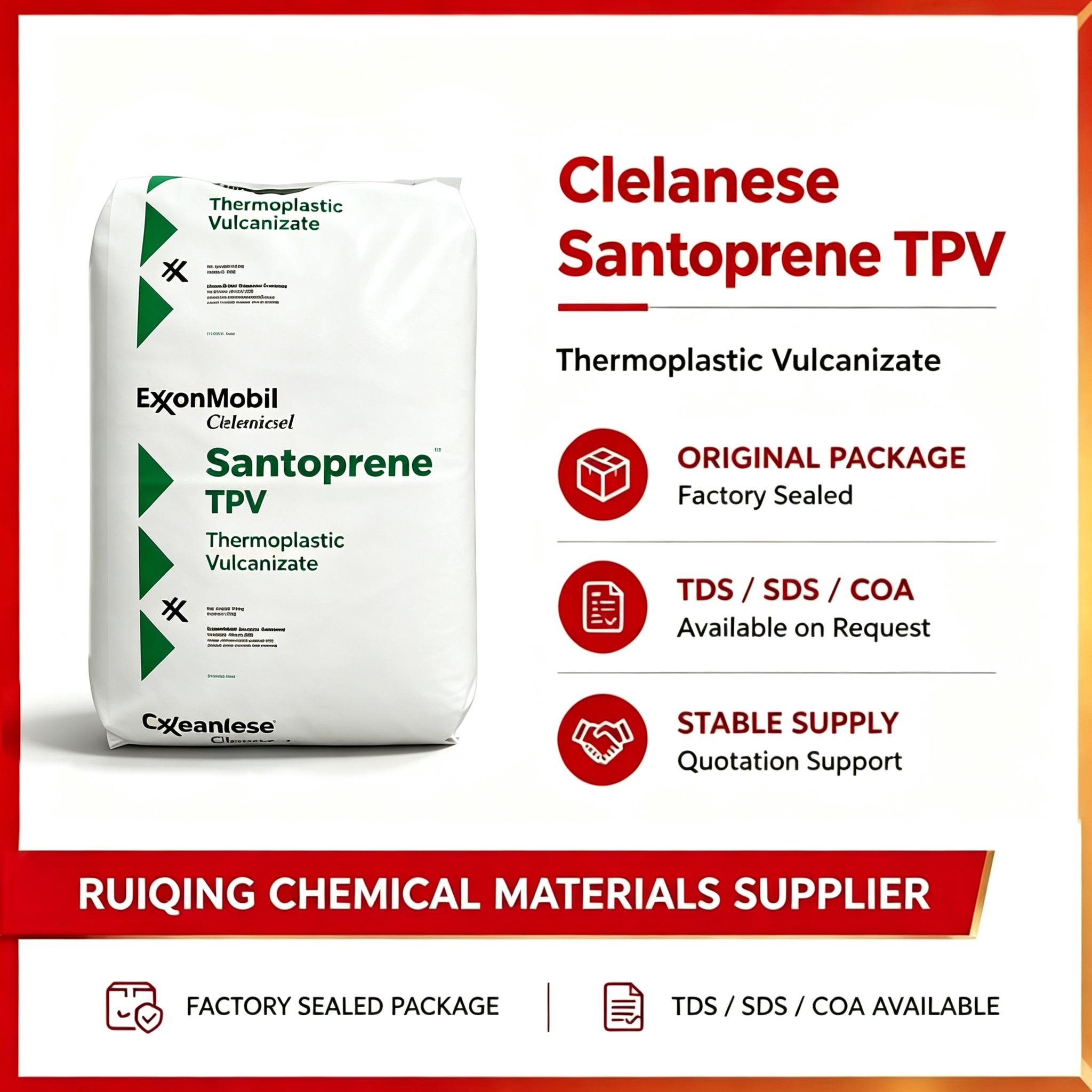
Santoprene 291-75B150 is a natural, colorable specialty thermoplastic vulcanizate from Celanese developed specifically for bonding, overmolding and hard/soft multi-material applications.
Unlike a standard general-purpose TPV, Santoprene 291-75B150 is formulated to develop adhesion to commonly used engineering thermoplastics, including:
- Polycarbonate (PC)
- ABS
- PC/ABS blends
- ASA
- PMMA
Celanese specifically positions the material for cold-insert molding and 2K / two-shot molding, where the TPV is molded directly onto a rigid engineering-plastic component.
The current Celanese Product Finder gives a typical hardness of approximately 78 Shore A and identifies the grade for overmolding or coextrusion onto acrylics, polyesters, COPE, ABS and PC.
This makes Santoprene 291-75B150 particularly useful for components that combine:
- A rigid structural substrate
- A flexible elastomeric surface
- Soft-touch functionality
- Grip enhancement
- Sealing functionality
- Impact protection
- Integrated hard/soft construction
The grade is also specifically recommended for applications requiring superior part surface appearance and soft-touch characteristics.
Current grade-specific data lists:
- 78 Shore A hardness
- 1.090 g/cm³ density
- 38% compression set at 23°C / 24 h
- 68% compression set at 70°C / 24 h
- Natural / colorable appearance
- Shear-dependent rheology
- Injection molding
- Multi-injection molding
- Coextrusion
For more TPV products, visit our TPV Thermoplastic Vulcanizates Product Category →.
For the current Santoprene portfolio, see the Official Celanese Santoprene & Geolast Product Finder →.
Key Features of Santoprene 291-75B150
| Feature | Engineering Benefit |
|---|---|
| 78 Shore A Hardness | Provides a firm but flexible elastomeric surface |
| Bonding to PC | Supports direct soft-touch overmolding onto polycarbonate |
| Bonding to ABS | Suitable for hard/soft ABS assemblies |
| Bonding to PC/ABS | Useful for consumer electronics, appliances and automotive components |
| Bonding to ASA | Supports selected weather-resistant rigid substrates |
| Bonding to PMMA | Supports hard/soft acrylic constructions |
| Cold-Insert Molding | Can be molded onto preformed rigid substrates |
| 2K / Two-Shot Molding | Enables integrated hard/soft component manufacture |
| Coextrusion Capability | Supports selected continuous multi-material structures |
| Broad Injection Processing Window | Helps improve production robustness |
| Superior Surface Appearance | Useful for visible consumer and decorative components |
| Soft-Touch Performance | Suitable for grips, handles and ergonomic surfaces |
| Shear-Dependent Flow | Lower apparent viscosity at higher processing shear |
| Natural / Colorable | Supports customized product colors |
| UL Recognized | Listed under applicable plastics-component UL files |
| Manufacturing-Stream Recyclability | Supports controlled reuse of suitable production material |
The main engineering advantage of Santoprene 291-75B150 is therefore not simply its hardness—it is the combination of elastomeric feel and engineered adhesion to rigid engineering plastics.
Typical Applications for Santoprene 291-75B150
Santoprene 291-75B150 is suitable for products where a hard structural material needs an integrated flexible or soft-touch layer.
| Application Area | Typical Use |
|---|---|
| Power Tools | Soft-touch handles and ergonomic grips |
| Kitchen Tools | Flexible non-slip grip surfaces |
| Small Appliances | Handles, control surfaces and flexible interfaces |
| White Goods | Soft-touch and sealing components |
| Consumer Electronics | Soft-touch housings and protective interfaces |
| Mobile Devices | Flexible protective areas and grips |
| Writing Instruments | Soft grip surfaces |
| Eyewear Components | Flexible comfort or contact areas |
| Automotive Interiors | Soft-touch trim and functional components |
| Automotive Components | Selected hard/soft molded parts |
| Seals & Gaskets | Integrated elastomeric sealing features |
| Grommets | Flexible protective elements |
| Bumpers | Impact and contact surfaces |
| Living-Hinge-Type Parts | Repeated-flex elastomeric sections |
| Tie-Layer Applications | Functional bonding between compatible materials |
| Decorative Overmolding | High-quality visible soft-touch surfaces |
Celanese also identifies 291-75B150 as bondable with engineering thermoplastics in its connectivity-material portfolio, with ETP defined there as PC, ABS, PC/ABS, ASA and PMMA.
Typical Properties of Santoprene 291-75B150
Physical Properties
| Property | Typical Value | Test Method |
|---|---|---|
| Density | 1090 kg/m³ / 1.090 g/cm³ | ISO 1183 |
| Shore A Hardness, 15 s | 78 | ISO 48-4 / ISO 868 |
| Resin Identification | TPV | ISO 1043 |
| Part Marking Code | >TPV< | ISO 11469 |
| Product Form | Pellets | Manufacturer information |
| Appearance | Natural / Colorable | Manufacturer information |
The current Celanese Materials Database revision dated April 21, 2025 lists approximately 78 Shore A hardness and 1.090 g/cm³ density for Santoprene 291-75B150.
Mechanical / Elastomeric Properties
| Property | Typical Value | Test Method |
|---|---|---|
| Shore A Hardness | 78 | ISO 48-4 / ISO 868 |
| Compression Set, 23°C / 24 h | 38% | ISO 815 |
| Compression Set, 70°C / 24 h | 68% | ISO 815 |
The current Celanese Product Finder does not publish tensile break and elongation values for this grade in the same summary table, so these values should not be copied from other 291 B150 grades.
That distinction is important for this page: Santoprene 291-75B150 should use its own verified data rather than carrying over the 291-60B150 mechanical values.
Adhesion to Engineering Thermoplastics
The defining feature of Santoprene 291-75B150 is its ability to bond to selected engineering thermoplastics.
Celanese specifically identifies:
- PC
- ABS
- PC/ABS
- ASA
- PMMA
The Product Finder also positions the grade for overmolding or coextrusion onto:
- Acrylics
- Polyesters
- COPE
- ABS
- PC
This allows a rigid substrate and flexible TPV to be integrated into a single component.
Typical design functions include:
- Soft-touch surfaces
- Grip zones
- Sealing lips
- Protective edges
- Flexible interfaces
- Anti-slip surfaces
- Impact zones
- Decorative elastomeric regions
PC Overmolding with Santoprene 291-75B150
Santoprene 291-75B150 is specifically formulated for adhesion to polycarbonate.
PC is widely used for:
- Consumer electronics
- Appliance housings
- Hand-held equipment
- Automotive components
- Technical housings
- Transparent or structural components
By overmolding Santoprene 291-75B150 onto a compatible PC substrate, designers can integrate a flexible or soft-touch area without separately attaching a rubber component.
This can reduce:
- Secondary assembly
- Mechanical fastening
- Separate adhesive application
- Component count
Actual adhesion should be validated with the customer’s exact PC grade because additives, mold-release agents, flame retardants and surface condition can affect bonding.
ABS and PC/ABS Overmolding
ABS and PC/ABS are also specifically listed substrates for Santoprene 291-75B150.
These combinations are particularly relevant to:
- Power tools
- Small appliances
- Consumer electronics
- Automotive interior parts
- Controls
- Handles
- Housings
The TPV can provide:
- Soft touch
- Grip
- Cushioning
- Sealing
- Impact protection
- Visual differentiation
while the ABS or PC/ABS substrate provides structural strength and dimensional stability.
ASA and PMMA Bonding
Celanese also identifies ASA and PMMA among the intended engineering-plastic substrates for Santoprene 291-75B150.
This expands its potential use into products requiring:
- Weather-resistant rigid substrates
- Acrylic-based components
- Decorative surfaces
- High-quality appearance
- Integrated flexible edges or grips
For critical PMMA or ASA applications, adhesion trials should be performed using the exact production substrate.
Cold-Insert Overmolding
Santoprene 291-75B150 is designed for cold-insert molding.
In this process, the rigid component is molded first, cooled, and then placed into a second mold where Santoprene 291-75B150 is injected onto the required area.
Important variables include:
- Substrate cleanliness
- Insert temperature
- TPV melt temperature
- Injection speed
- Interface pressure
- Gate location
- Overmold thickness
- Contact area
- Mechanical interlock
- Substrate formulation
A clean substrate surface is particularly important because mold-release agents, oils, dust or handling contamination can reduce adhesion.
2K / Two-Shot Molding
Santoprene 291-75B150 is also specifically intended for 2K or two-shot molding.
A typical process consists of:
- Mold the rigid engineering-plastic substrate.
- Transfer or rotate the substrate inside the mold.
- Inject Santoprene 291-75B150 onto the hot rigid substrate.
- Allow the materials to form the bonded hard/soft interface.
Two-shot molding can be especially effective because the rigid substrate may still retain useful heat when the TPV is injected.
This can support strong bonding while reducing secondary assembly.
Soft-Touch & Surface Appearance
Celanese specifically recommends Santoprene 291-75B150 for applications requiring:
- Superior part surface appearance
- Soft-touch performance
This makes it particularly relevant to visible or hand-contact components.
Typical examples include:
- Tool grips
- Appliance handles
- Electronics
- Controls
- Consumer-product housings
- Automotive contact surfaces
At approximately 78 Shore A, the grade provides a firmer tactile response than very soft elastomers while still delivering a clear rubber-like feel.
Why Choose Santoprene 291-75B150?
The strongest reason to select Santoprene 291-75B150 is its engineered adhesion to commonly used rigid engineering plastics.
The material provides:
- Adhesion to PC
- Adhesion to ABS
- Adhesion to PC/ABS
- Adhesion to ASA
- Adhesion to PMMA
- 78 Shore A hardness
- Cold-insert molding capability
- 2K molding capability
- Coextrusion capability
- Superior surface appearance
- Soft-touch functionality
- Broad injection-molding processing window
This allows product designers to combine the mechanical support of a rigid engineering polymer with the flexibility and tactile characteristics of Santoprene TPV.
For customers developing PC/TPV, ABS/TPV, PC-ABS/TPV, ASA/TPV or PMMA/TPV hard-soft components, Santoprene 291-75B150 is a key grade to evaluate.
Processing Guidelines for Santoprene 291-75B150
Current Celanese data lists the primary processing methods as:
- Injection molding
- Multi-injection molding
- 2K / two-shot molding
- Coextrusion
Current Grade-Specific Injection Conditions
| Processing Parameter | Celanese Guidance |
|---|---|
| Drying Recommended | Yes |
| Drying Temperature | 80°C |
| Drying Time | ≥3 hours |
| Dryer Type | Dehumidified dryer |
| Processing Moisture Content | ≤0.03% |
| Optimum Melt Temperature | 210°C |
| Minimum Melt Temperature | 190°C |
| Maximum Melt Temperature | 230°C |
| Optimum Mold Temperature | 40°C |
| Minimum Mold Temperature | 30°C |
| Maximum Mold Temperature | 50°C |
These are the current grade-specific values from Celanese Materials Database revision April 21, 2025.
Injection Molding Notes
Celanese recommends holding pressure of approximately 50–75% of actual injection pressure.
A relatively high screw speed of approximately 100–200 rpm is recommended.
Back pressure is not always necessary, although approximately 0.3–0.7 MPa can be used to help maintain homogeneous melt and consistent shot size.
For bonding applications, particular attention should be paid to:
- Melt temperature
- Substrate temperature
- Injection speed
- Interface pressure
- Gate location
- Flow length
- Mold temperature
- Holding pressure
- Surface cleanliness
- Overmold thickness
Processing for Maximum Adhesion
For Santoprene 291-75B150, processing should not be optimized only for easy mold filling.
The quality of the bonded interface is equally important.
Important factors include:
Substrate Cleanliness
The rigid substrate should be free from:
- Oil
- Grease
- Dust
- Mold-release residue
- Finger contamination
- Condensation
Melt Contact
The Santoprene melt should make effective contact with the hard substrate before excessive cooling occurs.
Injection Speed
Sufficient injection speed can help:
- Maintain interface temperature
- Improve cavity filling
- Increase shear
- Improve replication of the substrate surface
Overmold Thickness
Very thin sections cool rapidly, so the mold and gate design should maintain sufficient melt energy at the bonding interface.
Shear-Dependent Flow
Santoprene 291-75B150 is explicitly described by Celanese as a shear-dependent material.
This means apparent melt viscosity decreases as shear rate increases.
This behavior can be particularly useful for:
- Thin overmolded sections
- Small gates
- Complex grip geometries
- Decorative surfaces
- Detailed hard/soft components
Higher processing shear can therefore improve filling efficiency without relying only on higher melt temperature.
Coextrusion
Celanese’s current Product Finder specifically positions Santoprene 291-75B150 for overmolding or coextrusion onto compatible materials.
Coextrusion can be useful for continuous hard/soft structures such as:
- Profiles
- Edge seals
- Flexible lips
- Multi-material strips
- Protective sections
- Functional interfaces
The exact substrate and processing window should be validated before production.
Material Compatibility
Although Santoprene 291-75B150 is specifically formulated to bond to selected engineering plastics, compatibility still depends on the exact substrate formulation.
Different PC, ABS, PC/ABS, ASA and PMMA grades can contain:
- Flame retardants
- Glass fiber
- Mineral filler
- Mold-release additives
- UV stabilizers
- Impact modifiers
- Lubricants
- Pigments
These additives can influence interface adhesion.
For demanding applications, customers should provide the exact rigid substrate grade when requesting bonding recommendations.
UL Recognition
Current grade information lists:
- QMFZ2.E80017 – Plastics, Component
- QMFZ8.E80017 – Plastics Certified for Canada, Component
These listings should not be confused with a specific UL 94 V-0 flame-retardant rating.
For Santoprene 291-75B150, the primary product positioning remains bonding / overmolding, not flame-retardant performance.
Related Products
We supply Santoprene TPV grades for different bonding, overmolding, soft-touch and engineering-plastic substrate requirements.
Typical Santoprene product families include:
- Santoprene B150 bonding grades
- Santoprene B100 bonding grades
- Santoprene PC bonding grades
- Santoprene ABS bonding grades
- Santoprene PC/ABS bonding grades
- Santoprene PMMA bonding grades
- Santoprene hard/soft overmolding grades
- Santoprene 2K molding grades
- Santoprene coextrusion grades
- Santoprene soft-touch grades
View More TPV Thermoplastic Vulcanizates →
For grade-selection support, send us your exact rigid substrate, required hardness, component design and molding process.
Technical Documents for Santoprene 291-75B150
| Document Type | Description |
|---|---|
| TDS | Current physical, bonding and processing data |
| SDS | Safety Data Sheet |
| Bonding Information | PC, ABS, PC/ABS, ASA and PMMA compatibility information |
| Overmolding Guide | Hard/soft overmolding design guidance |
| 2K Molding Guide | Two-shot molding information |
| Processing Guide | Injection-molding and coextrusion guidance |
| UL Information | Applicable plastics-component recognition |
| Santoprene Product Finder | Celanese portfolio and substrate information |
| COA | Batch-specific quality information where available |
Need technical documents for Santoprene 291-75B150?
📧 Email: ruiqingchem@gmail.com
📝 Online form: Contact Us →
Please state Santoprene 291-75B150 and specify your rigid substrate, such as PC, ABS, PC/ABS, ASA or PMMA.
FAQ About Santoprene 291-75B150
Q1: What is Santoprene 291-75B150?
Santoprene 291-75B150 is a colorable specialty TPV from Celanese specifically formulated for hard/soft bonding and overmolding applications.
Q2: What is the hardness of Santoprene 291-75B150?
The current Celanese value is approximately 78 Shore A.
Q3: Is the “75” in 291-75B150 the actual Shore A hardness?
Not according to the current Celanese Materials Database. The current published value is approximately 78 Shore A.
Q4: What is the density of Santoprene 291-75B150?
The current grade-specific value is approximately 1.090 g/cm³.
Q5: Can Santoprene 291-75B150 bond to PC?
Yes. Polycarbonate is specifically listed as an intended substrate.
Q6: Can it bond to ABS?
Yes. ABS is specifically included in the grade’s bonding portfolio.
Q7: Is Santoprene 291-75B150 suitable for PC/ABS?
Yes. Celanese specifically lists PC/ABS among the intended substrates.
Q8: Can it bond to ASA?
Yes. ASA is explicitly included in the grade-specific bonding information.
Q9: Can Santoprene 291-75B150 bond to PMMA?
Yes. PMMA is one of the specifically listed rigid substrates.
Q10: Is Santoprene 291-75B150 suitable for 2K molding?
Yes. Celanese specifically lists 2K / two-shot molding for this grade.
Q11: Can it be used for cold-insert overmolding?
Yes. Both cold-insert and 2K molding are included in the grade’s bonding positioning.
Q12: Is Santoprene 291-75B150 suitable for soft-touch applications?
Yes. Celanese specifically identifies it as designed for soft-touch applications and superior part-surface appearance.
Q13: What is the compression set?
Current grade-specific data lists approximately 38% at 23°C / 24 h and 68% at 70°C / 24 h.
Q14: Does Santoprene 291-75B150 require drying?
Yes. Current Celanese guidance recommends approximately 80°C for at least 3 hours in a dehumidified dryer, with processing moisture at or below approximately 0.03%.
Q15: What injection melt temperature is recommended?
The current grade-specific guidance gives an optimum melt temperature of approximately 210°C, with a range of approximately 190–230°C.
Q16: What mold temperature is recommended?
The current Celanese guidance gives approximately 40°C optimum, with a range of approximately 30–50°C.
Request Santoprene 291-75B150 Price & Technical Support
For pricing, availability, technical documents or application support for Santoprene 291-75B150, please provide:
- Required quantity
- Destination country or port
- Rigid substrate: PC / ABS / PC-ABS / ASA / PMMA
- Exact substrate grade
- Cold-insert or 2K molding process
- Overmolding or coextrusion application
- Required Shore hardness
- Required color
- Soft-touch requirement
- Adhesion requirement
- Component geometry
- Overmold thickness
- Service temperature
- TDS / SDS requirement
- Processing guide requirement
- Sample requirement, if applicable
📧 Email: ruiqingchem@gmail.com