描述
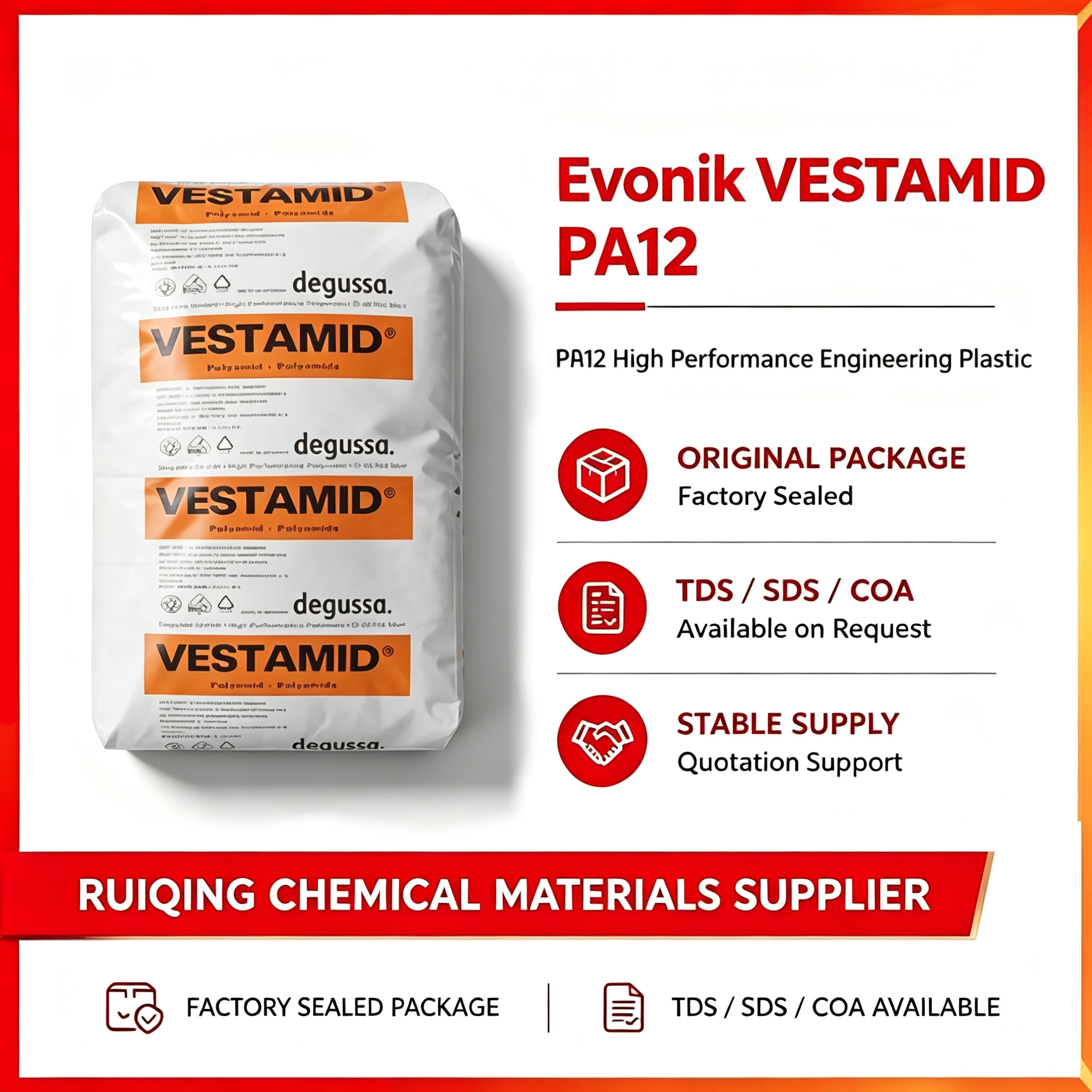
VESTAMID X7229 is a high-viscosity, plasticized, heat-stabilized and self-extinguishing polyamide 12 compound from Evonik Operations GmbH developed for aircraft, railway and ship interior applications.
The grade contains a non-migrating flame-retardant system that is free of both halogen and phosphorus. This is the central technical feature of VESTAMID X7229, because transportation interiors increasingly require flame performance together with low-smoke, low-toxicity and halogen-free material concepts.
Evonik states that VESTAMID X7229 complies with the requirements of FAR 25.853 and ABD 0031. These standards are highly relevant to aircraft interior materials and are one of the main reasons this grade is selected for profiles, tubes and other interior components.
Evonik also lists approval of X7229 under Airbus material specifications AIMS 04-01-004A and AIMS 04-01-004B in its quality and approvals information.
The material is plasticized, which makes it substantially more flexible than rigid flame-retardant PA12 grades such as X7167. That flexibility is useful for profiles, protective tubes, cable-protection tubing and interior components that must combine flame resistance with impact durability and bendability.
The designation PA12 FR(30) is a material classification. It should not be interpreted as meaning that the resin contains 30% flame retardant.
Current Evonik-derived data identifies VESTAMID X7229 as a high-viscosity grade with an MVR of approximately 26 cm³/10 min at 220°C / 10 kg. The combination of high viscosity and plasticization helps provide extrusion stability while retaining flexibility.
The current dry tensile modulus is approximately 980 MPa, yield stress approximately 36 MPa, yield strain approximately 17%, and nominal strain at break greater than 50%. These values clearly show that X7229 is more flexible and ductile than rigid electrical PA12 grades.
Impact performance is another strength. Current data reports no break in the unnotched Charpy test at both 23°C and -30°C, while notched impact strength is approximately 11 kJ/m² at 23°C and 5 kJ/m² at -30°C.
Thermal data includes a melting temperature of approximately 175°C, HDT of approximately 40°C at 1.80 MPa and 130°C at 0.45 MPa, and Vicat B softening temperature of approximately 150°C.
The grade also provides the chemical resistance, abrasion resistance, low moisture sensitivity and low-temperature toughness associated with VESTAMID PA12.
For more PA12 materials, visit our PA12 Polyamide 12 Product Category →.
For official manufacturer information about flame-retardant cable and profile materials, see the Evonik VESTAMID Cable Protection Guide →.
Key Features of VESTAMID X7229
| Feature | Engineering Benefit |
|---|---|
| High Viscosity | Supports stable profile and tube extrusion |
| Plasticized PA12 | Provides greater flexibility than rigid FR PA12 grades |
| Self-Extinguishing | Supports transportation-interior fire requirements |
| Halogen-Free Flame Retardant | Avoids halogenated flame-retardant chemistry |
| Phosphorus-Free Flame Retardant | Supports phosphorus-free material requirements |
| Non-Migrating Flame Retardant | Helps maintain stable long-term material behavior |
| Heat Stabilized | Supports processing and elevated-temperature use |
| FAR 25.853 Compliance | Important for aircraft interior applications |
| ABD 0031 Compliance | Supports Airbus-related interior requirements |
| UL 94 V-2 | Demonstrated flame classification down to approximately 0.8 mm |
| Good Low-Temperature Impact | Unnotched Charpy shows no break at -30°C |
| Extrusion + Injection Molding | Supports profiles, tubes and molded components |
The strongest commercial positioning of VESTAMID X7229 is the combination of flexibility, high-viscosity extrusion behavior and transportation-grade flame performance.
Typical Applications for VESTAMID X7229
VESTAMID X7229 is especially suitable for transportation interiors and flame-retardant cable-protection systems.
| Application Area | Typical Use |
|---|---|
| Aircraft Interior Profiles | Flexible or semi-rigid flame-retardant profile components |
| Aircraft Cable Protection Tubes | Protective PA12 tubing in aircraft interior systems |
| Railway Interior Components | Flame-retardant profiles, tubes and molded parts |
| Rail Cable Protection | Corrugated or smooth cable-protection tubing |
| Ship Interior Components | Halogen- and phosphorus-free flame-retardant PA12 parts |
| Cable Protection Profiles | Mechanically durable protective profiles |
| Corrugated Tubing | Flexible flame-retardant conduit and cable-protection tube |
| Transportation Interior Moldings | Injection-molded parts requiring PA12 toughness and flame behavior |
| Industrial Cable Protection | Profiles and tubing for tunnels, factories and public buildings |
Evonik’s cable literature specifically recommends VESTAMID X7229 for cable protection tubing and profiles where halogen-free and phosphorus-free flame-retardant behavior is required.
Typical Properties of VESTAMID X7229
Physical & Rheological Properties
| Property | Typical Value | Test Method |
|---|---|---|
| Density | 1.06 g/cm³ | ISO 1183 |
| Water Absorption | 1.5% | ISO 62 |
| Humidity Absorption | 0.6% | ISO 62 |
| MVR | 26 cm³/10 min | ISO 1133 |
| MVR Condition | 220°C / 10 kg | ISO 1133 |
| Molding Shrinkage – Parallel | 0.6% | ISO 294-4 / 2577 |
| Molding Shrinkage – Normal | 0.8% | ISO 294-4 / 2577 |
| Structure | Semi-crystalline | Manufacturer information |
| Color | Natural Color | Manufacturer information |
The current MVR test condition should always be quoted together with the value because flow data cannot be compared directly when temperature or load differs.
Mechanical Properties
| Property | Typical Dry Value | Test Method |
|---|---|---|
| Tensile Modulus | 980 MPa | ISO 527 |
| Yield Stress | 36 MPa | ISO 527 |
| Yield Strain | 17% | ISO 527 |
| Nominal Strain at Break | >50% | ISO 527 |
| Charpy Impact Strength, 23°C | No Break | ISO 179/1eU |
| Charpy Impact Strength, -30°C | No Break | ISO 179/1eU |
| Charpy Notched Impact, 23°C | 11 kJ/m² | ISO 179/1eA |
| Charpy Notched Impact, -30°C | 5 kJ/m² | ISO 179/1eA |
These values show why VESTAMID X7229 is well suited to flexible profiles and tubing: it retains useful stiffness while providing high ductility and low-temperature toughness.
Thermal Properties
| Property | Typical Value | Test Method |
|---|---|---|
| Melting Temperature | 175°C | ISO 11357-1/-3 |
| HDT @ 1.80 MPa | 40°C | ISO 75-1/-2 |
| HDT @ 0.45 MPa | 130°C | ISO 75-1/-2 |
| Vicat Softening Temperature B | 150°C | ISO 306 |
| Linear Thermal Expansion, Parallel | 80 × 10⁻⁶/K | ISO 11359-1/-2 |
Flammability & Transportation Compliance
| Property / Requirement | Published Performance |
|---|---|
| UL 94 @ 0.8 mm | V-2 |
| UL 94 @ 1.6 mm | V-2 |
| UL 94 @ 3.2 mm | V-2 |
| Oxygen Index | 24% |
| FAR 25.853 Vertical Burn | Pass |
| ABD 0031 | Complies |
| Airbus AIMS 04-01-004A | Approved / listed by Evonik |
| Airbus AIMS 04-01-004B | Approved / listed by Evonik |
| Halogen-Free | Yes |
| Phosphorus-Free | Yes |
| Flame-Retardant Migration | Non-migrating system |
The transportation compliance profile is the main reason VESTAMID X7229 is preferred over general-purpose plasticized PA12.
Why Choose VESTAMID X7229?
The main reason to choose VESTAMID X7229 is that it combines flame-retardant transportation compliance with flexibility.
Aircraft, railway and ship interiors require materials that do more than simply withstand heat. Components often need low smoke, low toxicity, controlled flame spread, mechanical durability and predictable behavior over long service periods.
Rigid flame-retardant materials can satisfy fire requirements but may not provide the flexibility needed for tubing or profiles.
The plasticized PA12 base of VESTAMID X7229 provides a more flexible balance. A tensile modulus around 980 MPa is substantially lower than rigid FR PA12 such as X7167, while elongation above 50% provides useful deformation capability.
The material also retains strong low-temperature toughness. No-break unnotched Charpy behavior at -30°C is valuable for transportation systems that can experience large temperature changes during storage, operation or maintenance.
The non-migrating flame-retardant system is another important advantage. Additive migration can affect surface appearance or long-term consistency in some polymer systems. Evonik specifically describes the X7229 flame retardant as non-migrating.
The absence of halogen and phosphorus also supports modern material-selection policies that seek to reduce halogenated flame-retardant chemistry.
For aircraft programs, the FAR 25.853 / ABD 0031 positioning and Airbus AIMS approvals make the grade much more application-specific than ordinary V-2 PA12.
For rail, ship and public-infrastructure cable protection, the combination of flame resistance, chemical resistance, abrasion resistance and PA12 toughness is equally valuable.
Processing Guidelines for VESTAMID X7229
VESTAMID X7229 can be processed by extrusion and injection molding.
Evonik provides clear grade-specific temperature guidance:
| Processing Parameter | Published Guidance |
|---|---|
| Recommended Melt Temperature | 210–230°C |
| Maximum Melt Temperature | Do not exceed 260°C |
| Primary Processes | Extrusion and Injection Molding |
| Main Extrusion Products | Profiles and tubing |
| Delivery Form | Cylindrical Pellets |
| Shelf Life | At least 2 years in original undamaged packaging at ≤30°C |
The manufacturer specifically warns that processing temperatures should not exceed 260°C because of the flame-retardant system.
For profile and tube extrusion, optimize:
- Barrel-temperature profile
- Adapter and die temperature
- Screw speed
- Melt pressure
- Line speed
- Profile or tube dimensions
- Draw-down
- Cooling conditions
- Surface quality
- Dimensional stability
For injection molding, optimize:
- Melt temperature
- Mold temperature
- Injection speed
- Holding pressure
- Gate geometry
- Cooling time
- Shrinkage
- Surface quality
Evonik supplies VESTAMID compounds dry in moisture-proof packaging. Fresh material from an intact package normally does not require additional drying.
For material exposed after opening, Evonik’s cable-processing guide recommends dry-air drying for VESTAMID at approximately 90–100°C for at least 2 hours, with moisture content below approximately 0.10% before processing.
VESTAMID X7229 vs. VESTAMID X7167
| Feature | VESTAMID X7229 | VESTAMID X7167 |
|---|---|---|
| Base Polymer | PA12 FR(30) / Plasticized PA12 | PA12 FR(30) |
| Viscosity | High | High |
| Plasticized | Yes | No plasticizer highlighted |
| Tensile Modulus | Approx. 980 MPa | Approx. 1,700 MPa |
| Flexibility | Higher | Lower / more rigid |
| Nominal Strain at Break | >50% | High, but grade is structurally stiffer |
| Flame Retardant | Halogen- & phosphorus-free | Halogen- & phosphorus-free |
| UL 94 | V-2 | V-2 |
| FAR 25.853 | Yes | Yes |
| ABD 0031 | Yes | Yes |
| Main Applications | Profiles, tubes, cable protection | Aircraft/rail/ship interior profiles |
| Main Selection Reason | Greater flexibility and tubing suitability | Higher stiffness for interior profiles |
Choose VESTAMID X7229 when the design needs a plasticized, more flexible flame-retardant PA12 for tubing or flexible profiles.
Choose VESTAMID X7167 when the application requires a stiffer high-viscosity flame-retardant PA12 for structural interior profiles.
Related Products
VESTAMID X7167 – High-viscosity halogen- and phosphorus-free flame-retardant PA12 for aircraft, railway and ship interior profiles.
VESTAMID X7166 – Low-viscosity flame-retardant PA12 for cable, electrical and electronic applications.
VESTAMID LX9104 – Plasticized, impact-modified flame-retardant PA12 with higher cold-impact performance for profiles and corrugated tubing.
View More PA12 Polyamide 12 Materials →
Technical Documents for VESTAMID X7229
| Document Type | Description |
|---|---|
| TDS | Physical, rheological, mechanical, thermal and flame-performance data |
| SDS | Safety Data Sheet |
| FAR 25.853 Documentation | Aircraft-interior flame-test information |
| ABD 0031 / Airbus Information | Transportation-interior compliance context |
| Cable Protection Guide | Evonik cable tubing and profile material-selection information |
| COA | Batch-specific quality information where available |
Need technical documents for VESTAMID X7229?
📧 Email: ruiqingchem@gmail.com
📝 Online form: Contact Us →
Please state VESTAMID X7229 and the required document type when submitting your inquiry.
FAQ About VESTAMID X7229
Q1: What is VESTAMID X7229?
VESTAMID X7229 is a high-viscosity, plasticized, heat-stabilized and self-extinguishing PA12 from Evonik containing a non-migrating flame retardant that is free of halogen and phosphorus.
Q2: What does PA12 FR(30) mean?
PA12 FR(30) is a material classification used for this flame-retardant PA12 grade. It does not mean 30% flame-retardant content.
Q3: Is VESTAMID X7229 halogen free?
Yes. Evonik explicitly describes the flame-retardant system as halogen free.
Q4: Is VESTAMID X7229 phosphorus free?
Yes. The flame-retardant system is also phosphorus free.
Q5: Does VESTAMID X7229 meet FAR 25.853?
Yes. Evonik states that the grade complies with FAR 25.853 requirements and is used in aircraft interior applications.
Q6: What is the tensile modulus?
Current Evonik-derived ISO data lists a dry tensile modulus of approximately 980 MPa.
Q7: What is the impact strength?
The grade shows no break in the unnotched Charpy test at 23°C and -30°C. Notched Charpy impact is approximately 11 kJ/m² at 23°C and 5 kJ/m² at -30°C.
Q8: What is the UL 94 rating?
Current data lists UL 94 V-2, including at approximately 0.8 mm thickness.
Q9: What processing temperature is recommended?
Evonik recommends approximately 210–230°C and states that the melt temperature should not exceed 260°C.
Q10: What is the difference between VESTAMID X7229 and X7167?
Both are high-viscosity halogen- and phosphorus-free flame-retardant PA12 grades for transportation interiors. VESTAMID X7229 is plasticized and more flexible, making it especially suitable for profiles and tubing, while X7167 is stiffer.
Request VESTAMID X7229 Price & Technical Support
For pricing, availability, technical documents or application support for VESTAMID X7229, please provide:
- Required quantity
- Destination country or port
- Aircraft, railway, ship or cable-protection application
- Profile or tube dimensions
- Required flexibility
- Minimum operating temperature
- FAR 25.853 / ABD 0031 requirement
- Airbus AIMS requirement
- UL 94 thickness requirement
- Extrusion or injection-molding equipment information
- Color requirement
- TDS, SDS, COA or compliance-document requirements
- Sample requirement, if applicable
📧 Email: ruiqingchem@gmail.com
📝 Send Inquiry →