描述
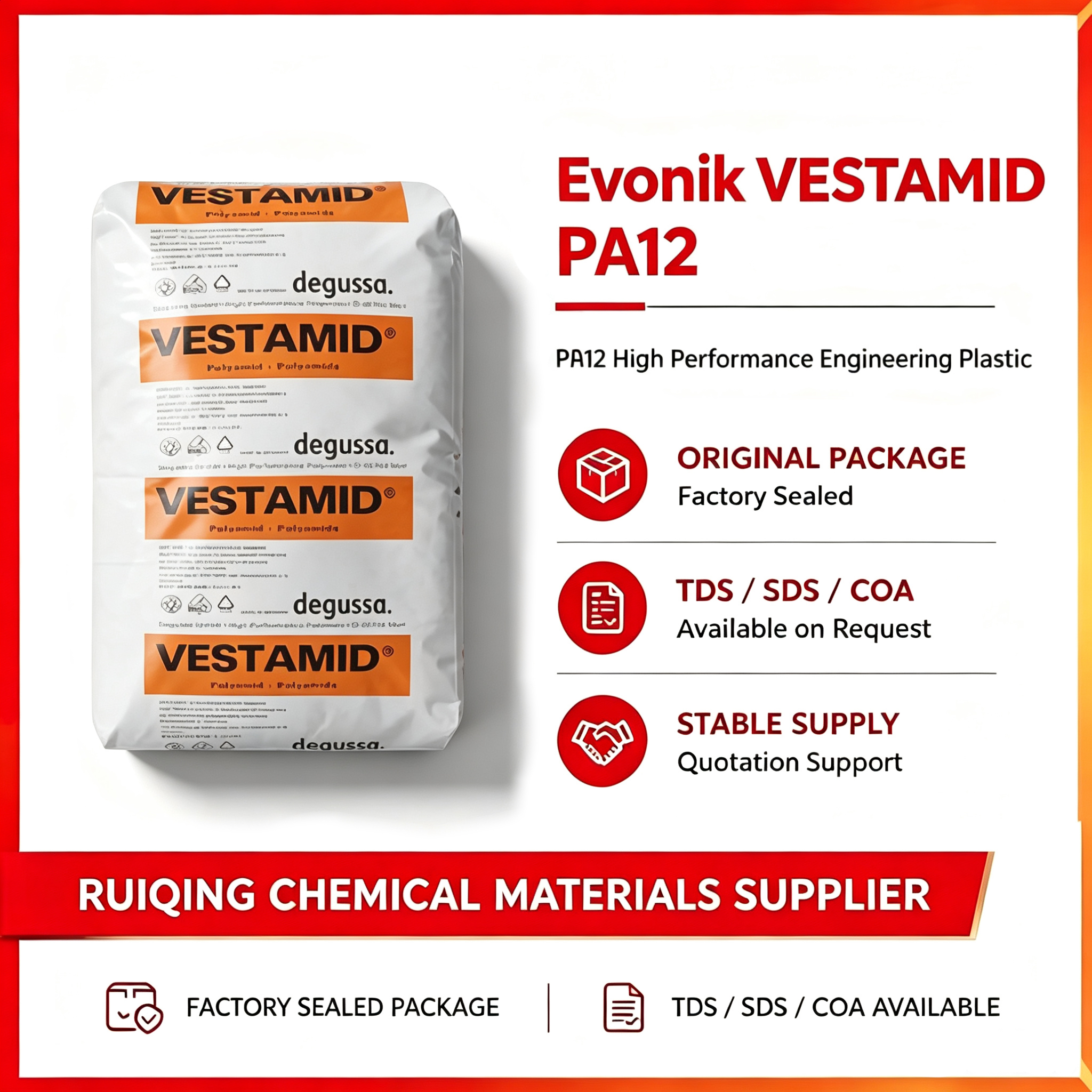
VESTAMID NRG 3001 NC is a natural-color, high-viscosity, heat- and light-stabilized polyamide 12 compound from Evonik Operations GmbH developed for hydrocarbon transport piping systems and thermoplastic liners.
The material is part of Evonik’s VESTAMID NRG portfolio for demanding oil and gas infrastructure. Unlike a general-purpose PA12 extrusion grade, VESTAMID NRG 3001 NC is specifically designed around the requirements of hydrocarbon transport, where a polymer liner or pipe layer can be exposed to crude oil, elevated temperature, oilfield chemicals and long-term mechanical loading.
Evonik’s current product information emphasizes two major processing advantages: easy processing and excellent dimensional control during pipe extrusion, especially when processing large-diameter pipes. These properties are critical because large extruded pipe and liner structures require strong melt stability to control wall thickness, ovality and sag.
The material also has excellent compatibility with hydrocarbons such as crude oil and with oilfield chemicals such as paraffin inhibitors. Evonik states that contact with these media does not significantly affect component properties, helping the finished pipe or liner retain high dimensional stability.
The grade is high viscosity and unfilled. Its high molecular and melt-strength character supports large-diameter extrusion, while its PA12 chemistry provides toughness, chemical resistance and relatively low moisture sensitivity.
In addition to conventional pipe extrusion, current product information lists Injection Molding and Extrusion as supported processing methods. The strongest commercial positioning, however, remains tube, pipe and liner applications in the energy, oil and gas sector.
The current grade-specific datasheet reports a density of approximately 1.02 g/cm³, dry tensile modulus of approximately 1,320 MPa, yield stress of approximately 40 MPa, stress at break of approximately 48 MPa, and nominal strain at break of approximately 160%, with a typical material value around 200%.
Impact performance remains strong. Unnotched Charpy specimens show no break at 23°C and -30°C, while notched impact strength is approximately 54 kJ/m² at 23°C and 15 kJ/m² at -30°C.
The melting temperature is approximately 176°C, and current grade-specific data lists a Vicat softening temperature A of approximately 172°C.
Beyond the grade datasheet, Evonik’s oil-and-gas literature identifies the VESTAMID NRG 3000 series as a high-molecular-weight, non-plasticized PA12 platform developed specifically for demanding liner applications. Evonik highlights low swelling in hydrocarbons, excellent mechanical strength after crude-oil saturation and much lower gas and BTX permeation than HDPE.
For more PA12 products, visit our PA12 Polyamide 12 Product Category →.
For manufacturer oil-and-gas application information, see the Official Evonik VESTAMID NRG Oil & Gas Guide →.
Key Features of VESTAMID NRG 3001 NC
| Feature | Benefit |
|---|---|
| High Viscosity | Provides melt strength for pipe and liner extrusion |
| High-Molecular PA12 Platform | Supports demanding oil and gas liner performance |
| Heat Stabilized | Supports elevated-temperature service and processing |
| Light / UV / Weathering Stabilized | Helps maintain properties during outdoor exposure and installation |
| Easy Extrusion Processing | Compatible with many commercially available PE extrusion machines |
| Large-Diameter Dimensional Control | Helps control sag, wall thickness and pipe geometry |
| Crude-Oil Resistance | Maintains material performance in hydrocarbon contact |
| Oilfield-Chemical Resistance | Compatible with media such as paraffin inhibitors |
| Hydrolysis / Hot-Water Resistance | Supports demanding wet-service conditions |
| Low Swelling in Hydrocarbons | Helps reduce collapse and buckling risk in liner systems |
| Low Gas / BTX Permeation | Strong barrier performance compared with HDPE |
| High Impact Strength | Supports handling, installation and service durability |
The defining technical value of VESTAMID NRG 3001 NC is the combination of large-diameter extrusion stability, hydrocarbon compatibility and liner-specific barrier performance.
Typical Applications for VESTAMID NRG 3001 NC
VESTAMID NRG 3001 NC is intended primarily for oil, gas and petrochemical transport systems.
| Application Area | Typical Use |
|---|---|
| Hydrocarbon Transport Pipes | PA12 pipe layers carrying crude oil and hydrocarbon media |
| Thermoplastic Liners | Internal corrosion-resistant liners for steel or composite pipe systems |
| Oil Production Pipelines | Liner systems exposed to crude oil and oilfield chemicals |
| Reinforced Thermoplastic Pipe (RTP) | Liner material in multilayer high-pressure pipe designs |
| Large-Diameter Pipe Extrusion | Applications requiring strong melt stability and dimensional control |
| Onshore Energy Infrastructure | Hydrocarbon transport and production pipeline systems |
| Offshore Energy Infrastructure | Liner and barrier concepts for demanding subsea or topside service |
| Tube & Hose Applications | Selected industrial hydrocarbon-handling applications |
The material should be qualified as part of the complete pipe or liner system, including pressure, temperature, fluid composition, reinforcement design and applicable API or customer specification.
Typical Properties of VESTAMID NRG 3001 NC
Physical & Rheological Properties
| Property | Typical Value | Test Method |
|---|---|---|
| Density | 1.02 g/cm³ | ISO 1183 |
| Water Absorption | 1.6% | Similar to ISO 62 |
| Humidity Absorption | 0.9% | Similar to ISO 62 |
| Moisture Content | 0.02 wt.% | ISO 15512 |
| Bulk Density, Granulate | 598 kg/m³ | Manufacturer data |
| Weight per 1,000 Granules | 15.4 g | Manufacturer data |
| MVR | N/A | ISO 1133 |
| Molding Shrinkage – Parallel | 0.4% | ISO 294-4 / 2577 |
| Molding Shrinkage – Normal | 1.5% | ISO 294-4 / 2577 |
| Structure | Semi-crystalline | Manufacturer information |
| Color | Natural Color | Manufacturer information |
The current grade-specific datasheet lists MVR as N/A, so no melt-flow value from another NRG grade should be substituted for VESTAMID NRG 3001 NC.
Mechanical Properties
| Property | Typical Value, Dry | Test Method |
|---|---|---|
| Tensile Modulus | 1,320 MPa | ISO 527 |
| Tensile Strength | 38 MPa | ISO 527 |
| Yield Stress | 40 MPa | ISO 527 |
| Yield Strain | 14% | ISO 527 |
| Stress at 50% Strain | 38 MPa | ISO 527 |
| Stress at Break | 48 MPa | ISO 527 |
| Nominal Strain at Break | 160% | ISO 527 |
| Typical Material Strain at Break | 200% | ISO 527 |
| Poisson’s Ratio, 23°C | 0.43 | ISO 527 |
| Poisson’s Ratio, 100°C | 0.45 | ISO 527 |
| Charpy Impact Strength, 23°C | No Break | ISO 179/1eU |
| Charpy Impact Strength, -30°C | No Break | ISO 179/1eU |
| Charpy Notched Impact, 23°C | 54 kJ/m² | ISO 179/1eA |
| Charpy Notched Impact, -30°C | 15 kJ/m² | ISO 179/1eA |
The combination of a 1,320 MPa modulus with high elongation and no-break unnotched Charpy behavior gives VESTAMID NRG 3001 NC the strength and ductility needed for demanding liner applications.
Thermal Properties
| Property | Typical Value | Test Method |
|---|---|---|
| Melting Temperature | 176°C | ISO 11357-1/-3 |
| ASTM Melting Temperature | 176°C | ASTM D3418 |
| Vicat Softening Temperature A | 172°C | ISO 306 |
| Thermal Conductivity, Solid State | 0.24 W/(m·K) | ISO 22007-4 |
| CTE, Parallel, 23–55°C | 140 × 10⁻⁶/K | ISO 11359-1/-2 |
| CTE, Normal, 23–55°C | 135 × 10⁻⁶/K | ISO 11359-1/-2 |
Oil & Gas Functional Performance
Evonik’s broader VESTAMID NRG 3000-series technical literature provides useful application context for VESTAMID NRG 3001 NC:
- High mechanical strength after saturation in crude oil
- Very low swelling in hydrocarbons even at elevated temperatures
- Strong resistance to collapse and buckling in stabilized-crude liner systems
- Good gas and vapor barrier properties
- BTX permeation reported at approximately 200 times lower than HDPE
- Lower methane permeation than HDPE at elevated temperature
- No corrosion by H₂S or CO₂
- Compatibility with spoolable liner concepts
- Reduced dependence on corrosion inhibitors, CRA and clad-pipe solutions
- API 15S testing referenced for VESTAMID NRG RTP liner applications
These are system-level application advantages and should be evaluated together with the actual pipe design.
Sustainability & LCA Data
| LCA Property | Published Value | Standard |
|---|---|---|
| LCA Certificate | VESTAMID L Compound low | ISO 14040 / 14044 |
| LCA Certifier | TÜV Rheinland | ISO 14040 / 14044 |
| Blue Water Consumption | 25.7 kg | ISO 14040 / 14044 |
| GWP incl. Biogenic Carbon incl. LUC | 6.1 kg CO₂ eq./kg | ISO 14040 / 14044 |
| GWP excl. Biogenic Carbon incl. LUC | 6.1 kg CO₂ eq./kg | ISO 14040 / 14044 |
| Land Use – ReCiPe 2016 | 0.1 annual crop eq.·y | ISO 14040 / 14044 |
| GWP Saving vs. 2023 Reference | 2.5 kg CO₂ eq./kg lower | ISO 14040 / 14044 |
Why Choose VESTAMID NRG 3001 NC?
The main reason to choose VESTAMID NRG 3001 NC is its specialization for hydrocarbon transport and thermoplastic liner systems.
A polymer liner in an oil or gas pipeline must withstand much more than simple pressure. It can be exposed continuously to crude oil, dissolved gases, temperature variation, H₂S, CO₂ and oilfield-treatment chemicals.
Conventional polyethylene can be attractive because of cost and processability, but it can show higher swelling and higher permeation of hydrocarbon vapors and gases. Evonik developed the VESTAMID NRG 3000 series to extend thermoplastic liner technology into more demanding production-pipeline environments.
The low swelling of VESTAMID NRG 3001 NC is especially important. Excessive swelling can change liner geometry and contribute to collapse or buckling during pressure or temperature changes.
Barrier performance is another major advantage. Evonik’s published oil-and-gas data shows substantially lower BTX and methane permeation through PA12 than through HDPE.
The material also provides excellent compatibility with crude oil and oilfield chemicals. This helps preserve mechanical performance and dimensions during long-term exposure.
High viscosity supports the extrusion of larger pipes and liners by providing stronger melt stability. At the same time, the grade can generally be processed on commercially available PE extrusion equipment, reducing the need for completely specialized machinery.
For projects seeking a non-metallic corrosion barrier, RTP liner or thermoplastic alternative to corrosion-resistant alloy and clad-pipe solutions, VESTAMID NRG 3001 NC is one of Evonik’s most relevant PA12 grades.
Processing Guidelines for VESTAMID NRG 3001 NC
VESTAMID NRG 3001 NC is designed primarily for extrusion of pipe, tube and liner systems.
Evonik provides a specific processing window:
| Processing Parameter | Published Guidance |
|---|---|
| Primary Process | Extrusion |
| Additional Process | Injection Molding |
| Recommended Extrusion Temperature | 220–240°C |
| Extrusion Equipment | Processable on many commercially available PE extrusion machines |
| Delivery Form | Cylindrical Granules |
| Packaging | Moisture-Proof Bags |
| Shelf Life | At least 2 years at ≤30°C in original undamaged packaging |
The current datasheet separately lists the following standardized injection-molded test-specimen conditions:
| Test-Specimen Parameter | Published Value |
|---|---|
| Melt Temperature | 290°C |
| Mold Temperature | 60°C |
| Injection Velocity | 200 mm/s |
The 290°C melt temperature is a test-specimen condition and should not be used as the normal pipe-extrusion temperature. For extrusion, the current manufacturer recommendation is 220–240°C.
For commercial pipe or liner extrusion, optimize:
- Barrel-temperature profile
- Adapter temperature
- Die temperature
- Screw speed
- Melt pressure
- Line speed
- Pipe diameter
- Liner wall thickness
- Die swell
- Vacuum sizing
- Cooling profile
- Ovality
- Surface quality
- Residence time
- Liner pull-through or installation method
Large-diameter extrusion deserves particular attention because gravity and non-uniform cooling can cause sag and dimensional distortion.
VESTAMID NRG 3001 NC vs. VESTAMID NRG 3101 YE
| Feature | VESTAMID NRG 3001 NC | VESTAMID NRG 3101 YE |
|---|---|---|
| Base Polymer | PA12 | PA12 |
| Color | Natural Color | Yellow |
| Viscosity | High | High / high-molecular platform |
| Primary Application | Hydrocarbon transport pipe & liners | Hydrocarbon transport pipe / liner systems |
| Crude-Oil Resistance | Core feature | Core feature |
| Oilfield-Chemical Resistance | Core feature | Core feature |
| Large-Diameter Extrusion | Explicitly emphasized | Yes |
| Recommended Extrusion Temperature | 220–240°C | Use exact NRG 3101 documentation |
| Current Public Grade Data | Detailed NRG 3001 NC TDS available | Use NRG 3101-specific TDS |
| Main Selection Reason | Natural-color high-viscosity liner and pipe grade | Yellow hydrocarbon transport grade where that exact specification is required |
Choose VESTAMID NRG 3001 NC when the specification calls for the natural-color NRG 3001 high-viscosity PA12 liner or pipe resin.
Choose VESTAMID NRG 3101 YE when the project specification, qualification or system design specifically requires the yellow NRG 3101 grade.
The two materials should not be treated as automatically interchangeable without checking the current Evonik documentation and project qualification.
Related Products
VESTAMID NRG 3101 YE – Yellow high-performance PA12 for hydrocarbon transport pipe and liner applications.
VESTAMID NRG 3901 BK – Black PA12 grade in the VESTAMID NRG hydrocarbon transport portfolio.
VESTAMID NRG 1001 – Flexible high-viscosity PA12 for demanding oil and gas flexible-pipe extrusion.
View More PA12 Polyamide 12 Materials →
Technical Documents for VESTAMID NRG 3001 NC
| Document Type | Description |
|---|---|
| TDS | Current mechanical, thermal, physical and processing data |
| SDS | Safety Data Sheet |
| COA | Batch-specific Certificate of Analysis where available |
| Oil & Gas Guide | VESTAMID NRG liner, barrier and hydrocarbon compatibility information |
| API 15S Context | RTP liner testing and application information |
| LCA Documentation | TÜV Rheinland-certified environmental data |
Need technical documents for VESTAMID NRG 3001 NC?
📧 Email: ruiqingchem@gmail.com
📝 Online form: Contact Us →
Please state VESTAMID NRG 3001 NC and the required document type when submitting your inquiry.
FAQ About VESTAMID NRG 3001 NC
Q1: What is VESTAMID NRG 3001 NC?
VESTAMID NRG 3001 NC is a natural-color, high-viscosity, heat- and light-stabilized PA12 from Evonik developed for hydrocarbon transport pipes and thermoplastic liner systems.
Q2: What is the main application of VESTAMID NRG 3001 NC?
The primary applications are hydrocarbon transport piping systems and liners, especially in oil and gas infrastructure.
Q3: Is VESTAMID NRG 3001 NC resistant to crude oil?
Yes. Evonik specifically states that the grade has excellent resistance to hydrocarbons such as crude oil.
Q4: Is VESTAMID NRG 3001 NC resistant to oilfield chemicals?
Yes. The manufacturer specifically identifies compatibility with oilfield chemicals such as paraffin inhibitors.
Q5: What is the density of VESTAMID NRG 3001 NC?
The typical density is approximately 1.02 g/cm³ according to ISO 1183.
Q6: What is the tensile modulus?
The typical dry tensile modulus is approximately 1,320 MPa according to ISO 527.
Q7: What is the impact strength?
Unnotched Charpy specimens show no break at 23°C and -30°C. Typical notched Charpy impact is approximately 54 kJ/m² at 23°C and 15 kJ/m² at -30°C.
Q8: What is the melting temperature?
The typical melting temperature is approximately 176°C.
Q9: What extrusion temperature is recommended?
Evonik recommends approximately 220–240°C for extrusion. The separately published 290°C melt temperature is a standardized injection-molded test-specimen condition.
Q10: Can you provide VESTAMID NRG 3001 NC TDS, SDS and oil-and-gas technical documents?
Yes. Please request the required documents through our Contact Page → or email ruiqingchem@gmail.com.
Request VESTAMID NRG 3001 NC Price & Technical Support
For pricing, availability, technical documents or project support for VESTAMID NRG 3001 NC, please provide:
- Required quantity
- Destination country or port
- Pipe, RTP or liner application
- Pipe outside diameter
- Liner wall thickness
- Design pressure
- Continuous and peak service temperature
- Crude-oil composition
- H₂S and CO₂ concentration
- Water cut
- Oilfield chemicals or paraffin inhibitor exposure
- Installation / liner technology
- Applicable API or customer specification
- Extrusion-line information
- TDS, SDS, COA or LCA document requirements
- Sample requirement, if applicable
📧 Email: ruiqingchem@gmail.com
📝 Send Inquiry →