描述
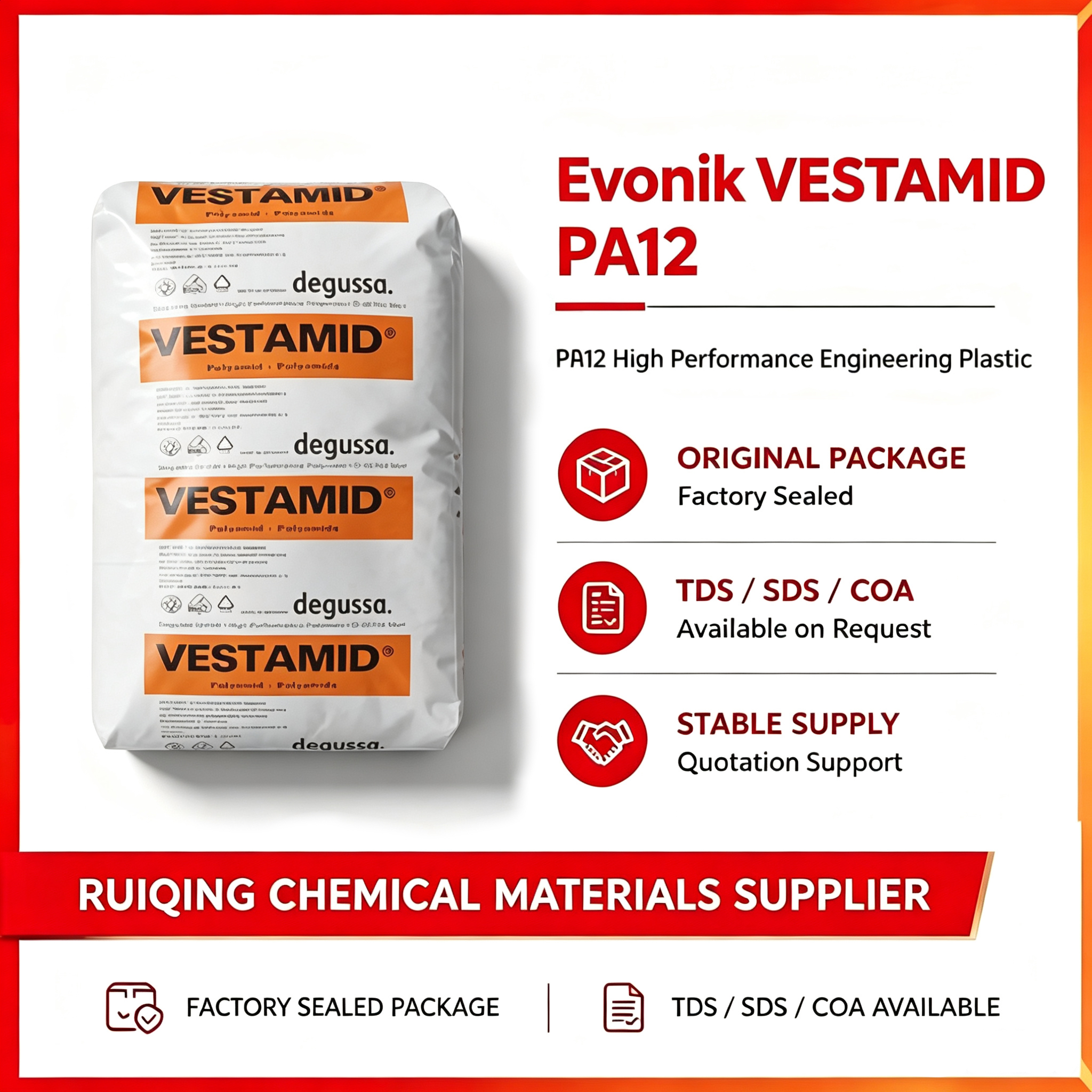
VESTAMID NRG 2101 YE is a yellow, high-molecular-weight polyamide 12 resin from Evonik Operations GmbH developed specifically for gas distribution pipes and fittings operating at higher pressures and larger diameters.
The grade is designed to extend the operating range of thermoplastic gas piping beyond the traditional limits of polyethylene. Evonik positions VESTAMID NRG 2101 YE as a thermoplastic alternative to metallic piping where the project requires higher pressure capability, corrosion resistance, low installation weight and long-term crack resistance.
The material is unplasticized PA12 and is classified as PA-U12 180 in European gas-pipe applications. It combines high viscosity and high melt strength with excellent toughness, making it suitable for both pipe/tube extrusion and fitting injection molding.
One of the most important strengths of VESTAMID NRG 2101 YE is its resistance to two major failure mechanisms in pressure piping: Slow Crack Growth (SCG) and Rapid Crack Propagation (RCP). Current Evonik gas-pipe literature lists PENT performance above 2,000 hours and a critical RCP pressure of approximately 30 bar at 0°C.
Long-term pressure performance is another defining feature. Evonik’s gas-pipe data lists a Hydrostatic Design Basis (HDB) of 3,150 psi at 23°C, 2,000 psi at 60°C and 1,600 psi at 82°C, together with a minimum required strength of approximately 18 MPa according to ISO 9080.
These pressure properties enable PA12 systems to serve applications that can be difficult for conventional polyethylene gas pipe. Commercial pipe systems manufactured from VESTAMID NRG 2101 YE are available for elevated-pressure natural-gas distribution and can be installed by familiar thermoplastic joining methods such as butt fusion and electrofusion.
Chemical resistance is also important in gas distribution. The grade is resistant to heavy hydrocarbons as well as oils, fuels, greases and many solvents. This helps protect pipe performance where condensates or hydrocarbon components may contact the pipe wall.
Because PA12 does not corrode, a gas network based on VESTAMID NRG 2101 YE can avoid the cathodic corrosion-protection requirements associated with steel pipe. The lower weight of thermoplastic pipe can also simplify transport, handling and trenchless installation.
The grade’s current technical data shows a density of approximately 1.02 g/cm³, tensile modulus of approximately 1,300 MPa, dry yield stress of approximately 40 MPa, dry stress at break of approximately 48 MPa, and nominal strain at break of approximately 175%. Pipe-wall specimens can show typical nominal strain at break above 220%.
For more PA12 materials, visit our PA12 Polyamide 12 Product Category →.
For manufacturer gas-pipe data, see the Official Evonik VESTAMID NRG Gas Pipe Guide →.
Key Features of VESTAMID NRG 2101 YE
| Feature | Benefit |
|---|---|
| High-Molecular-Weight PA12 | Supports long-term pressure-pipe performance |
| High Viscosity / High Melt Strength | Helps maintain pipe dimensions during extrusion |
| Gas Pipe & Fitting Grade | Developed specifically for gas-distribution infrastructure |
| High SCG Resistance | Reduces susceptibility to long-term slow crack growth |
| High RCP Resistance | Supports safe pressure-pipe design against rapid crack propagation |
| Corrosion Resistant | Eliminates polymer corrosion and reduces dependence on cathodic protection |
| Heavy-Hydrocarbon Resistant | Important for natural-gas distribution systems |
| High Impact Strength | Supports installation and low-temperature service |
| Heat Stabilized | Supports long-term thermal performance |
| UV / Light / Weathering Stabilized | Useful during outdoor storage and installation |
| Fatigue Resistant | Supports repeated pressure and mechanical loading |
| Weldable | Suitable for established thermoplastic pipe joining technologies |
| Halogen-Free / Phosphorus-Free | Current grade-specific technical data lists both characteristics |
| Electrical Insulation | Typical PA12 insulating behavior |
Typical Applications for VESTAMID NRG 2101 YE
VESTAMID NRG 2101 YE is primarily intended for gas distribution pipes and fittings.
| Application Area | Typical Use |
|---|---|
| Natural Gas Distribution Pipe | Higher-pressure buried thermoplastic gas networks |
| Gas Pipe Fittings | Injection-molded fittings compatible with PA12 pipe systems |
| Large-Diameter Gas Pipe | Thermoplastic alternative where PE pressure limits become restrictive |
| Steel Pipe Replacement | Corrosion-resistant replacement in selected gas infrastructure |
| Pipeline Rehabilitation | Trenchless replacement, slip lining and pipe-bursting applications |
| Industrial Gas Networks | PA12 pressure piping subject to applicable system standards |
| Hydrogen-Ready Gas Infrastructure | Selected certified European PA-U12 180 systems |
| High-Temperature Gas Distribution | Systems requiring higher temperature capability than conventional PE |
The exact allowable pressure, temperature, SDR, diameter and gas composition must be determined from the applicable pipe standard, local regulation and system certification rather than from resin properties alone.
Typical Properties of VESTAMID NRG 2101 YE
Physical & Rheological Properties
| Property | Typical Value | Test Method |
|---|---|---|
| Density | 1.02 g/cm³ | ISO 1183 |
| Water Absorption | 1.6% | Similar to ISO 62 |
| Humidity Absorption | 0.9% | Similar to ISO 62 |
| Shore D Hardness | 73 | ISO 7619-1 |
| Ball Indentation Hardness | 76 MPa | ISO 2039-1 |
| MVR | 3 cm³/10 min | ISO 1133 |
| MVR Condition | 235°C / 10 kg | — |
| Molding Shrinkage – Parallel | 0.5% | ISO 294-4 / 2577 |
| Molding Shrinkage – Normal | 1.6% | ISO 294-4 / 2577 |
| Color | Yellow | Manufacturer information |
| Structure | Semi-crystalline | Manufacturer information |
The low MVR of 3 cm³/10 min at 235°C / 10 kg is consistent with the high-viscosity, high-melt-strength character required for pressure-pipe extrusion.
Mechanical Properties
| Property | Typical Value, Dry | Test Method |
|---|---|---|
| Tensile Modulus | 1,300 MPa | ISO 527 |
| Tensile Strength | 40 MPa | ISO 527 |
| Yield Stress | 40 MPa | ISO 527 |
| Yield Strain | 12% | ISO 527 |
| Stress at 50% Strain | 36 MPa | ISO 527 |
| Stress at Break | 48 MPa | ISO 527 |
| Nominal Strain at Break | 175% | ISO 527 |
| Typical Pipe-Wall Strain at Break | >220% | ISO 527 |
| Charpy Impact, 23°C | No Break | ISO 179/1eU |
| Charpy Impact, -30°C | No Break | ISO 179/1eU |
| Charpy Impact, -40°C | No Break | ISO 179/1eU |
| Charpy Notched Impact, 23°C | 45 kJ/m² | ISO 179/1eA |
| Charpy Notched Impact, 0°C | 25 kJ/m² | ISO 179/1eA |
| Charpy Notched Impact, -30°C | 18 kJ/m² | ISO 179/1eA |
| Charpy Notched Impact, -40°C | 9 kJ/m² | ISO 179/1eA |
| Flexural Modulus, 23°C | 1,250 MPa | ISO 178 |
| Flexural Strength, 23°C | 53 MPa | ISO 178 |
The combination of high strain at break and excellent sub-zero impact resistance is particularly valuable during pipe installation and cold-weather service.
Gas Pipe Pressure & Crack-Growth Performance
| Property | Published Value | Test Method |
|---|---|---|
| Hydrostatic Design Basis @ 23°C | 3,150 psi | ASTM D2837 |
| Hydrostatic Design Basis @ 60°C | 2,000 psi | ASTM D2837 |
| Hydrostatic Design Basis @ 82°C | 1,600 psi | ASTM D2837 |
| Minimum Required Strength | 18 MPa | ISO 9080 |
| RCP Critical Pressure @ 0°C | 30 bar | ISO 13478 |
| PENT @ 2.4 MPa | >2,000 h | ASTM F1473 |
| PENT @ 4.8 MPa | >2,000 h | Modified ASTM F1473 methodology |
| PPI Material Designation | PA12 | PPI TR-4 |
| Gas-Pipe Cell Classification | PA423 | Evonik gas-pipe guide |
Commercial pipe systems made from this resin may carry additional ASTM or regulatory classifications. Those approvals apply to the qualified pipe system and should be checked separately.
Thermal Properties
| Property | Typical Value | Test Method |
|---|---|---|
| Melting Temperature | 177°C | ISO 11357-1/-3 |
| Glass Transition Temperature | 36°C | ISO 11357-1/-2 |
| HDT @ 1.80 MPa | 45°C | ISO 75-1/-2 |
| HDT @ 0.45 MPa | 145°C | ISO 75-1/-2 |
| Vicat Softening Temperature A | 170°C | ISO 306 |
| Vicat Softening Temperature B | 150°C | ISO 306 |
| Linear Thermal Expansion, Parallel | 144 × 10⁻⁶/K | ISO 11359-1/-2 |
Electrical Properties
| Property | Typical Value, Dry | Test Method |
|---|---|---|
| Volume Resistivity | >1 × 10¹³ Ω·m | IEC 62631-3-1 |
| Surface Resistivity | >1 × 10¹⁵ Ω/sq | IEC 62631-3-2 |
| Relative Permittivity, 50 Hz | 3.6 | IEC 62631-2-1 |
| Relative Permittivity, 100 Hz | 3.5 | IEC 62631-2-1 |
| Relative Permittivity, 1 MHz | 2.9 | IEC 62631-2-1 |
| Dissipation Factor, 1 MHz | 225 × 10⁻⁴ | IEC 62631-2-1 |
| Dielectric Strength, 1 mm | 42 kV/mm | IEC 60243-1 |
Sustainability & LCA Data
| LCA Property | Published Value | Standard |
|---|---|---|
| LCA Certificate | VESTAMID L Compound low | ISO 14040 / 14044 |
| LCA Certifier | TÜV Rheinland | ISO 14040 / 14044 |
| Blue Water Consumption | 25.7 kg | ISO 14040 / 14044 |
| GWP incl. Biogenic Carbon incl. LUC | 6.1 kg CO₂ eq./kg | ISO 14040 / 14044 |
| GWP excl. Biogenic Carbon incl. LUC | 6.1 kg CO₂ eq./kg | ISO 14040 / 14044 |
| GWP Saving vs. 2023 Reference | 2.5 kg CO₂ eq./kg lower | ISO 14040 / 14044 |
Why Choose VESTAMID NRG 2101 YE?
The key reason to choose VESTAMID NRG 2101 YE is that it is not merely a general-purpose PA12 extrusion grade. It was engineered around the long-term mechanical and fracture requirements of gas pressure piping.
Conventional polyethylene remains widely used in gas distribution, but the allowable pressure and temperature range can become limiting in certain infrastructure projects. High-performance PA12 can extend the thermoplastic design window while retaining the installation advantages of polymer pipe.
Slow crack growth resistance is essential because buried pipes can experience local stress concentrations, scratches and long-term loads. The PENT performance of VESTAMID NRG 2101 YE demonstrates its strong resistance to this failure mode.
Rapid crack propagation resistance is equally important. A pressure pipe must resist unstable crack growth after severe impact or defect initiation. The published RCP critical pressure of about 30 bar at 0°C provides an important design parameter.
The resin also combines high stiffness with substantial ductility. A modulus around 1,300 MPa provides pipe-wall rigidity, while the high elongation and low-temperature impact resistance help the system tolerate installation stresses.
Corrosion resistance creates an additional economic advantage over steel. PA12 does not require the same cathodic corrosion-protection infrastructure, and its lower weight can reduce handling and installation effort.
For qualified gas distribution networks that require higher thermoplastic operating pressure, larger diameter, hydrocarbon resistance and long-term crack resistance, VESTAMID NRG 2101 YE is one of Evonik’s most application-specific PA12 grades.
Processing Guidelines for VESTAMID NRG 2101 YE
VESTAMID NRG 2101 YE supports pipe/tube extrusion, profile extrusion and injection molding of fittings.
Evonik publishes a clear processing range for the grade:
| Processing Parameter | Published Guidance |
|---|---|
| Recommended Processing Temperature | 230–260°C |
| Possible Upper Processing Temperature | Up to 280°C in some cases |
| Mold Temperature | 60–100°C |
| Drying Temperature | 80°C |
| Drying Time | 2–4 hours |
| ISO Test Melt Temperature | 260°C |
| ISO Test Mold Temperature | 60°C |
| ISO Test Injection Velocity | 200 mm/s |
For pipe extrusion, the exact barrel profile, die temperature, screw speed, melt pressure, line speed, cooling conditions and sizing must be optimized around the pipe diameter, SDR and production line.
For injection-molded fittings, gate design, weld-line strength, mold temperature and dimensional shrinkage require particular attention because fittings must achieve long-term pressure performance compatible with the pipe system.
Drying at 80°C for 2–4 hours before processing is specifically recommended by Evonik for this grade.
The material is supplied in moisture-protective packaging and should be stored dry at temperatures not exceeding 30°C. Shelf life is at least two years in the original undamaged packaging.
VESTAMID NRG 2101 YE vs. VESTAMID NRG 3101 YE
| Feature | VESTAMID NRG 2101 YE | VESTAMID NRG 3101 YE |
|---|---|---|
| Base Polymer | PA12 | PA12 |
| Color | Yellow | Yellow |
| Molecular / Viscosity Positioning | High molecular, high viscosity | High molecular PA12 |
| Primary Application | Gas distribution pipes and fittings | Hydrocarbon transport piping systems and liners |
| Main Media | Natural gas / gas distribution | Crude oil, hydrocarbons and oilfield chemicals |
| SCG / RCP Gas-Pipe Positioning | Core design feature | Not the principal commercial positioning |
| Gas-Pipe Pressure Data | Extensive published HDB / MRS / RCP data | Use NRG 3101-specific documentation |
| Heavy Hydrocarbon Resistance | Yes | Yes; a primary NRG 3101 feature |
| Large-Diameter Pipe Extrusion | Yes | Yes |
| Main Selection Reason | Certified high-pressure thermoplastic gas-pipe platform | Hydrocarbon transport and liner applications |
Choose VESTAMID NRG 2101 YE when the project is a gas distribution pipe or fitting system and the design is based on gas-pipe standards and pressure qualifications.
Choose VESTAMID NRG 3101 YE when the primary requirement is hydrocarbon transport, crude-oil resistance or an oilfield pipe/liner specification built around that exact grade.
Related Products
VESTAMID NRG 3101 YE – High-molecular-weight PA12 for hydrocarbon transport piping systems and liners.
VESTAMID NRG 2901 BK – Black PA12 grade in the VESTAMID NRG energy-pipe portfolio.
VESTAMID NRG 1001 – Flexible high-viscosity PA12 for large-diameter oil and gas flexible-pipe extrusion.
View More PA12 Polyamide 12 Materials →
Technical Documents for VESTAMID NRG 2101 YE
| Document Type | Description |
|---|---|
| TDS | Current physical, mechanical, thermal, electrical and rheological data |
| SDS | Safety Data Sheet |
| Gas Pipe Guide | HDB, MRS, PENT, RCP and gas-pipe design data |
| DVGW Documentation | European PA-U12 gas-pipe certification information |
| COA | Batch-specific Certificate of Analysis where available |
| Processing Information | Pipe extrusion and fitting injection-molding guidance |
Need technical documents for VESTAMID NRG 2101 YE?
📧 Email: ruiqingchem@gmail.com
📝 Online form: Contact Us →
Please state VESTAMID NRG 2101 YE and the required document type when submitting your inquiry.
FAQ About VESTAMID NRG 2101 YE
Q1: What is VESTAMID NRG 2101 YE?
VESTAMID NRG 2101 YE is a yellow, high-molecular-weight, high-viscosity PA12 from Evonik developed for high-performance gas distribution pipes and fittings.
Q2: Is VESTAMID NRG 2101 YE plasticized?
No. It is used as an unplasticized PA12, commonly classified as PA-U12 180 in European gas-pipe applications.
Q3: What is the density of VESTAMID NRG 2101 YE?
The typical density is approximately 1.02 g/cm³ according to ISO 1183.
Q4: What is the MVR?
The typical MVR is approximately 3 cm³/10 min at 235°C / 10 kg, consistent with its high-viscosity pipe-grade positioning.
Q5: What is the tensile modulus?
The typical dry tensile modulus is approximately 1,300 MPa according to ISO 527.
Q6: How does VESTAMID NRG 2101 YE perform at low temperature?
Unnotched Charpy specimens show no break at 23°C, -30°C and -40°C. Notched Charpy impact is approximately 18 kJ/m² at -30°C and 9 kJ/m² at -40°C.
Q7: Is VESTAMID NRG 2101 YE resistant to slow crack growth?
Yes. Evonik’s gas-pipe data reports PENT >2,000 hours, demonstrating very high resistance to slow crack growth.
Q8: Can VESTAMID NRG 2101 YE be welded?
Yes. Evonik lists the grade as weldable, and commercial PA12 gas-pipe systems can use butt fusion and electrofusion when the qualified joining procedure is followed.
Q9: What processing temperature is recommended?
Evonik recommends approximately 230–260°C, with temperatures up to 280°C in some cases. Mold temperature is approximately 60–100°C, and drying at 80°C for 2–4 hours is recommended.
Q10: Can you provide VESTAMID NRG 2101 YE TDS, SDS and gas-pipe certification documents?
Yes. Please request the required technical documents through our Contact Page → or email ruiqingchem@gmail.com.
Request VESTAMID NRG 2101 YE Price & Technical Support
For pricing, availability, current technical documents or project support for VESTAMID NRG 2101 YE, please provide:
- Required quantity
- Destination country or port
- Pipe or fitting application
- Natural gas, hydrogen blend or other gas medium
- Pipe outside diameter
- SDR / wall thickness
- Design pressure
- Minimum and maximum operating temperature
- Applicable ASTM, ISO, EN or DVGW standard
- Butt-fusion or electrofusion requirement
- Installation method
- TDS, SDS, COA or certification-document requirements
- Sample requirement, if applicable
📧 Email: ruiqingchem@gmail.com
📝 Send Inquiry →