描述
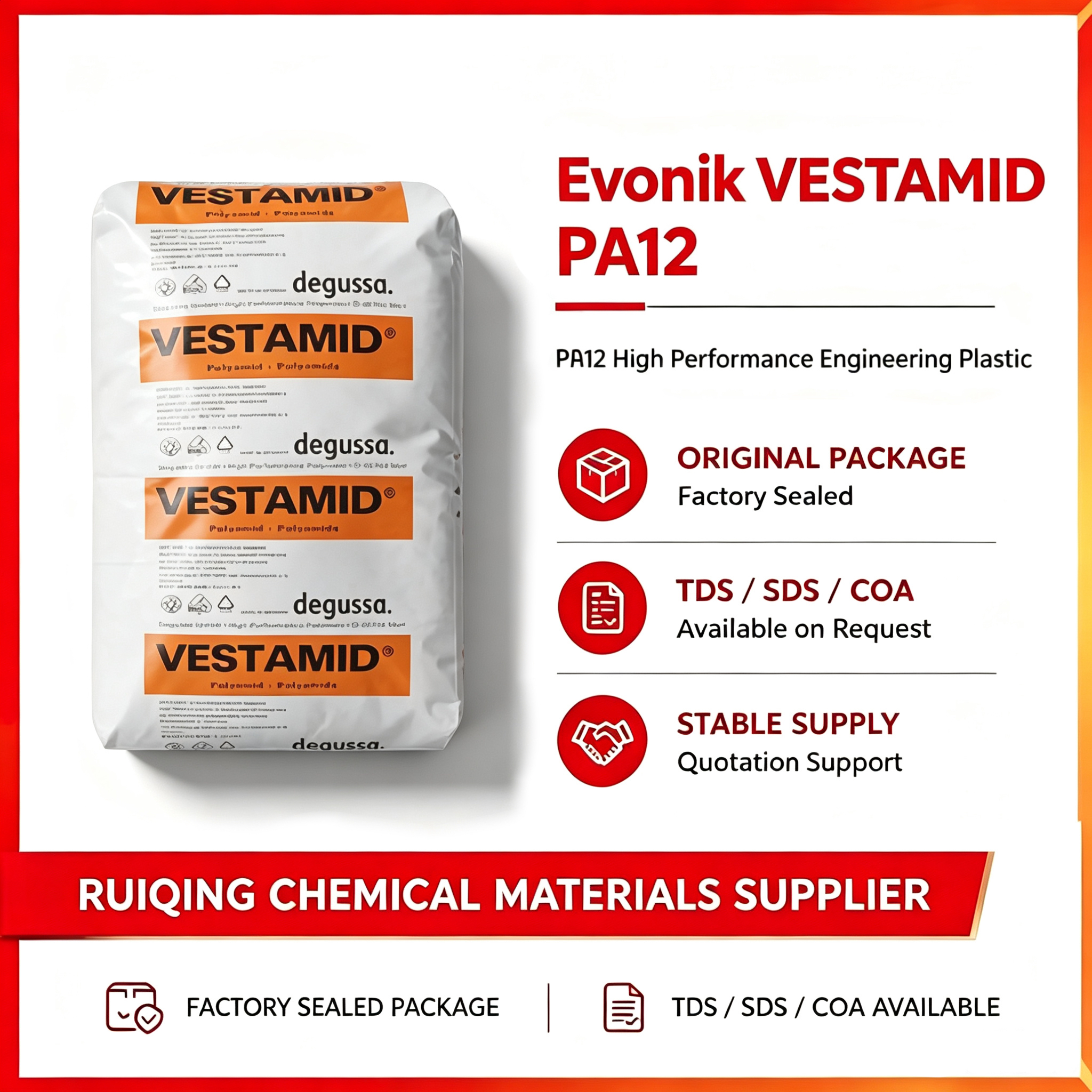
VESTAMID NRG 1001 is a high-viscosity, plasticized and impact-modified polyamide 12 compound from Evonik Operations GmbH developed for the extrusion of flexible tubing, hoses and large-diameter pipes, especially in oil, gas and petrochemical applications.
The current Evonik product information describes VESTAMID NRG 1001 as heat and light stabilized and specifically emphasizes easy processing and good dimensional control during pipe extrusion, particularly when processing large pipe diameters.
That processing stability is important in energy infrastructure. Large extruded pressure layers, barrier layers and protective jackets require more than ordinary melt flow. The resin must maintain sufficient melt strength, stable dimensions and consistent wall thickness over long production runs.
The grade is part of Evonik’s VESTAMID NRG portfolio for demanding energy applications. Evonik identifies PA12 as a high-performance thermoplastic used in onshore and offshore flexible pipes, where it can serve as a permeation barrier, pressure-layer material or external cover depending on the pipe design.
Historical and current Evonik oil-and-gas literature identifies VESTAMID NRG 1001 as a high-molecular-weight PA12 developed for flexible-pipe service. Evonik highlights superior ductility, strong fracture-mechanics performance even under arctic conditions, high creep and compression-creep resistance, methanol resistance, heat-aging resistance and easy processing.
The grade also has a strong field history. Evonik has reported more than 1,000 km of unbonded flexible pipe manufactured with VESTAMID NRG used as barrier or jacket layer in offshore operations. The material is also described as complying with API 17J requirements for unbonded flexible pipe systems.
PA12’s low moisture absorption adds another important benefit. Current grade-specific data lists approximately 1.3% water absorption and 0.7% humidity absorption, so properties vary relatively little with changes in environmental humidity compared with more moisture-sensitive polyamides.
Mechanical behavior is strongly ductile. Current ISO data lists a tensile modulus of about 370 MPa, stress at break of 42 MPa dry / 52 MPa conditioned, and nominal strain at break of 200% dry / 300% conditioned.
Impact resistance is particularly strong. Unnotched Charpy specimens show no break at both 23°C and -30°C, while notched Charpy impact strength is approximately 130 kJ/m² at 23°C.
The material is supplied as cylindrical natural-color pellets in moisture-proof bags and has a shelf life of at least two years when stored dry in original undamaged packaging at temperatures not exceeding 30°C.
For more PA12 materials, visit our PA12 Polyamide 12 Product Category →.
For official energy-sector information, visit the Evonik VESTAMID Energy Page →.
Key Features of VESTAMID NRG 1001
| Feature | Benefit |
|---|---|
| High Viscosity | Provides melt strength and dimensional stability during large-diameter pipe extrusion |
| Plasticized PA12 | Gives flexibility and ductility for dynamic pipe systems |
| Impact Modified | Improves resistance to mechanical shock and low-temperature loading |
| Heat Stabilized | Supports long-term thermal aging performance |
| Light / UV / Weathering Stabilized | Supports exposed technical applications |
| Easy Pipe Extrusion | Evonik specifically highlights easy processing |
| Large-Diameter Dimensional Control | Helps maintain geometry during high-caliber pipe production |
| Exceptional Impact Strength | No-break unnotched Charpy behavior at 23°C and -30°C |
| Hydrolysis / Hot-Water Resistance | Important for energy and industrial-fluid environments |
| Oil / Fuel Resistance | Supports oil, gas and petrochemical applications |
| Low Coefficient of Friction | Useful in pipe systems and handling |
| General Chemical Resistance | Supports demanding industrial media exposure |
The defining advantage of VESTAMID NRG 1001 is the combination of high-viscosity extrusion stability, flexibility and severe-service durability.
Typical Applications for VESTAMID NRG 1001
VESTAMID NRG 1001 is primarily intended for energy, oil, gas and petrochemical pipe systems.
| Application Area | Typical Use |
|---|---|
| Unbonded Flexible Pipes | PA12 barrier, pressure or jacket layers in offshore flexible-pipe systems |
| Oil & Gas Flexible Pipe | Polymer layers exposed to pressure, hydrocarbons and dynamic loading |
| Large-Diameter Pipe Extrusion | High-caliber pipe requiring stable dimensions |
| Flexible Tubing & Hoses | Oil and petrochemical fluid-handling applications |
| Permeation Barrier Layers | Hydrocarbon-resistant thermoplastic layers in flexible-pipe construction |
| Protective Jackets | External PA12 cover protecting reinforcement and inner layers |
| Onshore Energy Pipelines | Industrial flexible-pipe and liner applications |
| Offshore Energy Infrastructure | Subsea flexible pipes and related energy systems |
For qualification in offshore or pressure-pipe applications, the complete pipe design, temperature, pressure, fluid composition and applicable standard must be evaluated together.
Typical Properties of VESTAMID NRG 1001
Physical & Rheological Properties
| Property | Typical Value | Test Method |
|---|---|---|
| Density | 1.02 g/cm³ | ISO 1183 |
| Water Absorption | 1.3% | Similar to ISO 62 |
| Humidity Absorption | 0.7% | Similar to ISO 62 |
| Molding Shrinkage – Parallel | 0.7% | ISO 294-4 / 2577 |
| Molding Shrinkage – Normal | 1.6% | ISO 294-4 / 2577 |
| Melt Volume-Flow Rate | N/A | ISO 1133 |
| Structure | Semi-crystalline | Manufacturer information |
| Viscosity Classification | High Viscosity | Manufacturer information |
| Color | Natural Color | Manufacturer information |
The current grade-specific data marks MVR as N/A, so an MVR value from another PA12 grade should not be substituted.
Mechanical Properties
| Property | Typical Value (Dry / Conditioned) | Test Method |
|---|---|---|
| Tensile Modulus | 370 / 370 MPa | ISO 527 |
| Tensile Strength | 42 / — MPa | ISO 527 |
| Stress at 50% Strain | 27 / 24 MPa | ISO 527 |
| Stress at Break | 42 / 52 MPa | ISO 527 |
| Nominal Strain at Break | 200 / 300% | ISO 527 |
| Typical Nominal Strain at Break | ≥150% | ISO 527 |
| Charpy Impact Strength, 23°C | No Break / No Break | ISO 179/1eU |
| Charpy Impact Strength, -30°C | No Break / No Break | ISO 179/1eU |
| Charpy Notched Impact, 23°C | 130 / 130 kJ/m² | ISO 179/1eA |
| Charpy Notched Impact, -30°C | 7 / 13 kJ/m² | ISO 179/1eA |
| Flexural Modulus, 23°C | 380 / 360 MPa | ISO 178 |
| Flexural Strength, 23°C | 20 / 20 MPa | ISO 178 |
The combination of 370 MPa tensile modulus and up to 300% conditioned nominal strain at break illustrates the flexible, highly ductile character of VESTAMID NRG 1001.
Pipe-Specific Properties
| Property | Typical Value | Test Method |
|---|---|---|
| Yield Stress, Pipe, 23°C | 26 MPa | Evonik standard |
| Yield Strain, Pipe, 23°C | 35% | Evonik standard |
| Strain at Break, Pipe, 23°C | 200% | Evonik standard |
These pipe-specific values are particularly useful because the grade is designed around extrusion rather than conventional molded structural parts.
Thermal Properties
| Property | Typical Value | Test Method |
|---|---|---|
| Melting Temperature | 172°C | ISO 11357-1/-3 |
| Glass Transition Temperature | 13°C | ISO 11357-1/-2 |
| HDT @ 1.80 MPa | 53°C | ISO 75-1/-2 |
| HDT @ 0.45 MPa | 105°C | ISO 75-1/-2 |
| Vicat Softening Temperature A | 167°C | ISO 306 |
| Vicat Softening Temperature B | 121°C | ISO 306 |
| ASTM Melting Temperature | 172°C | ASTM D3418 |
Evonik’s dedicated flexible-pipe literature also publishes separate ASTM-based NRG 1001 datasets for offshore design work. Those values may differ because of test method and specimen preparation.
Electrical Properties
| Property | Typical Value (Dry / Conditioned) | Test Method |
|---|---|---|
| Volume Resistivity | 1.5 × 10⁹ / 2 × 10⁹ Ω·m | IEC 62631-3-1 |
| Surface Resistivity | 2.6 × 10¹⁴ / 1.1 × 10¹³ Ω/sq | IEC 62631-3-2 |
| Relative Permittivity, 50 Hz | 11.9 / — | IEC 62631-2-1 |
| Relative Permittivity, 100 Hz | 11 / — | IEC 62631-2-1 |
| Relative Permittivity, 1 MHz | 3.5 / — | IEC 62631-2-1 |
| Dielectric Strength, 1 mm | 36 / 35 kV/mm | IEC 60243-1 |
Electrical properties are secondary to the grade’s energy-pipe positioning but may be relevant in complete system design.
Sustainability & LCA Data
| LCA Property | Published Value | Standard |
|---|---|---|
| LCA Certificate | VESTAMID L Compound medium | ISO 14040 / 14044 |
| LCA Certifier | TÜV Rheinland | ISO 14040 / 14044 |
| Blue Water Consumption | 25.6 kg | ISO 14040 / 14044 |
| GWP incl. Biogenic Carbon incl. LUC | 6.0 kg CO₂ eq./kg | ISO 14040 / 14044 |
| GWP excl. Biogenic Carbon incl. LUC | 6.0 kg CO₂ eq./kg | ISO 14040 / 14044 |
| Land Use – ReCiPe 2016 | 0.1 annual crop eq.·y | ISO 14040 / 14044 |
| GWP Saving vs. 2023 Reference | 2.4 kg CO₂ eq./kg lower | ISO 14040 / 14044 |
Why Choose VESTAMID NRG 1001?
The main reason to choose VESTAMID NRG 1001 is that it was developed specifically for severe flexible-pipe extrusion in oil and gas service, not merely as a generic soft PA12.
Large-diameter flexible-pipe production requires stable melt behavior. A material that is too fluid may sag or produce poor wall control. A material that is too stiff may be difficult to process and may not provide the flexibility needed by a dynamic pipe system.
The high-viscosity formulation of VESTAMID NRG 1001 provides the melt strength needed for dimensional control, while plasticization and impact modification preserve flexibility and ductility.
Its mechanical profile is particularly suitable for flexible systems. The dry and conditioned tensile modulus is only about 370 MPa, while strain at break can reach 200–300%. This combination allows large deformation without brittle fracture.
Low-temperature toughness is another important advantage. Offshore and onshore energy infrastructure may be installed or operated in cold environments. No-break unnotched Charpy performance at -30°C supports these severe conditions.
Chemical resistance also matters. The current datasheet specifically highlights hydrolysis/hot-water resistance and oil/fuel resistance, while Evonik’s NRG literature also emphasizes methanol resistance.
Finally, VESTAMID NRG 1001 has a long track record in flexible-pipe systems, including offshore service. That application history distinguishes it from general-purpose plasticized PA12 grades.
Processing Guidelines for VESTAMID NRG 1001
VESTAMID NRG 1001 is designed primarily for pipe/tube extrusion and profile extrusion.
The most important current grade-specific processing recommendation is:
| Processing Parameter | Published Guidance |
|---|---|
| Primary Process | Pipe / Tube Extrusion |
| Additional Process | Profile Extrusion |
| Recommended Extrusion Temperature | 220–250°C |
| Supply Form | Cylindrical Pellets / Granules |
| Packaging | Moisture-Proof Bags |
| Shelf Life | At least 2 years at ≤30°C in original undamaged packaging |
The current datasheet separately lists 290°C melt / 60°C mold / 200 mm/s injection velocity for standardized injection-molded test-specimen production. These values are test conditions and are not the recommended pipe-extrusion temperature.
For actual pipe extrusion, use the manufacturer recommendation of approximately 220–250°C as the starting range and optimize:
- Barrel-temperature profile
- Adapter and die temperature
- Screw speed
- Melt pressure
- Line speed
- Pipe diameter
- Wall thickness
- Die swell
- Vacuum sizing
- Cooling conditions
- Ovality
- Dimensional stability
- Residence time
Large-diameter pipe production requires especially careful control of melt temperature and cooling because wall sag and dimensional distortion can become more pronounced as diameter increases.
The material is supplied ready for use in moisture-proof packaging. Opened material should be protected against unnecessary moisture exposure.
VESTAMID NRG 1001 vs. VESTAMID L2124 NC
| Feature | VESTAMID NRG 1001 | VESTAMID L2124 NC |
|---|---|---|
| Base Polymer | Plasticized / impact-modified PA12 | Plasticized PA12 |
| Viscosity | High | High |
| Primary Market | Energy, oil & gas, large flexible pipe | General oil/petrochemical tubing and hoses |
| Large-Diameter Pipe Positioning | Explicitly emphasized | Not the main differentiator |
| Offshore Flexible-Pipe History | Yes | Not the main positioning |
| Impact Modification | Explicitly identified | General plasticized tubing grade |
| Tensile Modulus | Approx. 370 MPa | Approx. 400 MPa |
| Nominal Strain at Break | 200–300% | High ductility |
| Recommended Extrusion Temperature | 220–250°C | Grade-specific conditions differ |
| Main Selection Reason | Severe-service flexible-pipe performance | General flexible tubing performance |
Choose VESTAMID NRG 1001 when the project involves oil and gas flexible pipe, large-diameter extrusion, offshore service or a specification built around the NRG platform.
Choose VESTAMID L2124 NC when the project is a more conventional flexible PA12 tube or hose application and its own grade-specific performance is sufficient.
Related Products
VESTAMID L2124 NC – High-viscosity plasticized PA12-P for flexible tubing and oil/petrochemical hose applications.
VESTAMID LX9029 – Highly flexible plasticized PA12-P for flexible tubes and hoses.
VESTAMID NRG 6001 – VESTAMID NRG energy-sector PA12 grade for demanding pipe applications.
View More PA12 Polyamide 12 Materials →
Technical Documents for VESTAMID NRG 1001
| Document Type | Description |
|---|---|
| TDS | Current grade-specific mechanical, thermal, electrical, rheological and pipe data |
| SDS | Safety Data Sheet |
| COA | Batch-specific Certificate of Analysis where available |
| Oil & Gas Guide | Evonik VESTAMID NRG flexible-pipe technical literature |
| API / Offshore Documentation | Flexible-pipe qualification information, including API 17J context |
| Processing Information | Pipe extrusion and PA12 handling guidance |
Need technical documents for VESTAMID NRG 1001?
📧 Email: ruiqingchem@gmail.com
📝 Online form: Contact Us →
Please state VESTAMID NRG 1001 and the required document type when submitting your inquiry.
FAQ About VESTAMID NRG 1001
Q1: What is VESTAMID NRG 1001?
VESTAMID NRG 1001 is a high-viscosity, plasticized, impact-modified, heat- and light-stabilized PA12 from Evonik for flexible tubing, hoses and large-diameter oil and gas pipe extrusion.
Q2: Is VESTAMID NRG 1001 suitable for offshore flexible pipes?
Yes. Evonik specifically positions the NRG 1001 platform for unbonded flexible-pipe systems and has reported extensive offshore use as barrier or jacket layers.
Q3: Is VESTAMID NRG 1001 plasticized?
Yes. Plasticizer is explicitly listed in the current grade-specific product information.
Q4: What is the density of VESTAMID NRG 1001?
The current ISO density is approximately 1.02 g/cm³.
Q5: What is the tensile modulus?
The current ISO tensile modulus is approximately 370 MPa dry and conditioned, reflecting the grade’s flexible character.
Q6: What is the elongation at break?
Current nominal strain at break is approximately 200% dry and 300% conditioned, with a typical material value of at least 150%.
Q7: What is the impact strength?
Unnotched Charpy specimens show no break at 23°C and -30°C. Typical notched Charpy impact is approximately 130 kJ/m² at 23°C.
Q8: What is the melting temperature?
The current grade-specific ISO melting temperature is approximately 172°C.
Q9: What extrusion temperature is recommended?
Evonik’s current product information recommends approximately 220–250°C for extrusion.
Q10: Can you provide VESTAMID NRG 1001 TDS, SDS and oil-and-gas documentation?
Yes. Please request the required technical documents through our Contact Page → or email ruiqingchem@gmail.com.
Request VESTAMID NRG 1001 Price & Technical Support
For pricing, availability, technical documents or grade-selection support for VESTAMID NRG 1001, please provide:
- Required quantity
- Destination country or port
- Onshore or offshore application
- Pipe or hose type
- Pipe outside diameter and wall thickness
- Barrier, pressure-layer or jacket function
- Continuous and peak service temperature
- Design pressure
- Oil, gas, methanol or chemical composition
- Sour-service / H₂S / CO₂ exposure where applicable
- Required API or customer specification
- Extrusion-line information
- TDS, SDS, COA or qualification-document requirements
- Sample requirement, if applicable
📧 Email: ruiqingchem@gmail.com
📝 Send Inquiry →