描述
Arkema Rilsan BESN BLACK P024 TL PA11 Resin is a bio-based Polyamide 11 extrusion grade specially developed for demanding automotive fluid transfer systems. Manufactured from renewable castor oil, this impact-modified PA11 material combines excellent toughness, chemical resistance, and low extractable characteristics for multilayer fuel line applications.
Designed for extrusion processing, Rilsan BESN BLACK P024 TL is particularly suitable for automotive gasoline lines, fuel venting systems, water cooling circuits, and industrial tubing. Its excellent impact performance, dimensional stability, and resistance to automotive fuels make it an ideal engineering material for long-term service in harsh environments.
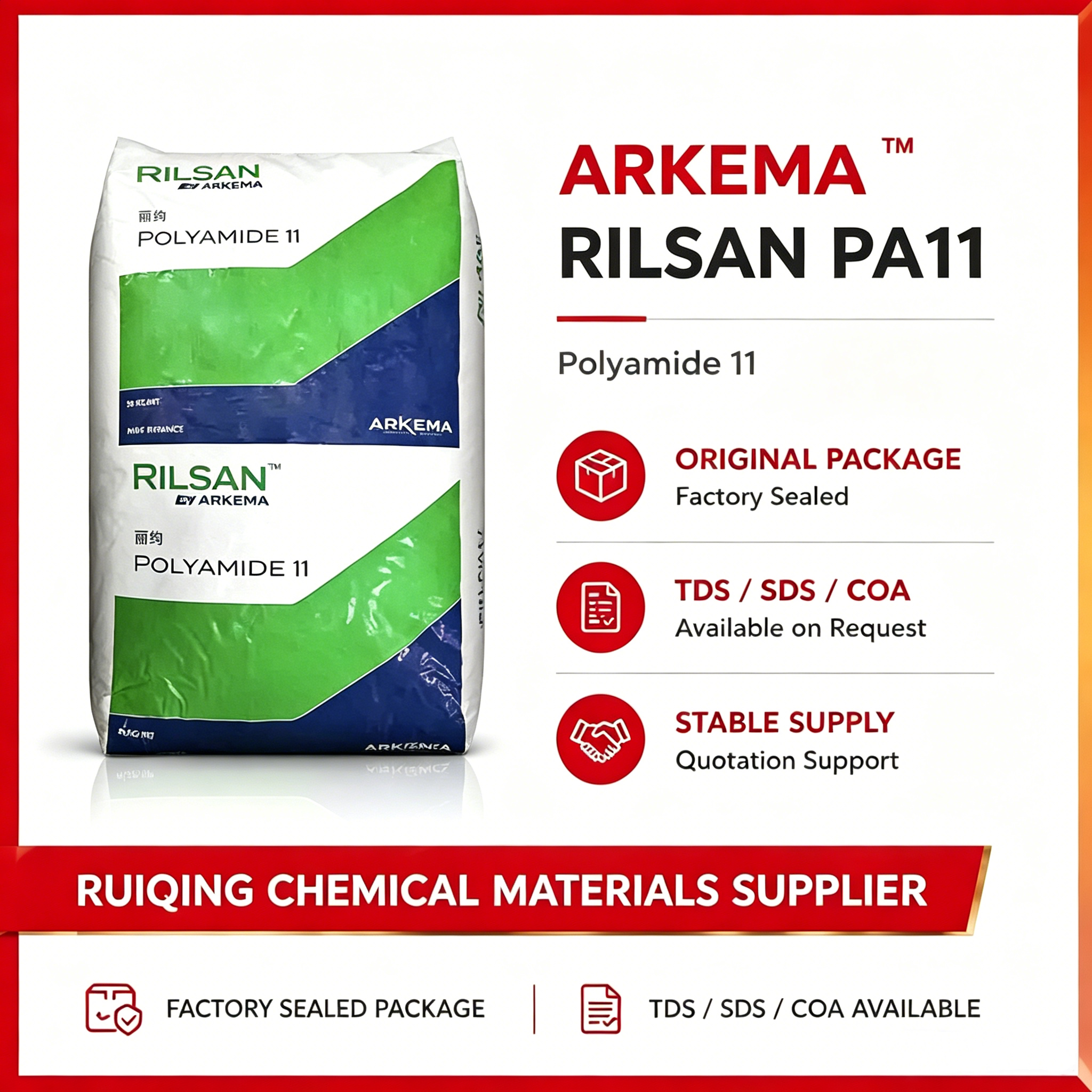
Shenzhen Ruiqing International Trade Co., Ltd. supplies Arkema Rilsan BESN BLACK P024 TL PA11 resin and provides quotation support, lead time confirmation, TDS/SDS documentation, and technical assistance for customers in automotive, industrial, and fluid transfer applications.
RILSAN BESN BLACK P024 TL PA11 Resin Key Features
- Bio-based PA11 resin produced from renewable castor oil
- Impact-modified grade for demanding extrusion applications
- Specifically designed for automotive fuel line systems
- Low extractable formulation suitable for multilayer tubing
- Excellent resistance to gasoline, diesel, oils, and automotive fluids
- Outstanding impact strength at low temperatures
- Heat stabilized and light stabilized for long-term outdoor durability
- Excellent dimensional stability and processing consistency
- Suitable for general extrusion and precision tube extrusion
RILSAN BESN BLACK P024 TL PA11 Resin Applications
- Automotive gasoline fuel lines
- Fuel venting systems
- Water cooling circuit tubing
- Multilayer automotive tubing
- Industrial fluid transfer tubing
- Chemical transfer hose
- Automotive extrusion components
- High-performance PA11 tube extrusion
Why Choose Arkema Rilsan BESN BLACK P024 TL?
Arkema Rilsan BESN BLACK P024 TL is engineered for extrusion applications requiring excellent impact resistance and long-term durability. Compared with conventional polyamide materials, this renewable PA11 resin offers lower moisture absorption, improved chemical resistance, and excellent flexibility while maintaining mechanical strength under demanding operating conditions.
The material is particularly suitable for automotive manufacturers and tubing processors seeking a lightweight, bio-based engineering plastic capable of meeting modern fuel system performance requirements.
RILSAN BESN BLACK P024 TL PA11 Resin FAQ
Q1: What is Arkema Rilsan BESN BLACK P024 TL?
A: It is an impact-modified bio-based Polyamide 11 (PA11) extrusion grade designed for automotive fuel line and industrial tubing applications.
Q2: What processing method is recommended?
A: This grade is primarily developed for general extrusion and precision tube extrusion.
Q3: Is this material bio-based?
A: Yes. It is manufactured from renewable castor oil, providing a sustainable alternative to petroleum-based engineering plastics.
Q4: What industries use this material?
A: Automotive, industrial tubing, fluid transfer systems, cooling circuits, fuel systems, and extrusion manufacturers.
Q5: Does it have good chemical resistance?
A: Yes. It offers excellent resistance to gasoline, diesel, lubricants, automotive fluids, and many industrial chemicals.
Q6: Is it suitable for multilayer fuel tubing?
A: Yes. This grade is specifically designed for low-extractable mono-layer and multilayer automotive fuel line applications.
Q7: Are TDS and SDS available?
A: Yes. Technical Data Sheet (TDS), Safety Data Sheet (SDS/MSDS), and related product documentation are available upon request.
Q8: Can you provide quotation and delivery support?
A: Yes. Shenzhen Ruiqing International Trade Co., Ltd. provides quotation, inventory inquiry, lead time confirmation, and technical support for Arkema Rilsan PA11 materials.
The following typical properties are based on Arkema technical data for RILSAN BESN BLACK P024 TL PA11 Resin. Actual values may vary depending on processing conditions, conditioning, and final part design.
Typical Properties
| Property | Typical Value | Unit | Test Method |
|---|---|---|---|
| Tensile Modulus, 23°C | 1250 / 1190 | MPa | ISO 527-1/-2 |
| Yield Stress, 23°C | 38 / 35 | MPa | ISO 527-1/-2 |
| Yield Strain, 23°C | 5 / 6 | % | ISO 527-1/-2 |
| Stress at Break, 23°C | 36 / 35 | MPa | ISO 527-1/-2 |
| Nominal Strain at Break, 23°C | >100 / >100 | % | ISO 527-1/-2 |
| Flexural Modulus, 23°C | 1150 / 1050 | MPa | ISO 178 |
| Charpy Unnotched Impact Strength, 23°C | No break / No break | – | ISO 179 1eU |
| Charpy Unnotched Impact Strength, -30°C | No break / No break | – | ISO 179 1eU |
| Charpy Notched Impact Strength, 23°C | 80P / 82P | kJ/m² | ISO 179 1eA |
| Charpy Notched Impact Strength, -30°C | 21 / 21 | kJ/m² | ISO 179 1eA |
| Charpy Notched Impact Strength, -40°C | 10.1 / 18.4 | kJ/m² | ISO 179 1eA |
| Melting Point, 10°C/min | 188 | °C | ISO 11357-1/-3 |
| Density, 23°C | 1.02 | g/cm³ | ISO 1183-1 |
Dry / Cond: Dry as molded / conditioned values.